
Pest Control in Fort Worth, TX
Connect With a Local Pro
Who Knows Tarrant County
PestAlly connects Fort Worth and Tarrant County homeowners with independent,
local pest control pros who know why older neighbourhoods carry higher
termite risk and what a Metroplex summer brings.
Fort Worth Sits Where North Texas Turns Into Ranch Country
Fort Worth is the point where the metroplex stops being suburban and starts being rural, and the pest work reflects that better than any postcode does. West and north of the city, subdivisions push out into open pasture and cross-timbers, which means fire ants with no competition, rodents coming in off the field edges every autumn, and the occasional scorpion working its way east from drier country. Closer in, the same expansive North Texas clay that troubles Dallas dries and shrinks through the summer, opening cracks at slabs and foundations that termites, ants and roaches all use. Brown recluse are established across the older housing near the Near Southside and Poly. It is a market where the address tells you more about the likely problem than the season does. PestAlly connects Fort Worth homeowners with independent, local pros who work Tarrant County.
Get Connected With a Local Pro →
At a Glance
Service Area
Fort Worth, TX and surrounding Tarrant County communities
Most Common Pests
Fire ants, subterranean termites, brown recluse spiders, field mice and rats, German and American cockroaches, mosquitoes, crickets, scorpions
Peak Pest Season
Fire ants and termites in spring; rodents off the field edges in autumn
Response Time
Same-day and next-day appointments typically available
Fort Worth’s Year-Round Pest Calendar
Clay soil in town and open pasture at the edges give Fort Worth two distinct pest patterns.
Winter
Dec – FebField rodents settle into garages and attics; recluse active in storage
Coldest weeks; roach and spider activity is entirely indoors
Ground warms early and ant trails start appearing indoors
Spring
Mar – MaySubterranean termite swarms begin across Tarrant County
Peak swarm month; fire ant mounds spread across open ground
Storm water fills low spots and mosquitoes hatch within days
Summer
Jun – AugHeat sets in and clay begins pulling away from foundations
Peak brown recluse activity; ants come indoors hunting water
Crickets swarm lit doorways; cracks at their widest of the year
Fall
Sep – NovLate rain rebuilds fire ant mounds; field rodents start moving
Peak rodent month as pasture and field edges are cut back
Rodent entry attempts continue; termites carry on below ground
One exception: how far out the property sits changes the pest list. A house on the western edge backing onto pasture carries fire ant, rodent and tick pressure that an established inner-city street does not, and the first few years on a new estate are consistently the busiest.
Services We Cover in Fort Worth
A Fairmount older home, an TCU area property or a newer build on the edge of town — here’s what the local pros in our network handle.
Termites
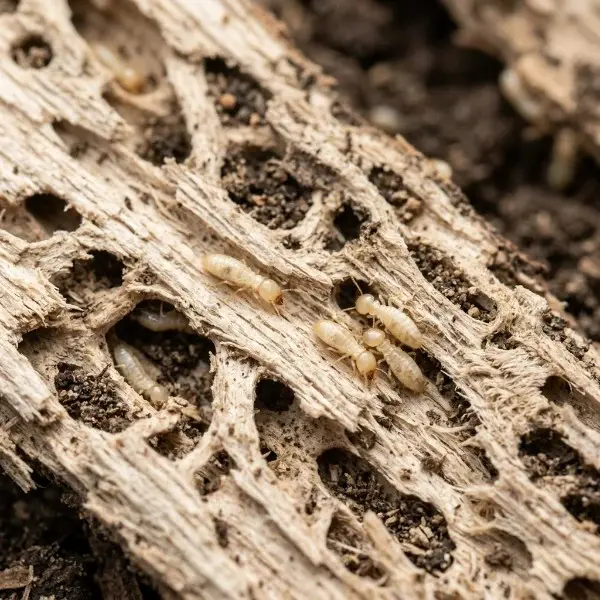
Subterranean termites are active across Tarrant County and shifting clay keeps opening new routes to the structure.
Ants
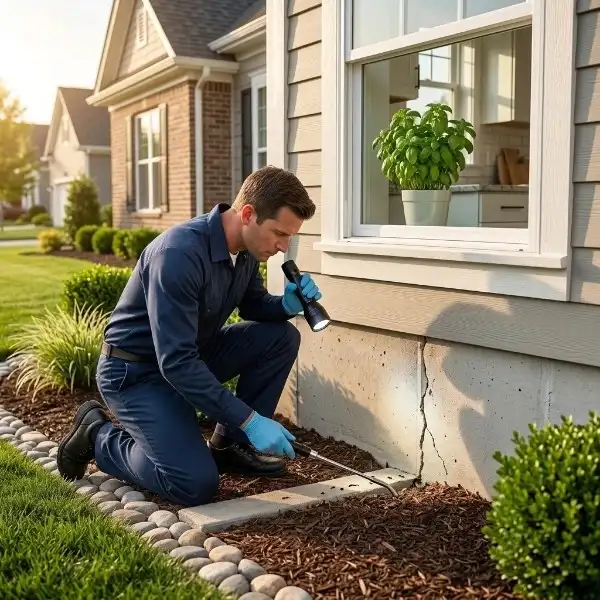
Fire ants take open and newly graded ground faster than anything else here, and Argentine ants come indoors for water in dry spells.

Roaches
American roaches come up from drains and slab cracks, while German roaches move through rental and multi-family housing.

Bed Bugs
Relocation into the metroplex, hotels and second-hand furniture keep bed bugs circulating through Fort Worth housing.

Fleas
Pasture wildlife, pets and warm summers keep flea and tick pressure high from spring through autumn.

Spiders
Brown recluse are established in older Fort Worth housing, sheltering in garages, attics and boxes rather than out in the open.
Yellow Jackets
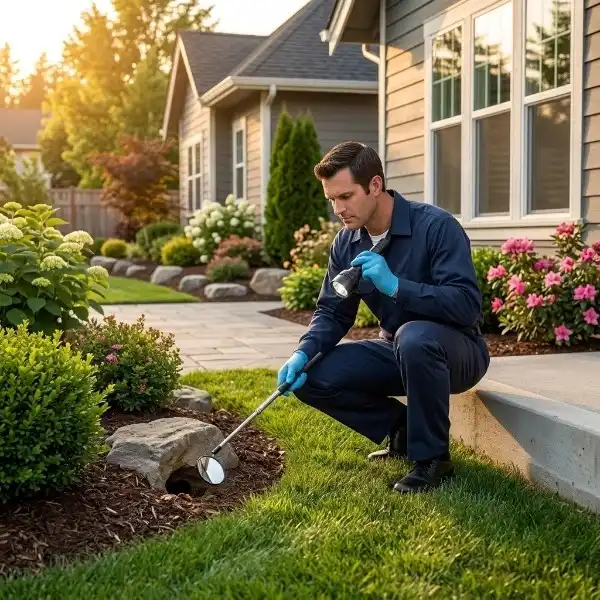
Ground and void nests build fast through the humid summer and turn defensive quickly around decks and play areas.

Wasps
Paper wasps and carpenter bees work eaves, decks, porches and untreated trim right through the long warm season.

Mosquitoes
Mosquitoes hatch quickly in the standing water North Texas storms leave behind in low ground and drainage.

Flies
Drain and filth flies trace to a specific source — usually a drain, bin area or grease line — rather than needing the room treated.

General Insects
Crickets swarm lit doorways in late summer, and the occasional striped bark scorpion turns up on the western edges.

General Rodents
Field mice and rats come in off pasture and cross-timbers ground, and newer western subdivisions see the most of them.
Trusted by Homeowners Across the Country
Licensed & Insured
Every pro in the network carries current licensing and insurance.
Same-Day Service
Same-day and next-day appointments typically available.
100% Satisfaction Guarantee
If the pest comes back, your pro comes back — that is the standard.
Locally Trusted Experts
Independent pros who actually live and work in your area.
No Obligation to Book
Talk to a pro first. Nothing is committed until you say so.
Vetted Pro Network
We screen every contractor before they join the PestAlly network.

Most Common Pest Entry Points in Fort Worth Homes
New development pushes straight into field and cross-timbers ground, which puts rodents, fire ants and ticks at the property line rather than a mile away.
Slab penetrations shift as North Texas clay dries and shrinks, opening gaps that roaches, ants and rodents use through the summer.
Brown recluse shelter in cardboard, stored clothing and shelving that has not been moved in months, which is exactly where people reach in blind.
Wood in contact with soil is the direct route subterranean termites use to reach the structure.
Firewood, stone borders and stacked material against the wall give spiders and scorpions shelter within reach of a door.
Why Fort Worth Homes Deal With These Pests Specifically
Two things drive the work here — the edge of the city moving outward, and clay that moves with the season.
New subdivisions inherit the pasture’s problems
Building on pasture puts a house next to fire ant colonies and rodent populations that were already there. Grading disturbs them rather than removing them, and the first few years on a new estate are consistently the busiest.
Assuming a new build is a low-risk build. It is usually the opposite here — and the builder’s termite pretreatment expires on a date most owners never learn.
Clay opens the building up every summer
North Texas clay shrinks in the heat and pulls away from slabs and foundations, opening gaps that a spring inspection would have found closed. The envelope changes shape between March and August.
Sealing once in spring and leaving it. In this soil the exterior deserves a second look mid-summer, when the cracks are widest.

What to Expect From a Local Pro’s Visit
Every Fort Worth property is different, but the sequence stays the same, and here the age and location of the development matter as much as the address.
Inspect
Full inspection: wood-to-soil contact, crawl space, lawn and mounds, plumbing areas, mulch and firewood placement.
→Identify
Confirming the species, since fire ant baiting, brown recluse harbourage work and rodent exclusion are three completely different jobs.
→Treat
Matched to the finding: broadcast fire ant baiting, harbourage reduction, exclusion timed to autumn, or termite treatment.
→Seal
Correcting wood-to-soil contact, screening crawl space vents, and pulling mulch and firewood back off the wall.
→Follow Up
Ongoing service through the year, with the exterior re-checked mid-summer and exclusion booked before the first cold nights.
→Fort Worth Neighborhoods & Communities We Serve
PestAlly connects homeowners across Fort Worth and the surrounding Tarrant and Johnson County communities.
Fairmount
→TCU area
→Ridglea
→Arlington Heights
→Alliance
→Eagle Mountain
→Poly
→Riverside
→Benbrook
→Near Southside
→Arlington
76001, 76002, 76006, 76010, 76012, 76013, 76014, 76015, 76016, 76017, 76018
→How PestAlly Works in Fort Worth
PestAlly doesn’t perform the pest control ourselves — we connect you with vetted, independent local professionals who do.
Get Started →Tell us what’s going on
The pest, and roughly where in the Fort Worth area you’re located.
We match you with an independent, local pro
Someone who services your specific neighborhood.
You deal directly with that contractor
Pricing, scheduling, and the work itself are between you and them.
Frequently Asked Questions
Is termite risk really that high in Fort Worth?⌄
Yes. Subterranean termites are active across Tarrant County and shifting clay keeps opening new routes to the structure. Swarms come every spring, and homeowners insurance does not cover the damage.
Why does spraying not get rid of brown recluse?⌄
Because a perimeter spray does very little against them. Brown recluse live inside harbourage rather than crossing treated surfaces, so clearing clutter and sealing storage is what actually reduces them.
When are mosquitoes worst in Fort Worth?⌄
Worst in the weeks after North Texas storms, when low ground and drainage hold water. A barrier spray holds three to four weeks and less after heavy rain.
Do I need pest control through a Fort Worth winter?⌄
Yes, though the mix shifts. Field rodents that came in during autumn are still there, and roaches and recluse stay active indoors regardless of the temperature outside.
Does PestAlly serve my specific Fort Worth neighborhood?⌄
PestAlly connects homeowners throughout Fort Worth and Tarrant County, including ZIP codes 76103, 76104, 76105, 76111, 76114, 76116, 76118, 76119, 76120, 76123, 76126, 76129, 76131, 76132, 76134, 76135, 76137, 76148, 76155 and 76179, plus the surrounding communities of Arlington, North Richland Hills, Burleson, Keller and Haltom City. If you are not sure whether your address is covered, call and we will tell you straight away.
Get Connected With a Local Fort Worth Pest Control Pro
Whether it’s fire ants taking over a new-build lot, field mice arriving in autumn, or a brown recluse in the garage, PestAlly puts you in touch with an independent local pro who works Tarrant County.
Looking beyond Fort Worth? See every Texas city we cover →