
Professional Termite Treatment That Reaches the Colony — Not Just the Damaged Wood
PestAlly connects you with independent, local termite pros who treat the colony — not just the wood you can see.
Structural Damage
Subterranean termites eat wood from the inside out, hollowing joists, subfloors and studs long before anything shows on the surface.
Contaminated Food
Termite damage is almost never covered by homeowners insurance, so the repair bill lands entirely on you.
Damage Found Too Late
Colonies feed silently for years. By the time swarmers turn up indoors, the nest is usually well established.
At a Glance
| Service | Termite Control |
| Best For | Active termites, mud tubes, or swarmers indoors |
| Common Species | Subterranean, Formosan, Drywood, Dampwood |
| DIY Works? | Prevention only — moisture and wood-to-soil contact |
| Professional Needed? | Any confirmed activity, mud tubes, or a swarm indoors |
| Typical Treatment | Species ID → soil barrier, bait system, or both, matched to the construction |
| Service Area | Nationwide |
The PestAlly Process
Inspect
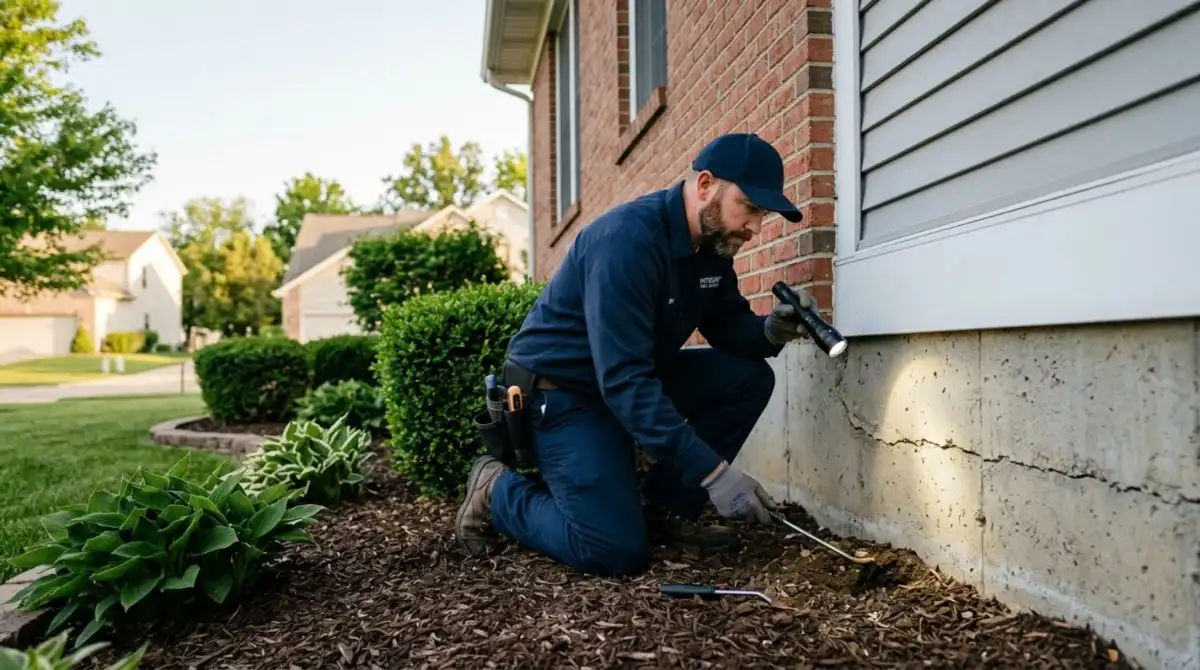
We start with a full inspection — inside, outside and in the crawl space — checking for mud tubes, hollow-sounding wood, discarded wings and damaged framing to confirm the species.
Diagnose
Every termite problem has a reason it’s happening — soil touching siding, a leaking hose bib, mulch piled against the foundation, or a damp crawl space. We flag the cause, not just the damage you can see.
Treat
Instead of patching the wood, treatment targets the colony — a liquid barrier in the soil around the foundation, an in-ground bait system, or both, depending on species and construction.
Seal
Wood-to-soil contact gets corrected and the moisture that drew them in gets fixed, so a new colony doesn’t simply move into the same spot behind the last one.
Follow Up
A liquid barrier starts working on contact, though full colony control usually takes several weeks. Bait systems work more slowly by design and are monitored over the months that follow.
CUSTOM TREATMENT
So Long, Termites — For Good This Time
Keeping termites out is an ongoing process, not a one-time spray. Here’s how PestAlly-connected pros make sure they don’t come back.
Thorough Inspection
PestAlly-connected pros start by checking where termites actually get in — the crawl space, the slab edge, expansion joints and the foundation line — not just the room where you found the wings.
→Species-Specific Treatment
Subterranean, Formosan and drywood termites each need a different approach. Treatment is matched to the species and the construction, not a one-size spray.
→Pet- & Family-Safe Options
Many PestAlly-connected pros offer EPA-registered products with pet- and family-safe application methods, so treatment doesn’t mean keeping everyone out of the house.
→RESOURCES
Termite Home Protection
Why Do Termites Swarm in Spring?
Mature colonies release winged swarmers on warm, damp spring days. Finding them indoors means a colony is already established in or against the structure.
→Is Termite Damage Covered by Insurance?
They don’t eat wood like termites, but they tunnel through damp or damaged wood to build nests, which can cause real structural damage over time.
→Do Bait Stations Actually Work?
Yes, but slowly by design. Workers carry the bait back and the colony declines over weeks to months, which is why stations are monitored rather than installed and forgotten.
→Should I Spray the Swarmers I Found Indoors?
No. Killing swarmers does nothing to the colony, and it can push the next swarm to emerge somewhere else, which makes the inspection harder.
→COMMON CAUSES
Why Termite Damage Keeps Getting Missed Until It’s Expensive
If a home has never had a proper inspection, here’s what usually goes unnoticed:
You’re only treating what’s visible
Damage runs inside the wood, so the surface can look perfectly normal.
Some species have multiple queens
Mud tubes are often hidden behind insulation, siding, or boxes stacked in the crawl space.
New eggs keep hatching
Most sprays don’t affect eggs, so a fresh batch of workers shows up days later.
The attractant is still there
Crumbs, a leaky pipe, pet food left out overnight — if the reason they came hasn’t changed, more will follow.
Rain pushed them in, and they decided to stay
Warm, damp spring weather triggers swarms from colonies that have been quietly feeding for years.
Treatment methods vary quite a bit by species, which is exactly why a one-time can of spray rarely finishes the job.
What Kind of Termite Is Actually in Your House?
What’s crawling across your kitchen changes both the treatment and the urgency.
| Termite Type | Size / Look | Key Sign | Risk Level |
|---|---|---|---|
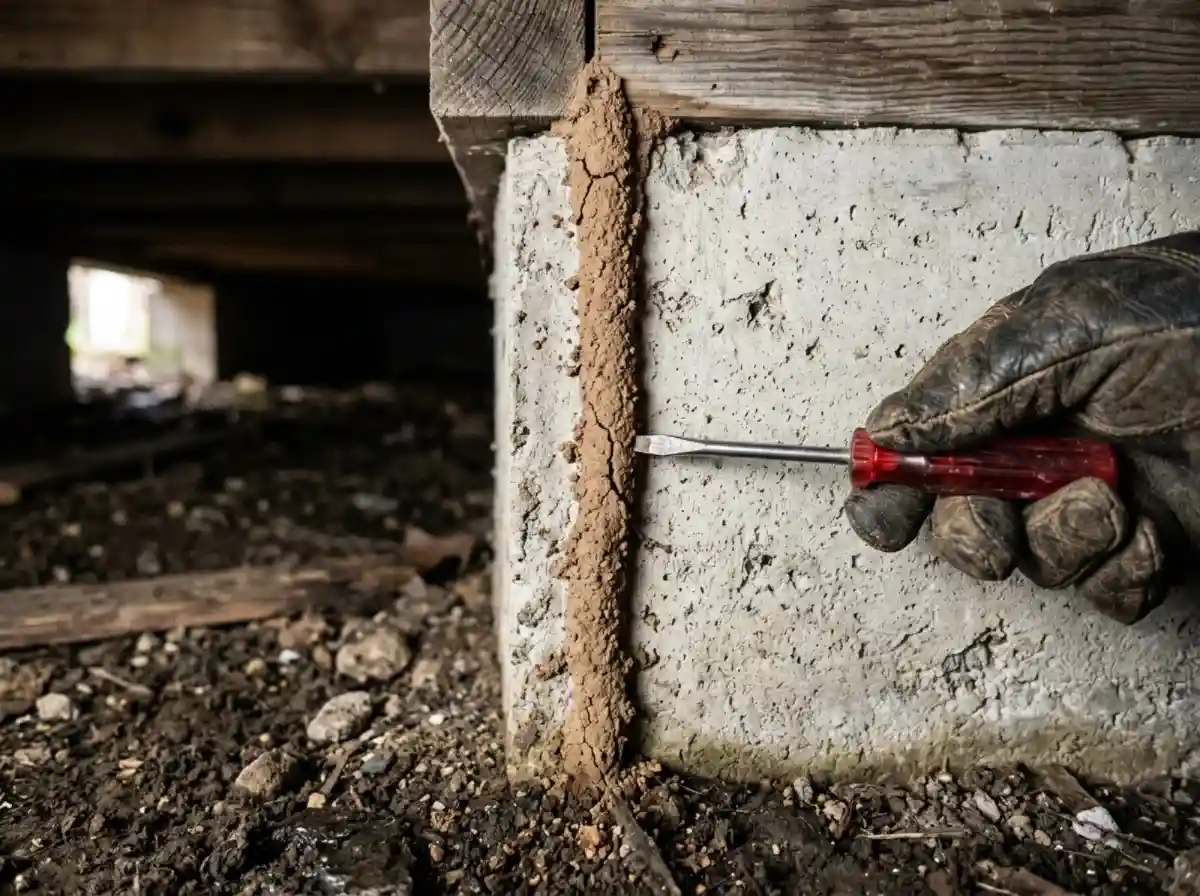
| Subterranean | ~1/8 in, cream workers; dark winged swarmers | Pencil-width mud tubes on foundation walls | Structural — behind most US termite damage |
| Formosan | Like subterranean, but colonies in the millions | Carton nests inside wall voids; huge spring swarms | Severe — months, not years |
| Drywood | ~3/8 in, pale to dark brown | Dry six-sided pellets below small kick-out holes | Structural, usually attics and trim |
| Dampwood | Largest, up to 1/2 in | Only in wood already wet or rotting | Secondary — points to a moisture problem first |
Subterranean termites need constant contact with soil moisture, so they reach the house through pencil-width mud tubes up the foundation, through slab expansion joints, or anywhere wood touches the ground. They cause the large majority of termite damage in the United States, and the mud tube is the one sign almost anyone can spot.
Formosan termites are genuinely difficult to handle without professional help. Colonies run into the millions and can build carton nests inside a wall void, which means they keep feeding even after the soil connection is cut. Treating only the visible damage leaves the colony untouched, and it simply starts working somewhere else in the structure.
Not sure which one you’re dealing with? That’s normal — it’s exactly what a local pro identifies during an inspection, and it’s what determines the entire treatment plan.
DIY vs. Professional Treatment
| DIY | Professional | |
|---|---|---|
| Works well for | Prevention only — fixing moisture and wood-to-soil contact | Any confirmed activity, mud tubes, or swarmers |
| Handles subterranean/Formosan/drywood? | Not reliably | Yes |
| Treats the colony, not just the damaged wood | Rarely | Yes — species-specific baiting/nest treatment |
| Typical cost | $10–$30 in store-bought products | $100–$300 per visit; lower per visit on a quarterly plan |
| Follow-up included | No | Often, especially for recurring cases |
Quick Prevention Checklist
- Seal visible gaps around windows, doors, and utility lines with caulk or silicone
- Store food (including pet food) in sealed containers, and don’t leave dishes out overnight
- Fix leaky faucets and pipes — moisture is a major draw
- Keep mulch and vegetation from touching the siding or foundation
- Wipe up spills and crumbs promptly rather than letting them sit
DIY isn’t useless — it just has a ceiling. Once there is confirmed activity, this is a job for a licensed professional.
Dealing with more than just termites? PestAlly also connects homeowners with local pros forBed Bug Treatment, Rodent Control, and General Pest Control.
- Inspect— walk the interior, exterior and crawl space to identify the species, find mud tubes, and work out how far the damage runs.
- Identify the cause— moisture problems, wood-to-soil contact, leaking gutters, and mulch piled against the foundation.
- Treat at the source— a liquid soil barrier and/or an in-ground bait system, so the colony is actually addressed rather than the damaged board.
- Seal and prevent — closing up entry points and flagging conditions that will cause the same problem again if left alone.
- Follow up— because termite colonies are never a one-visit fix, and treated homes need re-inspection to stay protected.
How a PestAlly-Connected Pro Handles a Termite Problem
PestAlly connects you with independent, local professionals — many licensed and using EPA-registered products, including pet- and family-safe options where needed. Every provider works a little differently, but a proper termite treatment generally follows this pattern:
Frequently Asked Questions
Why do termites swarm inside my house in spring?
Do termites really cause damage, or am I overreacting?
How long does termite treatment take to work?
Is a bait system better than a liquid barrier?
How much does professional termite treatment cost?
Can I treat termites myself, or do I need a professional?
Don’t Wait Until the Damage Starts Showing
By the time termite damage is visible, the colony has usually been feeding for years. PestAlly connects you with an independent, local termite professional who can inspect properly, identify the species, and treat the colony the first time.
Need termite control where you live? PestAlly covers 594 cities across 29 states and Washington, D.C. — find your city →