
Pest Control in Pittsford, NY
Connect With a Local Pro Who Knows Monroe County
Pittsford is one of the best-preserved canal villages in the state — Federal and Greek Revival houses from the early 1800s around the four corners, the Erie Canal through the middle, and large wooded lots with genuinely old trees spreading south along Irondequoit Creek. Preserved historic timber under a heavy canopy is what defines the work here. PestAlly is a free service connecting Pittsford homeowners with independent, licensed local pest control pros working Monroe County.
Call (888) 921-7764Speak to a Local ProWhy Pittsford
Why Pittsford Homes Get Hit Harder Than Most
The village housing is genuinely old and preserved rather than replaced. Federal and Greek Revival houses from the 1810s onward have stone cellars, hand-hewn sills, original framing and additions made over two centuries, which gives mice, carpenter ants and spiders far more routes in than modern construction does — and powderpost beetles work seasoned hardwood of that age, leaving fine flour-like powder that is routinely mistaken for termite damage. Preservation rules also limit what can be replaced rather than repaired.
The canopy and the creek supply the rest. Mature oak, maple and beech on the large lots now reach well over the rooflines, giving squirrels, flying squirrels and raccoons direct access to soffits and gable vents, and standing dead timber — a great deal of it lost ash — gives carpenter ants parent colonies within yards of houses. Irondequoit Creek and the canal hold damp, shaded ground that keeps mosquito production going all summer.

Seasonal Activity
What’s Active in Pittsford, and When
Spring · Mar–May
Powderpost beetle emergence from old hardwood, carpenter ant swarmers indoors, and snowmelt into stone cellars.
Summer · Jun–Aug
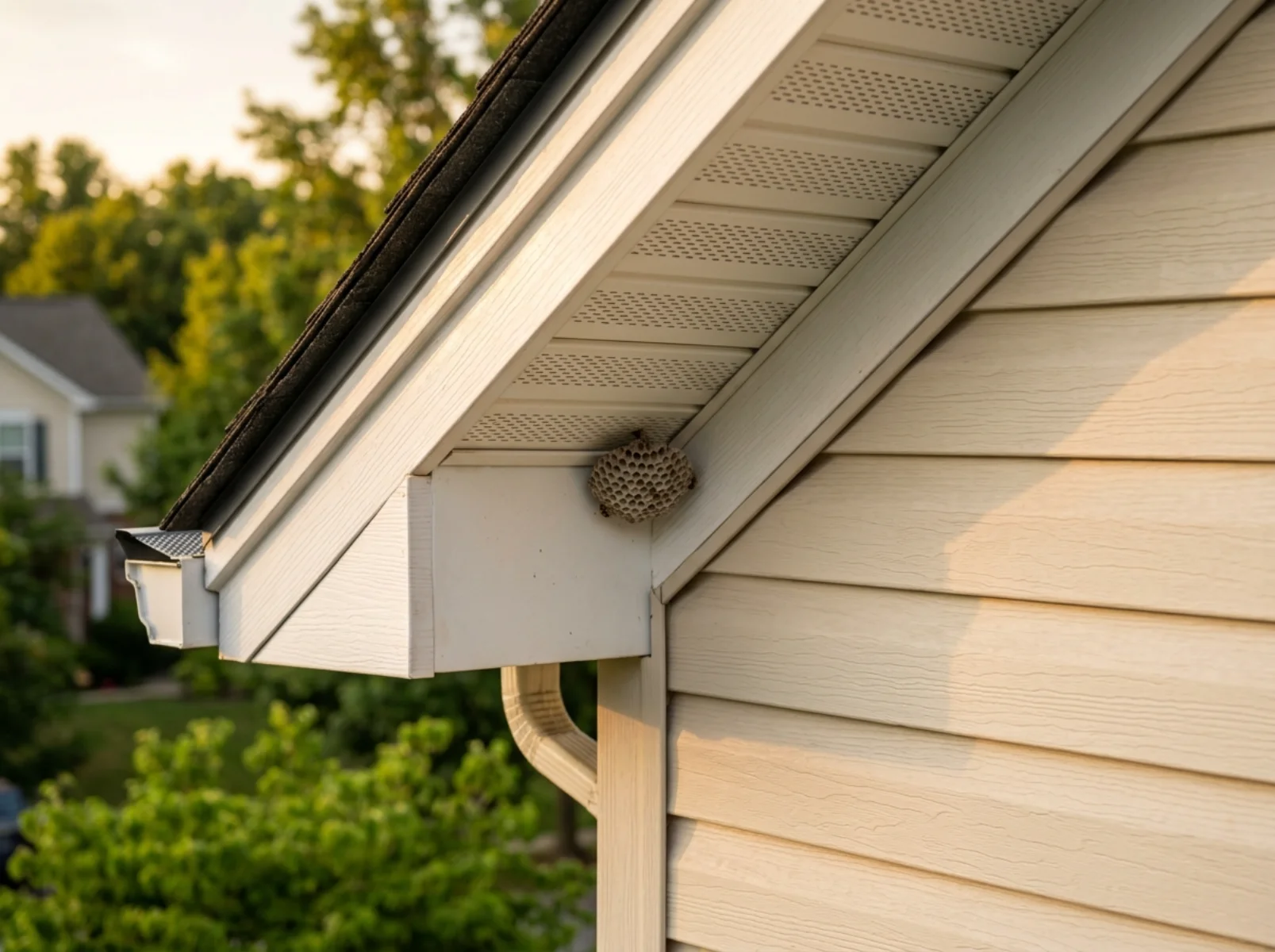
Mosquitoes off the canal and Irondequoit Creek, and wasps in the deep eaves of the historic housing.
Fall · Sep–Nov
Squirrels and raccoons look for attic space, and the freeze moves mice into cellars and wall voids.
Winter · Dec–Feb
Squirrels denning in attics, mice in stone cellars, and beetles quiet inside two-century-old timber.
Coverage
Areas We Cover in Pittsford
The historic four corners & village core
Federal and Greek Revival houses from the 1810s with stone cellars, hand-hewn sills and two centuries of additions.
The mature canopy lots
Old oak, maple and beech reaching over the rooflines, giving squirrels and raccoons direct soffit access.
The ash-loss areas
Standing dead ash giving carpenter ants parent colonies within yards of houses on the wooded lots.
The Erie Canal & Irondequoit Creek
Still and slow water through the village, breeding mosquitoes and keeping the low ground damp.
The post-war subdivisions
Newer stock on full basements, taking the compressed autumn mouse entry at the rim joist.
Pittsford sits about 15 minutes south-east of Rochester in Monroe County, an affluent canal village of preserved 1800s architecture under heavy mature canopy.
See the whole state on our New York pest control page, the metro hub in Rochester, or the nearby towns we also cover: Webster, Henrietta, Fairport, Penfield.
Services
The Pest Problems Pittsford Calls About Most
General Pest Control
Powderpost beetles work two-century-old seasoned hardwood and leave fine powder, not the mud termites make.
Rodent Control
A canopy that has outgrown the houses gives squirrels and raccoons direct access to soffits and gable vents.
Ant Control
Standing dead ash gives carpenter ants parent colonies, with satellites moving into soffits and damp sills.
Spider Control
Two-century-old stone cellars stay cool and damp year-round, keeping camel crickets and cellar spiders active.
Mosquito Control
Still canal water and shaded creek ground hold breeding habitat through the whole warm season.
Wasp Nest Removal
The deep eaves and porches of Federal and Greek Revival housing are prime paper wasp sites, often out of reach.
Also available in Pittsford: Termite Control · Cockroach Control · Bed Bug Treatment · Yellow Jacket Removal · Flea Control · Fly Control
Common Questions
Pittsford Pest Questions, Answered
Fine powder like flour under a beam.
Our house is on the historic register. Does that limit treatment?
Squirrels in the attic every autumn.
We took down a dead ash and then got ants indoors.
Do 1810s houses get termites?
Speak to an Exterminator in Pittsford
Tell us what you’re dealing with and we’ll connect you with an independent, licensed exterminator working in Monroe County. Using PestAlly costs nothing and there is no obligation.
Call (888) 921-7764