
Pest Control in Winter Park, FL
Connect With a Local Pro Who Knows Orange County
Winter Park is the oldest housing stock in metro Orlando and it shows on every street — 1880s to 1920s frame houses, brick roads, and a live oak canopy that shades entire blocks. The chain of lakes runs through the middle of town and Rollins College sits on Lake Virginia. Old wood, old trees and permanent water put a very different pest list on this city than on the subdivisions around it. PestAlly is a free service connecting Winter Park homeowners with independent, licensed local pest control pros working Orange County.
Call (888) 921-7764Speak to a Local ProWhy Winter Park
Why Winter Park Homes Get Hit Harder Than Most
The canopy is the thing that makes Winter Park different. Mature live oaks and camphor trees reach over roofs across most of the older neighbourhoods, and that is a continuous highway for roof rats — the dominant rat in Central Florida — straight onto roof lines and in through soffit gaps and vents. The same canopy keeps roofs and wood trim shaded and slow to dry after the daily summer storms, and it drops leaf litter into gutters and valleys. Add the chain of lakes, which holds permanent water within a few blocks of most addresses, and both rodent and mosquito pressure stay high year-round.
The building stock is the other half, and it is genuinely old for Florida. Downtown Winter Park and the streets around Park Avenue hold frame houses from the 1880s through the 1920s with real wood structure, wood siding, exposed rafter tails and shingle or tile roofs. That is drywood termite territory — the species that lives entirely inside the wood with no soil contact and generally ends in whole-structure fumigation rather than a soil treatment. Subterranean termites work the same houses from below through shallow foundations and crawl space piers, so both can be present in one building.

Seasonal Activity
What’s Active in Winter Park, and When
Spring · Mar–May
Subterranean swarms after the first warm rains, drywood swarms into May, and the spring lovebug flight through the neighbourhoods.
Summer · Jun–Aug
Daily storms keep mosquitoes peaking, shaded roofs stay damp, and American roaches come out of drainage and mulch beds at night.
Fall · Sep–Nov
A second lovebug flight, mosquitoes holding through the rains, and roof rats moving up the oaks into attics as nights cool.
Winter · Dec–Feb
The dry season brings ants and roaches indoors for water, while drywood galleries keep widening inside the old wood, unseen.
Coverage
Areas We Cover in Winter Park
Park Avenue & the historic core
1880s–1920s frame houses with wood siding and rafter tails — the drywood termite centre of Winter Park, under a heavy oak canopy.
Lake Virginia & the Rollins College area
Permanent lake water plus dense student and faculty rentals, so mosquito pressure and bed bug turnover both run higher here.
Winter Park Chain of Lakes shoreline
Shoreline homes with docks and boathouses. Damp wood at the water line draws subterranean termites and carpenter ants alike.
Hannibal Square & the west side
Older frame cottages on small lots with mature trees — roof rats, drywood termites and steady ant pressure off shaded ground.
Winter Park Pines & the eastern blocks
Post-1960 block on slab. Subterranean termites through bath traps, ghost ants in kitchens, and wasps under wide eaves.
Winter Park sits about 10 minutes north-east of downtown Orlando, built around a chain of lakes under one of the oldest oak canopies in Central Florida.
See the whole state on our Florida pest control page, the metro hub in Orlando, or the nearby towns we also cover: Kissimmee, Saint Petersburg, Clearwater, Largo.
Services
The Pest Problems Winter Park Calls About Most
Termite Control
Winter Park’s 1880s–1920s wood houses are drywood termite territory, and subterranean species work the same buildings from below — both can be present at once.
Rodent Control
The live oak canopy reaches over most roofs here, giving roof rats a direct route to soffits and vents — trimming matters as much as trapping.
Ant Control
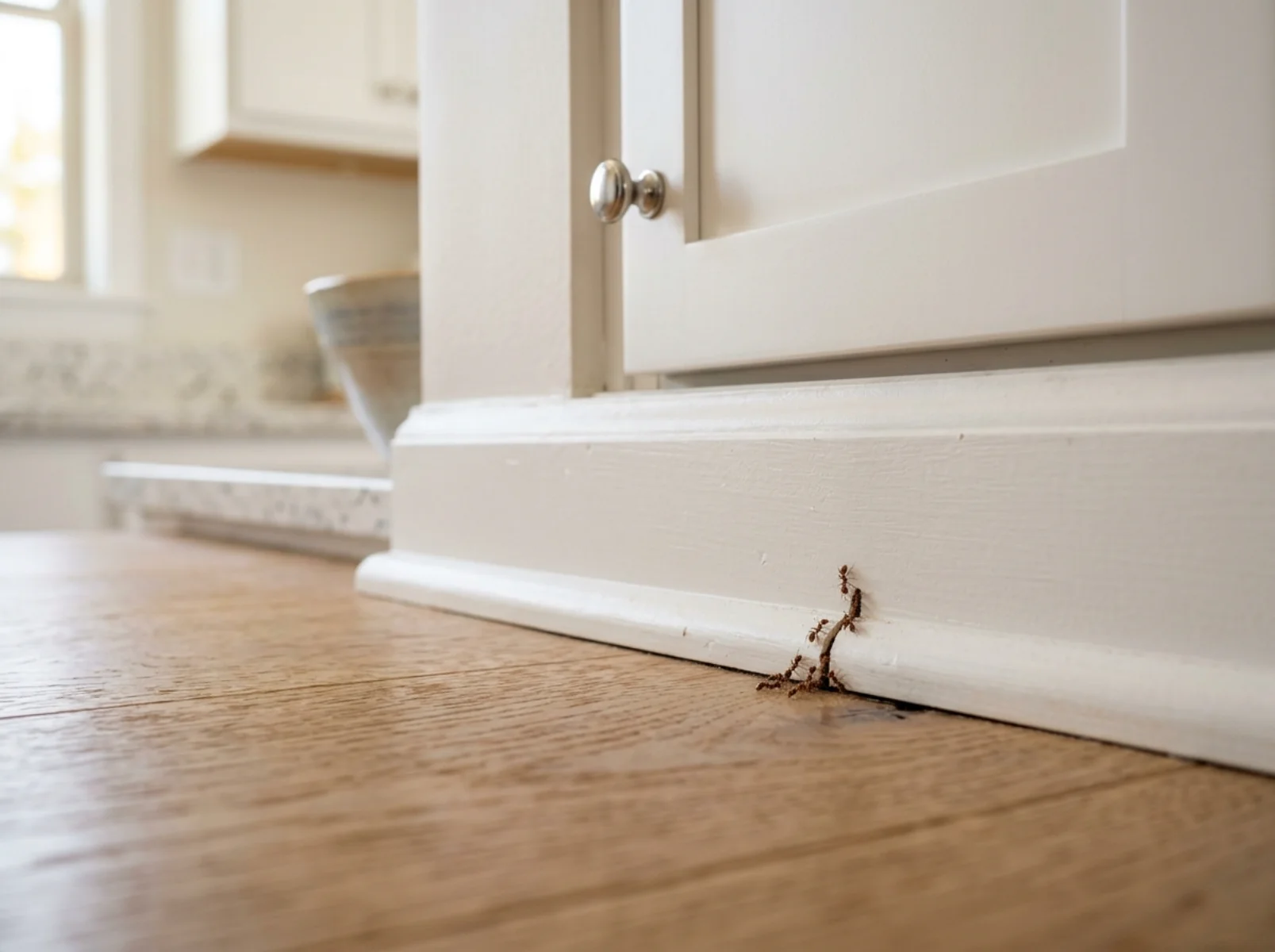
Florida carpenter ants nest in damp wood in the older houses, while ghost ants and white-footed ants trail in off shaded mulch beds.
Mosquito Control
The chain of lakes holds permanent water within blocks of most addresses, so control depends on finding container and margin breeding, not fogging.
Cockroach Control
American roaches live in mulch, palm boots and drainage and come indoors at night, while German roaches spread through rentals near the college.
Bed Bug Treatment
Student housing turnover around Rollins keeps bed bugs circulating, and in shared-wall buildings the neighbouring units have to be inspected too.
Also available in Winter Park: Spider Control · Wasp Nest Removal · Yellow Jacket Removal · Flea Control · Fly Control · General Pest Control
Common Questions
Winter Park Pest Questions, Answered
My house is from 1915. Which termite should I be worried about?
Can I keep the oak canopy and still stop the roof rats?
Do I need a WDO report before selling here?
Large black ants in the bathroom — termites?
Why are mosquitoes worse here than a few miles away?
Speak to an Exterminator in Winter Park
Tell us what you’re dealing with and we’ll connect you with an independent, licensed exterminator working in Orange County. Using PestAlly costs nothing and there is no obligation.
Call (888) 921-7764