
Pest Control in Roswell, GA
Connect With a Local Pro Who Knows Fulton County
Roswell grew up around a cotton mill on Vickery Creek in the 1830s, and the original mill village, the founders’ houses and the town square are all still there. The Chattahoochee runs along the southern edge with a wide band of protected river park, and the city’s tree ordinance has kept an unusually heavy canopy over the newer neighbourhoods too. Old wood, river damp and dense forest is a specific combination. PestAlly is a free service connecting Roswell homeowners with independent, licensed local pest control pros working Fulton County.
Call (888) 921-7764Speak to a Local ProWhy Roswell
Why Roswell Homes Get Hit Harder Than Most
The Chattahoochee corridor does most of the damage. The river and Vickery Creek cut through Roswell in steep, shaded ravines that stay damp all year, and the protected national recreation area keeps hundreds of acres of hardwood permanently undeveloped against the neighbourhoods. That forest is a continuous reservoir for squirrels, flying squirrels, roof rats and mice, and the damp ravine floor supports smokybrown roaches that live in leaf litter and tree holes rather than in kitchens. Georgia red clay underneath holds surface water, so crawl spaces here rarely dry out between storms.
The housing runs across two centuries. The Historic District holds 1830s and 1840s antebellum houses and mill cottages on shallow foundations and crawl spaces — real wood structure, original sills, framing close to damp ground, which is exactly what eastern subterranean termites and carpenter ants want. The 1980s and 1990s subdivisions east of Highway 9 are mostly crawl space or basement under mature hardwood, so the moisture problem repeats even in newer houses. Roswell’s tree ordinance keeps limbs over rooflines, which is how squirrels and roof rats reach soffits.

Seasonal Activity
What’s Active in Roswell, and When
Spring · Mar–May
Subterranean termite swarms off the first warm rain, odorous house ants indoors, and fire ant mounds through clay yards.
Summer · Jun–Aug
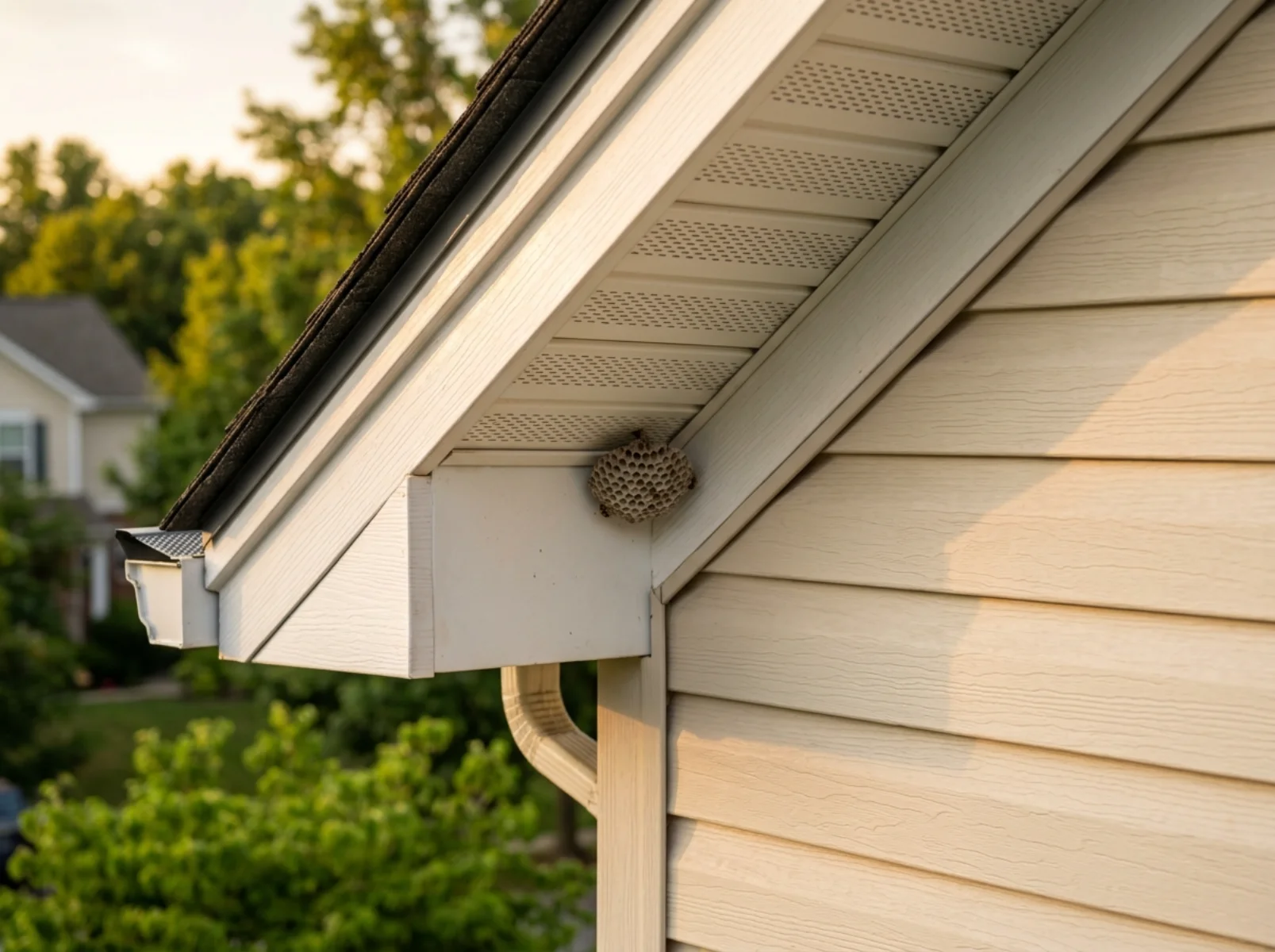
Asian tiger mosquitoes peak in the shaded ravines, smokybrown roaches out of leaf litter at night, wasps under deep eaves.
Fall · Sep–Nov
Yellow jacket ground nests at their most aggressive, Joro webs across the yards, and rodents in from the river park woods.
Winter · Dec–Feb
Squirrels and mice settled in attics and crawl spaces, and termites feeding on where the clay holds moisture below frost.
Coverage
Areas We Cover in Roswell
Roswell Historic District & the Square
1830s–40s antebellum houses and mill cottages on shallow foundations — termites in the sills, carpenter ants, and mice through original gaps.
Vickery Creek & the mill ruins
Steep, shaded ravine that never dries out. Smokybrown roaches from the leaf litter and the worst mosquito pressure in the city.
Chattahoochee river park edge
Hundreds of protected acres of hardwood against the back fence — squirrels, flying squirrels, roof rats and heavy Joro spider load.
Martins Landing & the 1980s subdivisions
Crawl space and basement homes under mature canopy. Damp clay draws termites, and limbs over the roof let squirrels reach the soffit.
Holcomb Bridge corridor
Denser apartment and rental stock where German roaches and bed bugs travel between units rather than staying in one address.
Roswell sits about 25 minutes north of downtown Atlanta on the Chattahoochee, built around an 1830s mill village that is still standing.
See the whole state on our Georgia pest control page, the metro hub in Atlanta, or the nearby towns we also cover: Marietta, Alpharetta, Lawrenceville, Decatur.
Services
The Pest Problems Roswell Calls About Most
Termite Control
Roswell’s antebellum and mill-village houses sit on shallow foundations over clay that stays damp — the sill plate is where inspectors find it first.
Rodent Control
The protected river park restocks squirrels, flying squirrels and roof rats each autumn, and the tree ordinance keeps limbs on the roofline.
Mosquito Control
Asian tiger mosquitoes thrive in the shaded Vickery Creek ravines and breed in containers, so the fix is a property walk rather than fogging.
Cockroach Control
Smokybrown roaches breed in ravine leaf litter, mulch and gutters and come indoors at night — nothing to do with kitchen cleanliness.
Yellow Jacket Removal
Ground nests in clay banks and under decks turn genuinely aggressive from August, and the steep lots here put people right on top of them.
Spider Control
Joro webs cover Roswell yards from late summer, while black widows and recluse hold in the crawl spaces year-round.
Also available in Roswell: Ant Control · Bed Bug Treatment · Wasp Nest Removal · Flea Control · Fly Control · General Pest Control
Common Questions
Roswell Pest Questions, Answered
My house is from the 1840s. What does a termite inspector actually look at?
Big roaches come in at night from the yard.
We keep the trees because of the ordinance. Can we still stop the squirrels?
Why are mosquitoes so much worse down by the creek?
Our crawl space smells musty and now we have ants.
Speak to an Exterminator in Roswell
Tell us what you’re dealing with and we’ll connect you with an independent, licensed exterminator working in Fulton County. Using PestAlly costs nothing and there is no obligation.
Call (888) 921-7764