
Pest Control in Oak Park, IL
Connect With a Local Pro Who Knows Cook County
Oak Park is a village of old wood. Frank Lloyd Wright built and remodelled dozens of houses here between 1889 and 1913 and the surrounding blocks filled in with Victorians, foursquares and brick two-flats in the same period, so almost nothing is newer than the 1920s. Service alleys run behind every block and the Chicago city line is the eastern boundary. Old timber and alleys set the agenda. PestAlly is a free service connecting Oak Park homeowners with independent, licensed local pest control pros working Cook County.
Call (888) 921-7764Speak to a Local ProWhy Oak Park
Why Oak Park Homes Get Hit Harder Than Most
Nowhere else in the Chicago area has this much original exterior woodwork still in place. Prairie School and Victorian houses here carry deep overhanging eaves, wide wood fascia, exposed rafter tails, wood porch columns and original window frames — and historic district rules mean owners repair rather than replace them. Carpenter ants nest in exactly that kind of aged, occasionally damp timber, and wood-boring beetles turn up in century-old porch framing. Deep unfinished basements below stay cool and damp, which suits camel crickets, centipedes and the odd German roach population.
The alleys supply the rest. Like Evanston and Chicago, Oak Park is built with service alleys holding the garbage carts for every block, and Norway rats live in that corridor permanently — burrowing under garage slabs, sheds and concrete pads rather than nesting in yards. Original clay sewer laterals under century-old houses crack with age, and a broken lateral is how rats get into a sound brick basement. The east side toward Austin has denser two-flat and multi-unit stock, where German roaches and bed bugs move between apartments instead.

Seasonal Activity
What’s Active in Oak Park, and When
Spring · Mar–May
Rat burrows reopen as the ground thaws, carpenter ant swarmers appear indoors from damp porch and eave timber.
Summer · Jun–Aug
Culex mosquitoes breed in alley catch basins — the Cook County West Nile window. Wasps build in deep Prairie School eaves.
Fall · Sep–Nov
Boxelder bugs and lady beetles mass on sunny walls, mice move indoors, and squirrels take up residence in attics.
Winter · Dec–Feb
Mice in wall voids, rats into garages and basements, and carpenter ants continuing quietly in any timber holding damp.
Coverage
Areas We Cover in Oak Park
The Frank Lloyd Wright Historic District
Original 1890s–1910s exterior woodwork kept in repair rather than replaced — carpenter ants and wood-boring beetles in aged timber.
The alley network, village-wide
Garbage carts and garage slabs behind every block. Norway rats burrow here and forage outward; this is where control has to start.
South Oak Park & the Harrison Street side
Older frame and brick stock with deep basements and original clay sewer laterals — rats entering through cracked lines.
The Austin border & east side
Denser two-flats and multi-unit buildings where German roaches and bed bugs travel shared walls, chases and outlets.
Ridgeland & the tree-lined blocks
A heavy mature canopy reaching over rooflines, giving squirrels and raccoons direct access to soffits and chimneys.
Oak Park sits immediately west of Chicago on the city line, holding the largest concentration of Frank Lloyd Wright and Prairie School houses anywhere.
See the whole state on our Illinois pest control page, the metro hub in Chicago, or the nearby towns we also cover: Evanston, Skokie, Des Plaines, Cicero.
Services
The Pest Problems Oak Park Calls About Most
Rodent Control
Norway rats live in the alley corridor and burrow under garage slabs — exclusion at grade and burrow work beats indoor trapping every time.
Ant Control
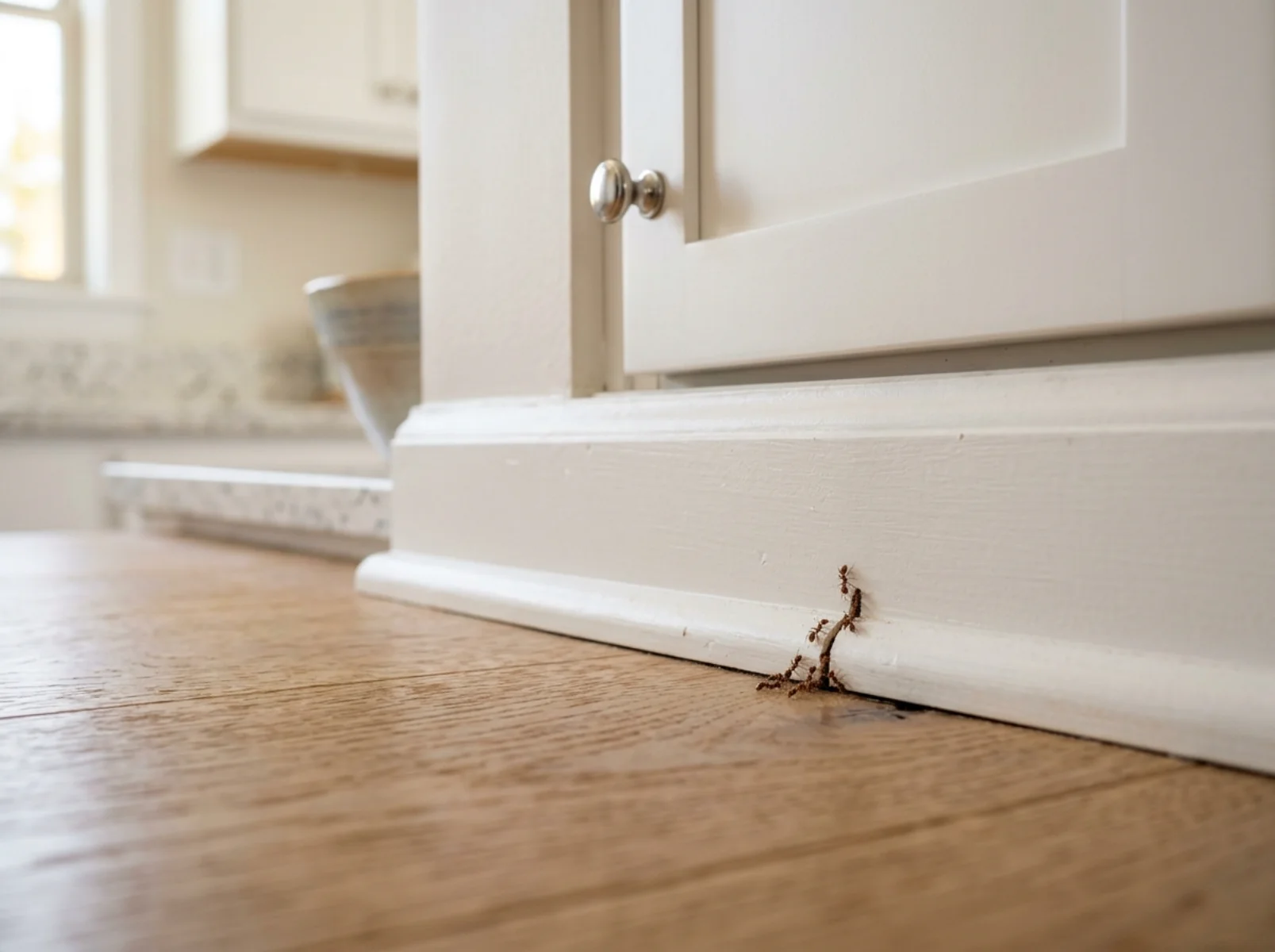
Carpenter ants nest in the aged, damp exterior timber Oak Park is full of — the moisture behind it has to be fixed alongside the treatment.
Cockroach Control
German roaches move between units in the two-flat and multi-unit stock, so a single treated apartment is reseeded by its neighbours.
Mosquito Control
Alley catch basins are the main Culex breeding site in Cook County, and Culex carries West Nile — the source is usually just past the fence.
General Pest Control
Boxelder bugs, Asian lady beetles and cluster flies cover warm south walls each October and settle into wall voids for the winter.
Bed Bug Treatment
Dense rental stock near the city line keeps them circulating, and Cook County rules require adjacent units to be inspected as well.
Also available in Oak Park: Spider Control · Wasp Nest Removal · Yellow Jacket Removal · Flea Control · Fly Control · Termite Control
Common Questions
Oak Park Pest Questions, Answered
Large black ants indoors in spring — are those termites?
Our house is in the historic district. Does that limit treatment?
Rats in the basement of a solid brick house.
Why does everyone say the rats are the neighbours’ problem?
Ladybugs all over the south wall in October.
Speak to an Exterminator in Oak Park
Tell us what you’re dealing with and we’ll connect you with an independent, licensed exterminator working in Cook County. Using PestAlly costs nothing and there is no obligation.
Call (888) 921-7764