
Pest Control in Clear Spring, MD
Connect With a Local Pro Who Knows Washington County
Clear Spring takes its name from the limestone springs that come up out of the valley floor, and that geology is not a footnote — the Hagerstown Valley is karst country, where limestone bedrock is riddled with solution channels, sinkholes and caves. Fairview Mountain rises to the north and farm ground surrounds the rest. Building on karst creates pest routes that ordinary soil does not. PestAlly is a free service connecting Clear Spring homeowners with independent, licensed local pest control pros working Washington County.
Call (888) 921-7764Speak to a Local ProWhy Clear Spring
Why Clear Spring Homes Get Hit Harder Than Most
Karst limestone behaves differently under a house. Instead of draining evenly, water moves through solution channels and fissures, which means basements here can take water suddenly from a direction that makes no sense, and sinkholes and voids can open close to foundations. Those same fissures and voids give rodents and snakes ready-made routes right up to and under a structure, and they hold cool, damp air that keeps cellars humid year-round — which is why camel crickets, cave crickets and spiders are heavier here than the surrounding farm country.
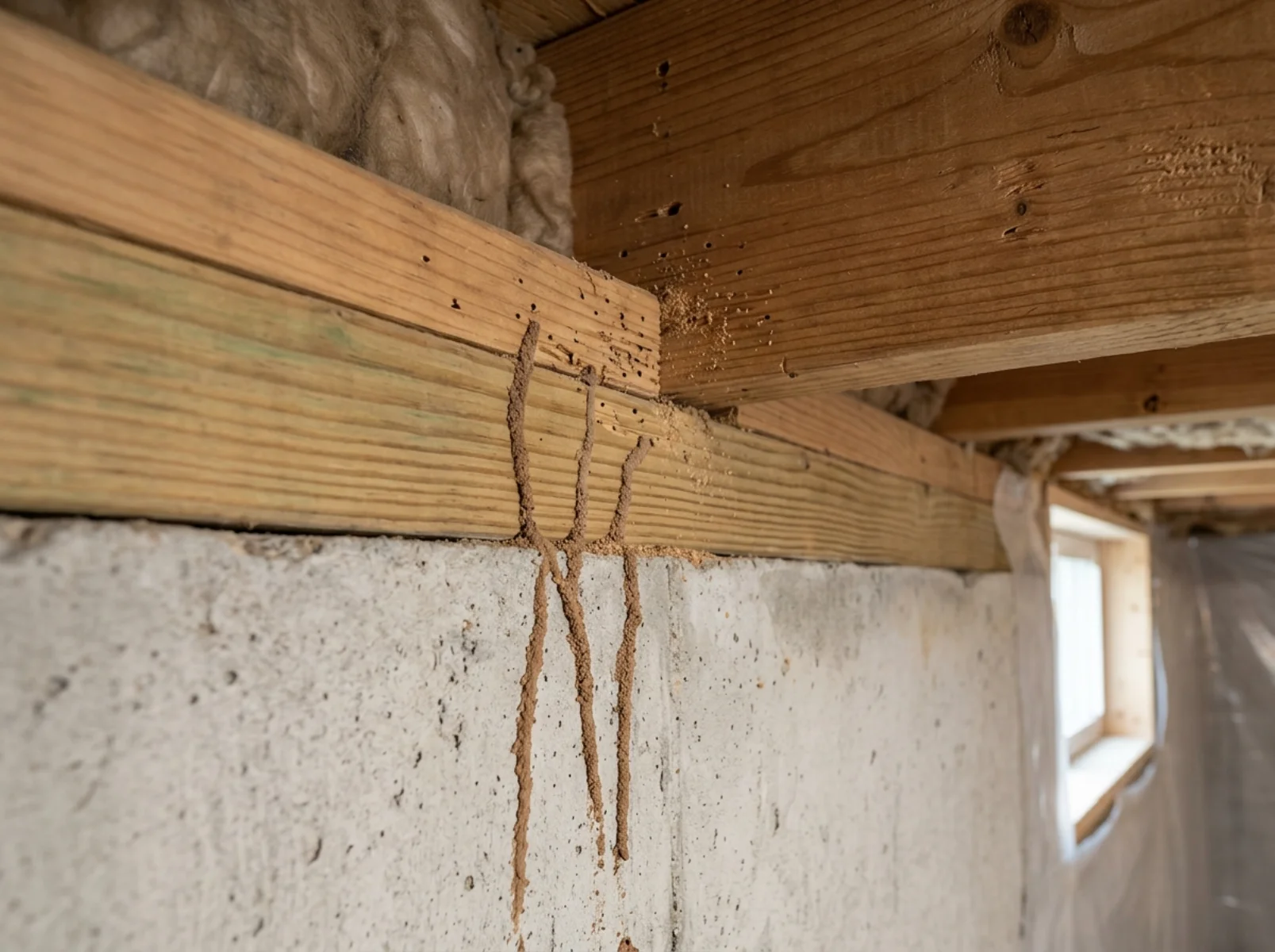
Above ground it is farm and mountain. Crop and hay ground surrounds the town and is cut through late summer and autumn, pushing field mice and voles toward buildings, while Fairview Mountain and the wooded ridges hold blacklegged ticks in leaf litter — Maryland has among the highest Lyme rates in the country. The old National Pike buildings are 1800s stone and log on rubble cellars with wood close to soil, and Maryland carries moderate to heavy eastern subterranean termite pressure with a heavy October stink bug flight on top.

Seasonal Activity
What’s Active in Clear Spring, and When
Spring · Mar–May
Snowmelt and rain moving fast through karst channels into cellars, termite swarms after warm rain, and stink bugs emerging.
Summer · Jun–Aug
Blacklegged ticks in the ridge leaf litter, mosquitoes in shaded low ground, and cave crickets heavy in damp cellars.
Fall · Sep–Nov
Harvest pushes field mice and voles toward buildings, and the heavy Maryland stink bug flight takes the sunny walls.
Winter · Dec–Feb
Rodents in stone cellars and wall voids, and stink bugs waking at windows on mild days.
Coverage
Areas We Cover in Clear Spring
The karst ground & springs
Limestone solution channels and voids giving rodents and snakes direct routes under buildings, and keeping cellars permanently damp.
Old Main Street & the National Pike
1800s stone and log buildings on rubble cellars with original wood close to soil — termites and powderpost beetles.
Fairview Mountain & the wooded ridges
Forest and leaf litter holding blacklegged ticks, and restocking mice, squirrels and raccoons each autumn.
The surrounding crop and hay ground
Cut through late summer and autumn, sending field mice and voles toward the nearest heated buildings.
The farmsteads & outbuildings
Barns, sheds and grain storage holding rodents and stored-product insects year-round and feeding them into houses.
Clear Spring sits about 15 minutes west of Hagerstown on the National Pike, named for the limestone springs that rise in the Hagerstown Valley floor.
See the whole state on our Maryland pest control page, the metro hub in Hagerstown, or the nearby towns we also cover: Boonsboro, Smithsburg, Funkstown, Williamsport.
Services
The Pest Problems Clear Spring Calls About Most
Rodent Control
Karst fissures and voids give rodents ready-made routes under buildings, and harvest adds a hard push off the fields each autumn.
Spider Control
Limestone cellars stay cool and damp year-round, which is why cave crickets and spiders are heavier here than on ordinary farm ground.
Termite Control
1800s rubble cellars put original sills close to soil, and karst moisture keeps that timber damp longer than it should be.
General Pest Control
The heavy Maryland stink bug flight takes the sunny walls each October, and powderpost beetles work seasoned old hardwood.
Mosquito Control
Spring-fed low ground and shaded pockets hold water, and the Asian tiger mosquito breeds in yard containers and bites by day.
Ant Control
Carpenter ants nest in damp cellar and sill framing kept wet by karst drainage, so the moisture has to be dealt with too.
Also available in Clear Spring: Wasp Nest Removal · Yellow Jacket Removal · Bed Bug Treatment · Cockroach Control · Flea Control · Fly Control
Common Questions
Clear Spring Pest Questions, Answered
Our cellar floods from a direction that makes no sense.
Crickets with long legs everywhere in the cellar.
Snakes near the foundation more than seems normal.
Do we need termite work on an 1800s stone building?
Mice every autumn no matter what we do.
Speak to an Exterminator in Clear Spring
Tell us what you’re dealing with and we’ll connect you with an independent, licensed exterminator working in Washington County. Using PestAlly costs nothing and there is no obligation.
Call (888) 921-7764