
Pest Control in White City, OR
Connect With a Local Pro Who Knows Jackson County
White City exists because of Camp White, a Second World War army training centre, and the industrial estate that took over the site afterwards. It is unincorporated, with lumber mills, manufacturing and heavy industry sitting directly alongside housing, and irrigated agricultural ground and the Rogue Valley’s dry range country beyond that. Industry next to homes is the defining local condition. PestAlly is a free service connecting White City homeowners with independent, licensed local pest control pros working Jackson County.
Call (888) 921-7764Speak to a Local ProWhy White City
Why White City Homes Get Hit Harder Than Most
Industrial ground is a rodent reservoir residential streets cannot match. Mill yards, lumber stacks, scrap and pallet storage, and long-parked equipment give rats and mice undisturbed harbourage and continuous cover, and they range outward from it into nearby housing. The same stacked timber and material shelters western black widows, which do well in exactly those dry, undisturbed, sheltered spaces.
Dry heat and irrigation account for the rest. Rogue Valley summers are long and dry, so pests work toward whatever water exists — irrigation ditches, tailwater and, indoors, sinks, pet bowls and condensate lines — and canals hold the standing water that keeps mosquitoes going through months without rain. Yellowjackets nest readily in dry banks and stacked material, peaking hard from August.

Seasonal Activity
What’s Active in White City, and When
Spring · Mar–May
Rodent activity rising in mill and scrap yards, ants moving indoors, and irrigation starting.
Summer · Jun–Aug
Long dry heat pushing pests toward water, and yellowjackets nesting in banks and stacked material.
Fall · Sep–Nov
Peak yellowjacket aggression around bins and waste, and rodents moving into buildings as nights cool.
Winter · Dec–Feb
Rats holding steady on industrial waste, and black widows in stacked timber and stored equipment.
Coverage
Areas We Cover in White City
The mill and industrial yards
Lumber stacks, scrap and pallet storage giving rats and mice undisturbed harbourage year-round.
The stacked timber and stored equipment
Dry, sheltered and undisturbed, which is exactly what western black widows want.
The irrigation ditches and canals
Standing water through months without rain, and the real source of local mosquitoes.
The housing alongside the industry
Streets that take the outward pressure from a rodent source nobody living there controls.
The dry range and brush margins
Open country beyond the irrigated ground, holding ticks and sending rodents in as it dries.
White City sits north of Medford in Jackson County, an unincorporated industrial community built on the site of a Second World War army training camp, with mills and manufacturing alongside housing.
See the whole state on our Oregon pest control page, the metro hub in Medford, or the nearby towns we also cover: Central Point, Ashland, Eagle Point, Jacksonville.
Services
The Pest Problems White City Calls About Most
Rodent Control
Mill and scrap yards sustain rats at a level housing never would, and they forage outward.
Spider Control
Western black widows favour stacked timber, pallets and stored equipment left undisturbed.
Yellow Jacket Removal
Dry banks and stacked material give easy nesting, and colonies peak hard in late summer.
Ant Control
Through a long dry summer ants head for sinks, pet bowls and condensate rather than food.
Mosquito Control
Irrigation ditches and canals carry the only standing water for months at a time.
General Pest Control
Dry brush margins hold ticks, and industrial ground keeps a steady flow of pests moving outward.
Also available in White City: Fly Control · Wasp Nest Removal · Cockroach Control · Termite Control · Bed Bug Treatment · Flea Control
Common Questions
White City Pest Questions, Answered
Rats coming from the industrial side.
Black widows in stacked timber and pallets.
Why do pests come indoors in summer here?
Mosquitoes with no rain for months.
Do we need termite protection here?
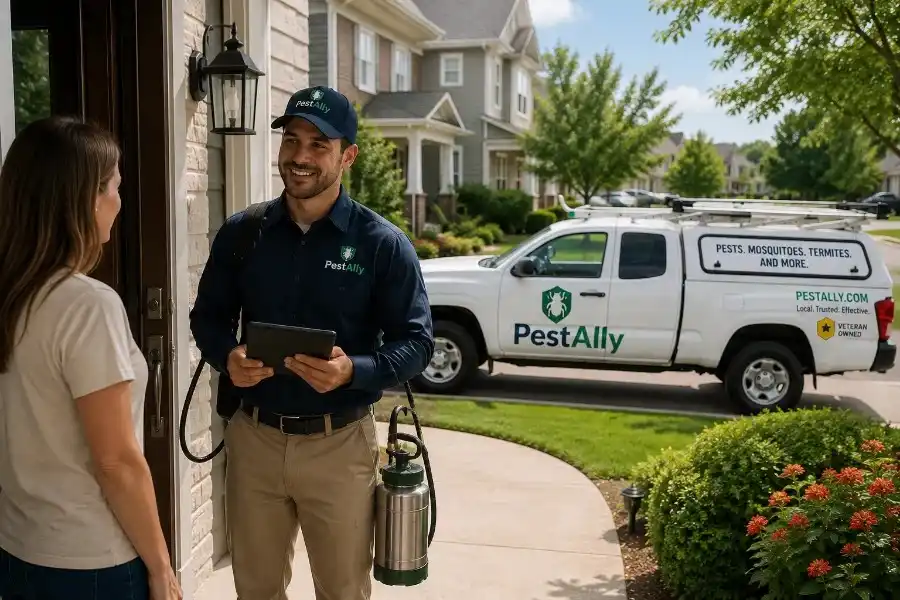
Speak to an Exterminator in White City
Tell us on the call what you’re dealing with and we’ll connect you with an independent, licensed exterminator working in Jackson County. Using PestAlly costs nothing and there is no obligation.
Call (888) 921-7764