
Pest Control in Charlotte, NC
Connect With a Local Pro
Who Knows the Piedmont
PestAlly connects Charlotte metro homeowners with independent, local
pest control pros who understand red-clay termite pressure, fire ant
mounds and a nine-month insect season.
Red Clay Holds the Moisture Termites Need All Year
Charlotte sits in the Piedmont, and the red clay under the whole region is what makes termites the defining local problem. Clay retains moisture exceptionally well, which gives eastern subterranean termite colonies the consistent soil moisture they need year-round — and across the southern half of the country, most suburban yards hold at least one colony and often several. Eastern subterranean termites are North Carolina’s most destructive pest, and they can take apart a home’s structural wood before anything is visible. Around that, hot humid Piedmont summers drive heavy pest activity from March right through November: fire ant mounds across every lawn, mosquitoes carrying real West Nile and encephalitis risk, German cockroaches, and both brown recluse and black widow spiders. PestAlly connects Charlotte homeowners with independent, local pros who start with the clay.
Get Connected With a Local Pro →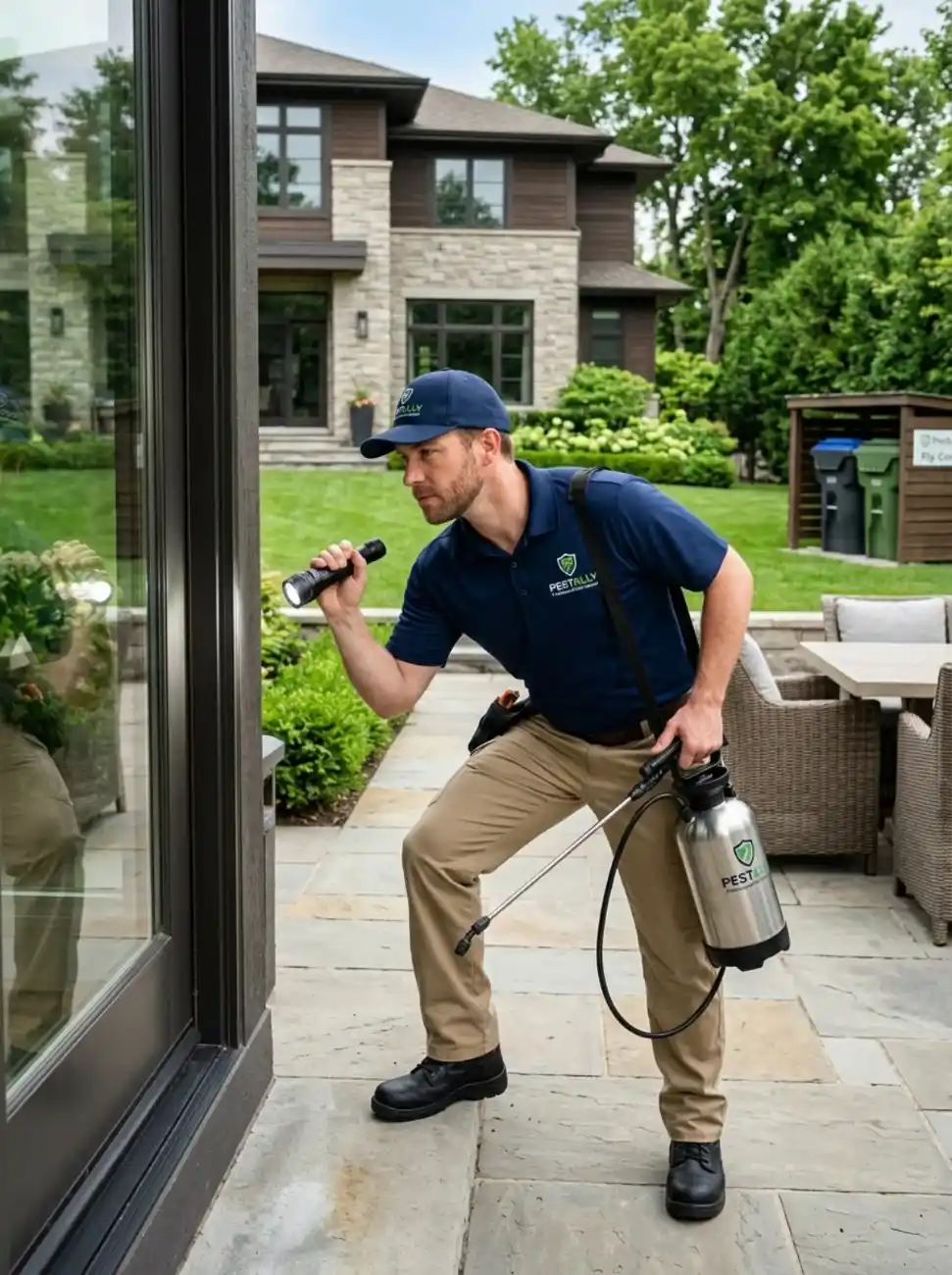
At a Glance
Service Area
Charlotte, NC and surrounding Mecklenburg County communities
Most Common Pests
Eastern subterranean termites, fire ants, mosquitoes, German cockroaches, brown recluse and black widow spiders, carpenter bees, rodents
Peak Pest Season
Heavy activity March–November; termite pressure runs all year
Response Time
Same-day and next-day appointments typically available
Charlotte’s Year-Round Pest Calendar
Hot humid Piedmont summers give Charlotte a nine-month active season rather than a short one.
Winter
Dec – FebRodents settled in attics and crawl spaces; termites feeding in the clay
Mild winter keeps ants and roaches ticking over at low level
Active season begins — ant and roach activity picks up sharply
Spring
Mar – MayEastern subterranean termite swarms begin across the metro
Peak swarm season; fire ant mounds expand across lawns
Mosquito season begins in earnest; carpenter bees work trim
Summer
Jun – AugPeak mosquito season, with West Nile and encephalitis risk
Heaviest humidity of the year; fire ants at their peak
Storm rain floods harborage and rebuilds fire ant mounds
Fall
Sep – NovActivity still high; rodents begin moving toward buildings
Active season ends; rodent entry attempts peak
Insects slow above ground, termites continue in the clay
One exception: Termite risk doesn’t move with this calendar at all. Charlotte’s red clay retains moisture exceptionally well, so eastern subterranean colonies have the conditions they need in every month of the year. The swarm months below are simply when termites become visible — the colony feeding on the structure was there long before anyone saw a swarmer.
Services We Cover in Charlotte
A Dilworth bungalow, a Myers Park older home or a newer build in the suburbs — here’s what the local pros in our network handle.
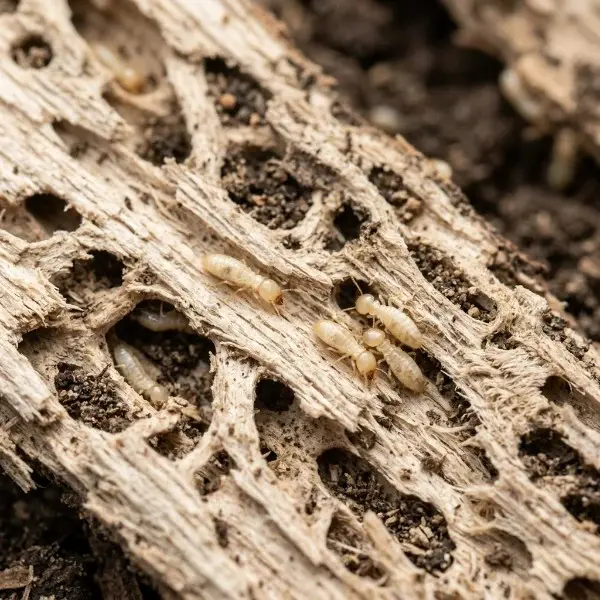
Termites
Eastern subterranean termites are North Carolina’s most destructive pest, and they can take apart a home’s structural wood before anything is visible.

Ants
Fire ants are the defining Charlotte ant problem, with signature mounds across lawns, alongside odorous house and carpenter ants indoors.

Roaches
German cockroaches are the main Charlotte roach concern, breeding indoors and rebounding fast without follow-up service.

Bed Bugs
Steady travel, rental turnover and a fast-growing metro keep bed bug cases active across Charlotte all year.

Fleas
Humid Piedmont yards and urban wildlife keep flea populations going through most of the nine-month active season.

Spiders
Both brown recluse and black widow spiders are present here, using garages, sheds, crawl spaces and woodpiles.

Yellow Jackets
Ground and void nests build fast through the humid summer and turn defensive quickly around decks and play areas.

Wasps
Paper wasps and carpenter bees work eaves, decks, porches and untreated trim right through the long warm season.

Mosquitoes
Charlotte mosquitoes carry real West Nile virus and encephalitis risk, and they peak through the humid Piedmont summer.

Flies
Drain and filth flies trace to a specific source — usually a drain, bin area or grease line — rather than needing the room treated.

General Insects
Silverfish, millipedes and camel crickets thrive in damp Charlotte crawl spaces, plus eastern subterranean termite inspection referrals.

General Rodents
Rodents work crawl spaces, attics and drainage across the metro, with pressure rising as the active season ends.
Trusted by Homeowners Across the Country
Licensed & Insured
Every pro in the network carries current licensing and insurance.
Same-Day Service
Same-day and next-day appointments typically available.
100% Satisfaction Guarantee
If the pest comes back, your pro comes back — that is the standard.
Locally Trusted Experts
Independent pros who actually live and work in your area.
No Obligation to Book
Talk to a pro first. Nothing is committed until you say so.
Vetted Pro Network
We screen every contractor before they join the PestAlly network.
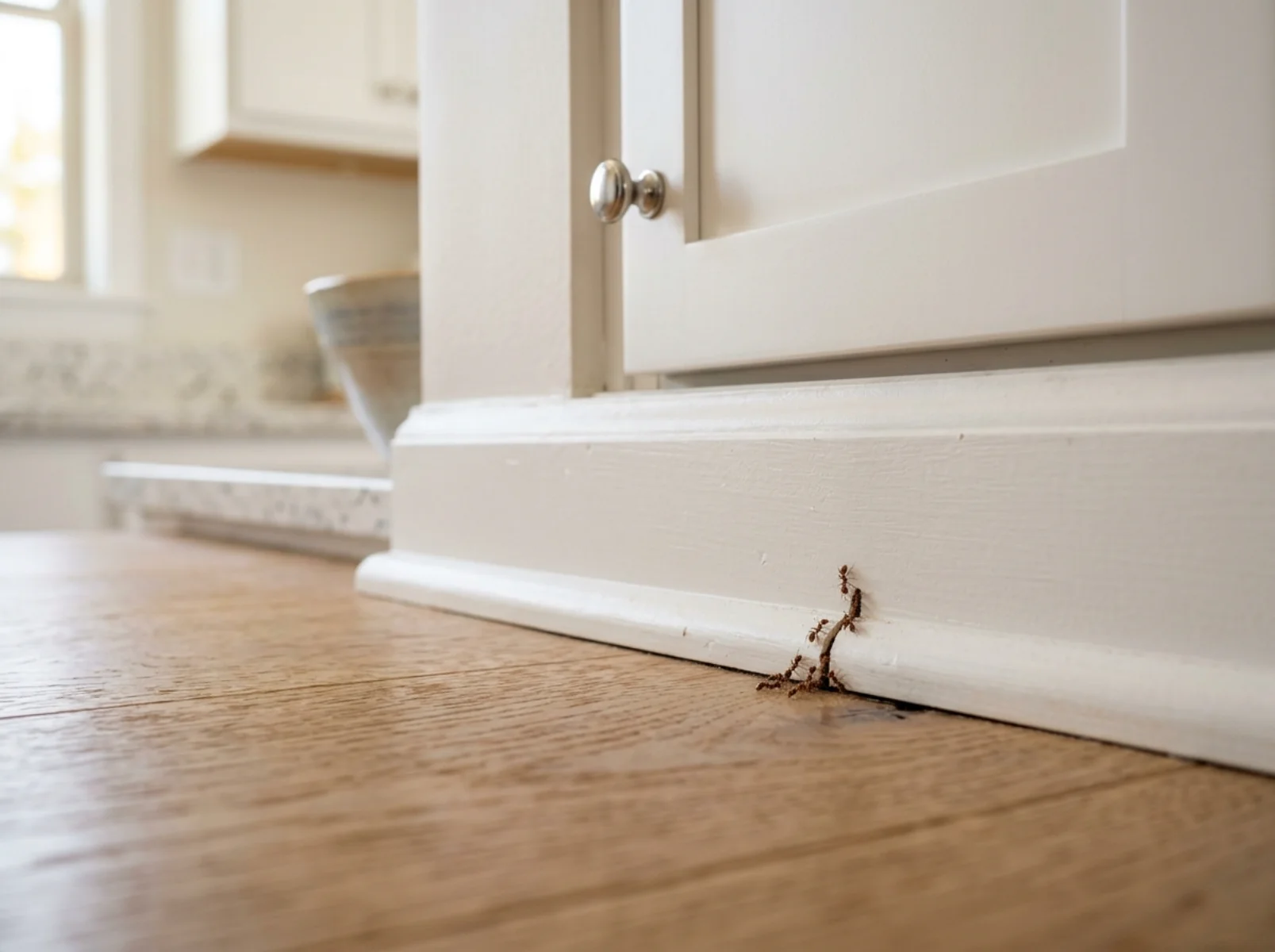
Most Common Pest Entry Points in Charlotte Homes
Red clay retains moisture exceptionally well and holds it against the foundation, and eastern subterranean termites use foundation cracks and pipe penetrations to build mud tubes into the structure.
Many Charlotte homes sit over a crawl space, and one unscreened vent or warped access door hands the whole sub-floor to rodents, camel crickets and spiders.
Fire ant mounds in the lawn are the visible edge of a colony that will keep relocating unless it’s baited rather than sprayed.
Soffit, fascia and roofline gaps are where rodents actually enter, and it’s above eye level so it’s usually found late.
Mulch and firewood stacked against the house holds moisture and harbours roaches and spiders directly against the wall.
Why Charlotte Homes Deal With These Pests Specifically
Two Piedmont realities change how treatment has to work here — one below ground, one about the length of the season.
Red clay gives termite colonies year-round soil moisture
Eastern subterranean termites are North Carolina’s most destructive pest, and Charlotte’s red clay is why. Clay retains moisture exceptionally well, giving colonies the consistent soil moisture they need year-round — and most suburban yards in this part of the country hold at least one colony.
Treating termite protection as optional in Charlotte. In this market it functions more like insurance on the structure — the question is which type of protection, not whether the risk is real.
A nine-month season stacks several problems together
Hot, humid Piedmont summers drive heavy pest activity from March right through November — nine months of it. Fire ants peak in that window, and so do mosquitoes, which here carry real West Nile virus and encephalitis risk rather than being only a nuisance.
Treating a fire ant mound directly with a general product. It usually just splits the colony and relocates it a few feet — baiting is what reaches the queen and actually ends it.

What to Expect From a Local Pro’s Visit
Every Charlotte property is different, but the sequence stays the same — your local pro starts at the foundation and the lawn, because in the Piedmont that’s where it begins.
Inspect
Full inspection: foundation and pipe penetrations, crawl space, lawn and mounds, soffits and roofline, mulch and firewood placement.
→Identify
Confirming the species, since termite work, fire ant baiting and German roach control are three completely different jobs.
→Treat
Matched to the finding: termite baiting or liquid barrier, fire ant baiting, targeted roach work, or mosquito source reduction.
→Seal
Sealing foundation cracks and pipe penetrations, screening crawl space vents, closing roofline gaps and pulling mulch back off the wall.
→Follow Up
Ongoing service through the March-to-November season, with termite monitoring running independently of the general pest schedule.
→How PestAlly Works in Charlotte
PestAlly doesn’t perform the pest control ourselves — we connect you with vetted, independent local professionals who do.
Get Started →Tell us what’s going on
The pest, and roughly where in the Charlotte metro you’re located.
We match you with an independent, local pro
Someone who services your specific neighborhood.
You deal directly with that contractor
Pricing, scheduling, and the work itself are between you and them.
Frequently Asked Questions
Is termite risk really that high in Charlotte?⌄
Yes. Eastern subterranean termites are North Carolina’s most destructive pest, and Charlotte’s red clay retains moisture exceptionally well — which is exactly the condition their colonies need year-round. Across the southern half of the country most suburban yards hold at least one colony, and often more.
Why do fire ant mounds keep coming back?⌄
Because the colony relocates rather than dies. Treating a mound directly with a general product often splits it, and heavy Piedmont rain floods mounds and moves them anyway. Baiting is what reaches the queen and ends the colony properly.
Are Charlotte mosquitoes actually a health risk?⌄
They’re a genuine health concern here, not only a nuisance. Charlotte mosquitoes can carry West Nile virus and encephalitis, and both are transmissible through a single bite. Most of the mosquitoes biting on a property still bred within a few dozen feet of it, so clearing containers and gutters matters.
Do I need pest control through a Charlotte winter?⌄
Largely yes. Heavy pest activity in Charlotte runs March through November, and even in the quiet months termites keep feeding below ground in moist clay and German cockroaches carry on inside heated buildings.
Does PestAlly serve my specific Charlotte neighborhood?⌄
PestAlly connects homeowners throughout Charlotte and the surrounding metro, including Dilworth, NoDa, Myers Park, Plaza Midwood, Ballantyne and University City, plus Gastonia, Cary, Apex, Concord and Matthews. ZIP codes we cover in Charlotte include 28203, 28205, 28209, 28211, 28215, 28226, 28269 and 28277.
Get Connected With a Local Charlotte Pest Control Pro
Whether it’s a swarm on the deck in spring, fire ant mounds across the lawn, or mosquitoes that make the back yard unusable, PestAlly connects you with an independent, local pro who knows what Piedmont homes are actually up against.
Looking beyond Charlotte? See every North Carolina city we cover →