
Pest Control in North Carolina — Find a Local Pro in Your City
From the Cape Fear coast to the Blue Ridge, North Carolina packs three climates and three pest lists into one state. PestAlly connects you with a pro who works yours.
☎ Call (888) 921-7764Jump to your city ↓North Carolina Changes Pest Lists Three Times From Coast to Mountains
Few states shift this much over a single drive. On the coast, New Hanover County sits in Termite Infestation Probability Zone 1 and is one of the few North Carolina markets where Formosan subterranean termites turn up alongside the native eastern species — larger colonies, faster damage, and capable of nesting inside a wall with no soil contact. In the Piedmont it becomes red clay, subterranean termites and fire ants. By the time you reach Asheville at two thousand feet the termite pressure has dropped away and the calls are about yellow jacket nests and October lady beetles instead.
The one constant is crawl space moisture. Most housing across the state sits over one, humidity keeps them damp, and camel crickets, silverfish and wood-boring beetles are usually telling you about that rather than about themselves. PestAlly is a referral network, not a single company — you get routed to a pro who works your market.
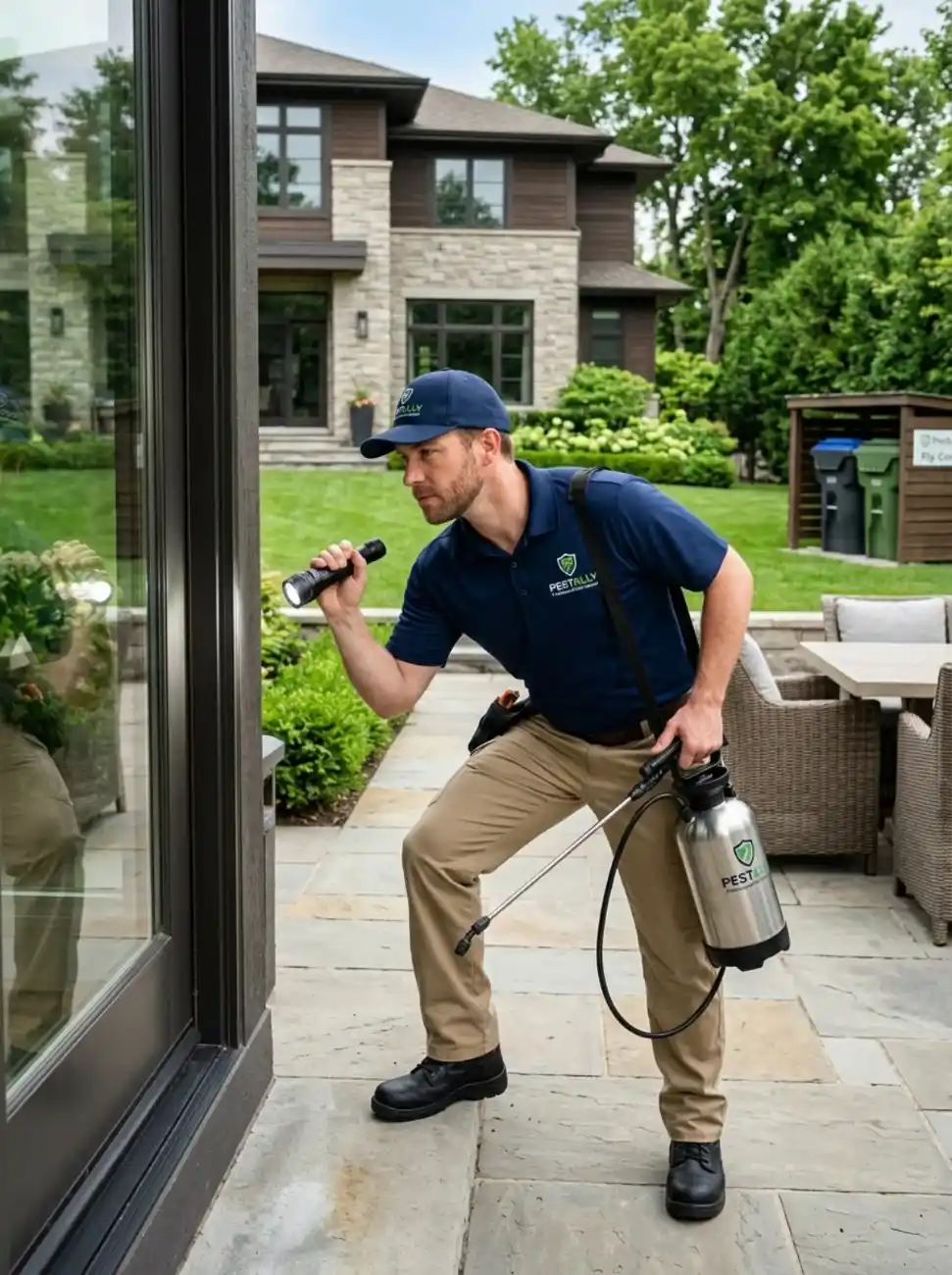
Three North Carolinas, Three Different Pest Problems
Coastal Plain, Piedmont and mountains — and a plan written for one is wrong for the others.
Coastal & Cape Fear
Wilmington, Greenville, Rocky MountSandy soil, high humidity and crawl spaces that flood in storm season. The heaviest termite pressure in the state sits here.
- Formosan and eastern subterranean termites
- Palmetto bugs through weep holes
- Camel crickets and wood-boring beetles
- Roof rats in attics and canopy
Piedmont
Charlotte, Raleigh, Greensboro, FayettevilleRed clay that holds moisture against foundations, dense suburban growth and a long humid season.
- Eastern subterranean termites
- Fire ants across open and graded yards
- American roaches from mulch beds
- Mosquitoes after summer storms
Mountains
Asheville & the Blue RidgeTwo thousand feet up with a genuine winter. No Formosans, minimal fire ants, and a completely different call list.
- Yellow jacket nests in banks and walls
- Asian lady beetles and cluster flies
- Mice from the treeline in autumn
- Carpenter ants in damp mountain wood
North Carolina Cities We Cover
Pick your city for local pest problems, seasonal timing and the neighbourhoods each pro serves. Not listed? Call and we will tell you straight whether we have coverage near you.
Piedmont
Coastal Plain
Services Available Across North Carolina
Every service below is offered by PestAlly-connected pros across North Carolina. Each page explains what the treatment involves, what it typically costs and what to expect afterwards.
The North Carolina Pest Calendar
The coast runs almost twelve months; the mountains run about seven.
- Subterranean termite swarms statewide
- Formosan swarms follow on the coast
- Fire ant mounds spread in the Piedmont
- Carpenter ant swarmers appear in the mountains
- Peak humidity and roach pressure
- Mosquitoes heaviest on the Coastal Plain
- Ticks peak in wooded mountain counties
- Crawl space humidity at its highest
- Storm rain floods coastal crawl spaces
- Yellow jacket nests turn defensive
- Lady beetles mass on mountain walls
- Rodents move toward buildings statewide
- Coastal roaches and rodents stay active
- Mountain activity is entirely indoors
- Termites keep feeding below ground
- Quietest window to schedule treatment
North Carolina Pest Control Questions
The questions North Carolina homeowners actually ask — answered without the sales pitch.
Are Formosan termites really in North Carolina?
Yes, on the coast. Wilmington and the Cape Fear area are among the few North Carolina markets where Formosan subterranean termites turn up alongside the native eastern species. Their colonies are larger, they damage wood faster, and they can nest above ground in a wall void where a soil treatment never reaches them.
Why do camel crickets and silverfish keep coming back?
Because they are symptoms rather than the problem. Both are telling you the crawl space is running above about sixty percent humidity. Correct the vapour barrier, the vents and the drainage, and the insects leave with the moisture.
Is termite risk the same across the state?
No, and it is worth knowing where you sit. The coast is in the highest federal risk band; the Piedmont is high but lower; and by the time you reach Asheville the pressure has dropped substantially. Paying for a coastal-level termite plan on a mountain property is usually overkill.
When are mosquitoes worst in North Carolina?
April through October on the Coastal Plain, shorter and lighter in the mountains. On the coast a barrier spray holds three to four weeks and less after storm rain, so a seasonal programme works better than a one-off treatment.
Do I need pest control through a North Carolina winter?
On the coast and in the Piedmont, yes — roaches, rodents and termites all stay active. In the mountains the priority shifts to autumn exclusion before mice and lady beetles come in.
Get Connected With a North Carolina Pest Pro
One call, no runaround. Tell us the city and what you are seeing, and we will route you to an independent local pro who works that market.