
Pest Control in Weaverville, NC
Connect With a Local Pro Who Knows Buncombe County
Weaverville sits in the Reems Creek valley north of Asheville, a small mountain town with a genuinely old centre, farm and pasture on the valley floor, and newer housing climbing the wooded slopes above it. There is more working land here than in the Asheville suburbs and more forest boundary than anywhere in the eastern half of the state. Mountain damp, forest edge and old farm buildings together. PestAlly is a free service connecting Weaverville homeowners with independent, licensed local pest control pros working Buncombe County.
Call (888) 921-7764Speak to a Local ProWhy Weaverville
Why Weaverville Homes Get Hit Harder Than Most
Old farm structures and forest boundary drive the rodent side. Barns, springhouses, sheds and stone-foundation outbuildings hold stored feed and undisturbed clutter, which is the best harbourage on any property here, and the surrounding forest supplies a continuous population rather than a seasonal one. Because outbuildings sit close to houses on these properties, a population established in a barn in October is in the house by January unless the entries have been dealt with first.
Damp and elevation shape the insect year. Cool wet mountain conditions and heavy shade keep exterior timber and crawl spaces moist, which is what carpenter ants — the main wood-destroying insect up here — and camel crickets need, while termite pressure is lighter than in the east. In autumn, cluster flies, Asian lady beetles and stink bugs mass on sunlit walls and overwinter in wall voids, and the forest edges hold ticks in a state with very high spotted fever rates.

Seasonal Activity
What’s Active in Weaverville, and When
Spring · Mar–May
Carpenter ant swarmers indoors, overwintering insects waking in walls, and wildlife raising young in outbuildings.
Summer · Jun–Aug
Ticks in the forest and pasture edges, yellow jackets building underground, and flies around stock.
Fall · Sep–Nov
Cluster flies and lady beetles massing on walls, and rodents moving from pasture and forest into buildings.
Winter · Dec–Feb
Rodents established in barns, feed stores, attics and crawl spaces through the coldest months.
Coverage
Areas We Cover in Weaverville
The old farmsteads & outbuildings
Stored feed and undisturbed clutter giving rodents the best harbourage on the whole property.
The wooded hillside housing
Forest boundary bringing mice, squirrels and raccoons to the building line continuously.
The Reems Creek valley floor
Damp low ground and creek corridor keeping timber moist and holding mosquitoes in summer.
The sunlit south-facing walls
Where cluster flies, lady beetles and stink bugs mass in autumn before overwintering in wall voids.
The old town centre
Older timber and stone-foundation buildings with voids that rodents and camel crickets use freely.
Weaverville sits north of Asheville in Buncombe County in the Reems Creek valley, a small mountain town of older farmsteads and newer hillside housing under heavy tree cover.
See the whole state on our North Carolina pest control page, the metro hub in Asheville, or the nearby towns we also cover: Arden, Black Mountain, Candler, Fletcher.
Services
The Pest Problems Weaverville Calls About Most
Rodent Control
Barns and feed stores give rodents harbourage that indoor trapping alone will never offset.
Ant Control
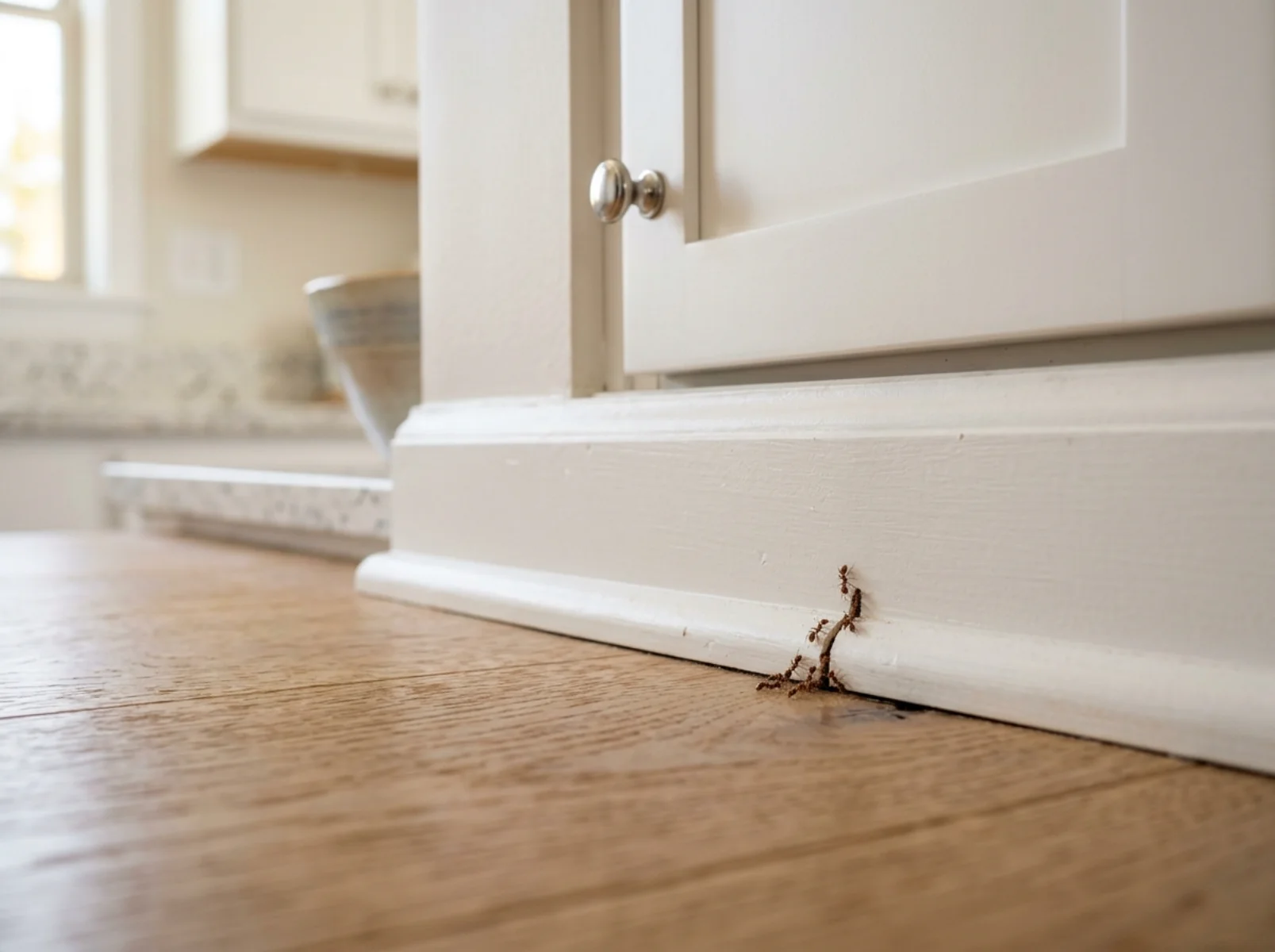
Carpenter ants are the mountain wood pest, and damp shaded timber is what draws them in.
General Pest Control
Autumn invaders mass on sunlit walls, and forest and pasture edges hold ticks through the season.
Yellow Jacket Removal
Sloping pasture and wooded ground suit underground nests, largest and most defensive in autumn.
Fly Control
Stock, manure and feed handling on valley farms sustain house and stable flies right through summer.
Wasp Nest Removal
Barns, porches and deep eaves give paper wasps sheltered nesting from late spring onward.
Also available in Weaverville: Spider Control · Cockroach Control · Mosquito Control · Termite Control · Flea Control · Bed Bug Treatment
Common Questions
Weaverville Pest Questions, Answered
Rodents in the barn every winter no matter what.
They move from the barn into the house.
Large black ants inside in spring.
Cluster flies on the walls every October.
Ticks from the pasture and forest edges.
Speak to an Exterminator in Weaverville
Tell us what you’re dealing with and we’ll connect you with an independent, licensed exterminator working in Buncombe County. Using PestAlly costs nothing and there is no obligation.
Call (888) 921-7764