
Pest Control in Fayetteville, NC
Connect With a Local Pro
Who Knows the Sandhills
PestAlly connects Fayetteville and Cumberland County homeowners with independent,
local pest control pros who know spring termite swarms, fire ants near
the pet bowl and bed bugs that move with postings.
In the Sandhills the Pest Year Runs in a Very Clear Order
Fayetteville sits in the Sandhills, and the pest year here has a very clear order to it. Spring brings ant trails indoors and termite swarms — eastern subterranean termites are especially active in this region, and the moisture in the ground encourages the colonies to thrive right through spring and summer. Then the heat and humidity arrive and mosquitoes, cockroaches and spiders take over, with mosquito activity building fast anywhere there’s standing water and shade. Fire ants are the other constant: their stings are painful, they can cause serious illness in people and pets with weakened immune systems, and they’re drawn to any food source — pet food outdoors being the classic one. Fort Bragg keeps household turnover unusually high across the metro. PestAlly connects Fayetteville homeowners with independent, local pros who work to that order.
Get Connected With a Local Pro →
At a Glance
Service Area
Fayetteville, NC and surrounding Cumberland County communities
Most Common Pests
Eastern subterranean termites, fire ants, sugar and Argentine ants, mosquitoes, cockroaches, spiders, bed bugs, rodents
Peak Pest Season
Ants and termites in spring; mosquitoes and roaches in summer
Response Time
Same-day and next-day appointments typically available
Fayetteville’s Year-Round Pest Calendar
Sandhills moisture and heat give Fayetteville a long season with a very predictable order.
Winter
Dec – FebRodents in attics and crawl spaces; termites feeding in Sandhills soil
Mild winter keeps ants and roaches ticking over at low level
Ants begin trailing indoors as the ground warms
Spring
Mar – MayTermite swarms become noticeable across Cumberland County
Peak swarm season; fire ant mounds expand across yards
Heat and humidity arrive — mosquitoes and roaches take over
Summer
Jun – AugPeak mosquito season anywhere with standing water and shade
Heaviest humidity; roach and spider activity at its highest
Summer rain rebuilds fire ant mounds within days
Fall
Sep – NovMosquito season tails off; rodents begin moving toward buildings
Active season ends; rodent entry attempts peak
Insects slow above ground, termites continue below it
One exception: Fort Bragg changes the rhythm of one problem entirely. Constant military rotation means household goods, furniture and mattresses move in and out of Fayetteville-area homes far more often than in a comparable city — and that movement is exactly how bed bugs travel. It follows posting cycles rather than the weather, which is why bed bug work here rarely lines up with any pest season.
Services We Cover in Fayetteville
A Haymount older home, a military rental or a newer build out toward Cliffdale — here’s what the local pros in our network handle.
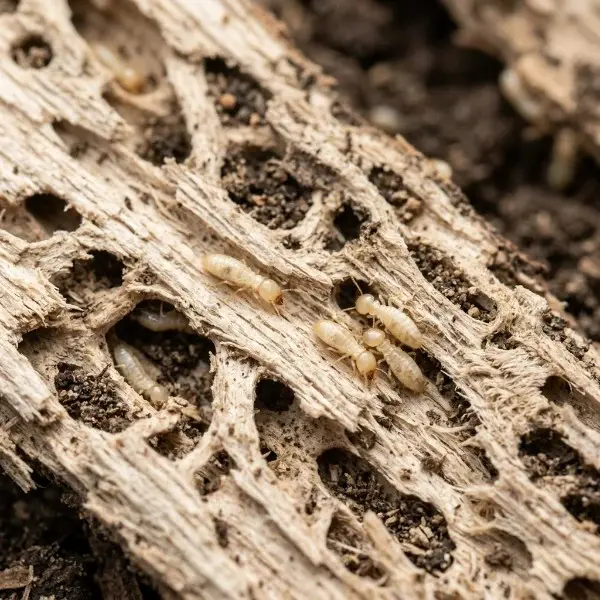
Termites
Eastern subterranean termites are especially active in this region, and the moisture in Sandhills ground encourages colonies to thrive.

Ants
Fire ants, sugar ants and Argentine ants are all found here, and fire ants begin trailing indoors as soon as spring arrives.

Roaches
Cockroaches become far more active as heat and humidity build through the Fayetteville summer.

Bed Bugs
Constant military rotation through Fort Bragg moves household goods in and out, keeping bed bug cases active year-round.

Fleas
Humid Sandhills yards, pets and wildlife keep flea populations going through most of the long active season.

Spiders
Spiders become noticeably more active as summer heat and humidity increase across Cumberland County.

Yellow Jackets
Ground and void nests build fast through the humid summer and turn defensive quickly around decks and play areas.

Wasps
Paper wasps and carpenter bees work eaves, decks, porches and untreated trim right through the long warm season.

Mosquitoes
Mosquito activity builds quickly in warm weather, especially where standing water and shaded areas are present.

Flies
Drain and filth flies trace to a specific source — usually a drain, bin area or grease line — rather than needing the room treated.

General Insects
Crickets, earwigs and silverfish are common in the Sandhills, plus eastern subterranean termite inspection referrals.

General Rodents
Rodents work crawl spaces, attics and drainage across the county, with pressure rising as the active season ends.
Trusted by Homeowners Across the Country
Licensed & Insured
Every pro in the network carries current licensing and insurance.
Same-Day Service
Same-day and next-day appointments typically available.
100% Satisfaction Guarantee
If the pest comes back, your pro comes back — that is the standard.
Locally Trusted Experts
Independent pros who actually live and work in your area.
No Obligation to Book
Talk to a pro first. Nothing is committed until you say so.
Vetted Pro Network
We screen every contractor before they join the PestAlly network.
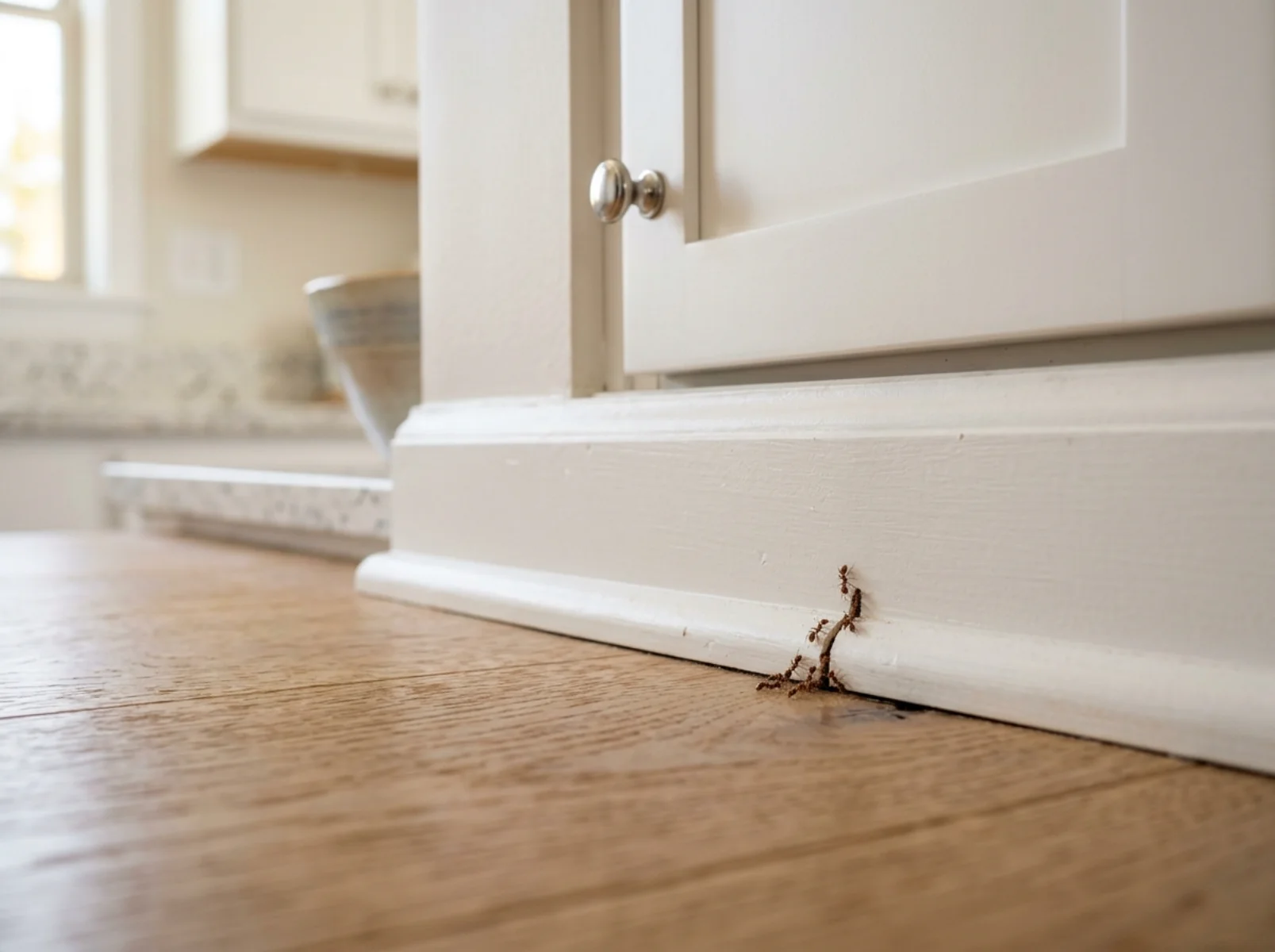
Most Common Pest Entry Points in Fayetteville Homes
Wood in contact with moist Sandhills soil is exactly the route eastern subterranean termites use to reach the structure.
Many Fayetteville homes sit over a crawl space, and one unscreened vent or warped access door hands the whole sub-floor to rodents, crickets and spiders.
Pet food and outdoor eating areas draw fire ants toward the parts of the yard people and animals actually use.
Standing water and shaded corners are where mosquito activity builds fastest once the heat arrives.
Second-hand furniture and household goods moving with a posting are how bed bugs travel into a Fayetteville home.
Why Fayetteville Homes Deal With These Pests Specifically
Two Sandhills realities change how treatment has to work here — one about the soil, one about fire ants.
Sandhills moisture keeps termite colonies thriving
Eastern subterranean termites are especially active in the Fayetteville region, and the moisture in the ground here is what lets the colonies thrive. Spring and summer are when the risk is highest and when swarms make them visible.
Treating a spring swarm as the start of the problem. A swarm means a mature colony is already established — the useful response is inspection and monitoring rather than reacting to what’s visible.
Fire ants here are a health risk, not just a nuisance
Fire ants are a serious Fayetteville problem rather than a nuisance one. Their stings are painful and can cause extreme illness in people and pets with weakened immune systems, and they’re drawn to any food source — pet food left outdoors especially.
Leaving pet food outdoors. It’s one of the most reliable ways to draw fire ants toward the parts of a yard people and animals actually use, and no amount of treatment offsets a permanent food source.

What to Expect From a Local Pro’s Visit
Every Fayetteville property is different, but the sequence stays the same — your local pro starts with the soil contact and the yard, because in the Sandhills that’s where it begins.
Inspect
Full inspection: wood-to-soil contact, crawl space, yard and mounds, standing water and shade, and any recently moved furniture.
→Identify
Confirming the species, since termite work, fire ant baiting and bed bug treatment are three completely different jobs.
→Treat
Matched to the finding: termite baiting or liquid barrier, fire ant baiting, bed bug heat or chemical work, or mosquito source reduction.
→Seal
Correcting wood-to-soil contact, screening crawl space vents, clearing standing water and moving pet food indoors.
→Follow Up
Ongoing service through a long active season, with bed bug work timed to household moves rather than to the weather.
→How PestAlly Works in Fayetteville
PestAlly doesn’t perform the pest control ourselves — we connect you with vetted, independent local professionals who do.
Get Started →Tell us what’s going on
The pest, and roughly where in the Fayetteville area you’re located.
We match you with an independent, local pro
Someone who services your specific neighborhood.
You deal directly with that contractor
Pricing, scheduling, and the work itself are between you and them.
Frequently Asked Questions
Is termite risk really that high in Fayetteville?⌄
Yes. Eastern subterranean termites are especially active in this region, and the moisture in Sandhills ground encourages colonies to thrive. Spring and summer carry the highest risk, and spring is when swarms make them visible.
How dangerous are fire ants here?⌄
They’re worth taking seriously. Fire ant stings are painful, and for people and pets with weakened immune systems they can cause extreme illness. They’re also drawn to any food source, so pet food and outdoor eating areas are where the risk concentrates.
When are mosquitoes worst in Fayetteville?⌄
Mosquito activity in Fayetteville builds quickly in warm weather, especially where standing water and shaded areas are present. Most of the mosquitoes biting on a property bred within a few dozen feet of it, so gutters, pot saucers and shaded containers matter more than the size of the spray.
Do I need pest control through a Fayetteville winter?⌄
Largely yes. North Carolina’s warm humid climate means pressure drops rather than stops, termites keep feeding in moist Sandhills soil, and bed bug movement tied to military rotation carries on regardless of season.
Does PestAlly serve my specific Fayetteville neighborhood?⌄
PestAlly connects homeowners throughout Fayetteville and Cumberland County, including Haymount, Vanstory Hills, Terry Sanford, Cliffdale, Arran Lakes and Kings Grant, plus Hope Mills, Spring Lake and Raeford. ZIP codes we cover in Fayetteville are 28301, 28303, 28304, 28305, 28306, 28311, 28312 and 28314.
Get Connected With a Local Fayetteville Pest Control Pro
Whether it’s a termite swarm in spring, fire ants near the pet bowl, or mosquitoes in every shaded corner of the yard, PestAlly connects you with an independent, local pro who knows what Sandhills homes are actually up against.
Looking beyond Fayetteville? See every North Carolina city we cover →