
Pest Control in Wilson, NC
Connect With a Local Pro Who Knows Wilson County
Wilson made its name as a tobacco market town — the warehouses that handled that trade still stand around the centre — and it sits in flat Coastal Plain farm country where row crop, sweet potato and hog and poultry operations run right up to the town edge. Flat sandy loam that drains slowly, a lot of old brick warehouse stock, and agriculture on every side. PestAlly is a free service connecting Wilson homeowners with independent, licensed local pest control pros working Wilson County.
Call (888) 921-7764Speak to a Local ProWhy Wilson
Why Wilson Homes Get Hit Harder Than Most
Agriculture drives the calendar here. When row crops come off in late summer and autumn, field mice lose cover and food in the space of a few days and move to the nearest buildings, which in Wilson means the houses at the edge of town. Grain and produce storage keeps rats supplied through winter, and hog and poultry operations in the surrounding county support house fly populations that travel well beyond the farm boundary when houses are cleaned out.
The building stock and the water do the rest. Old tobacco warehouses and brick commercial blocks have shared walls, service voids and long-undisturbed spaces that hold rats and roaches, and the Coastal Plain water table sits high — flat ground, slow drainage and swampy creek bottoms hold standing water for weeks after storms. Wilson County took heavy flooding from Floyd, Matthew and Florence, and North Carolina carries moderate to heavy eastern subterranean termite pressure on top of that.

Seasonal Activity
What’s Active in Wilson, and When
Spring · Mar–May
Termite swarms after warm rain, fly numbers building at farm operations, and ants moving indoors.
Summer · Jun–Aug
Heavy mosquito pressure off the flat creek bottoms, and peak fly pressure from surrounding agriculture.
Fall · Sep–Nov
Harvest pushing field mice into town, hurricane season at its peak, and yellow jackets at their largest.
Winter · Dec–Feb
Rats in the old warehouse and storage stock, and mice settled in crawl spaces and wall voids.
Coverage
Areas We Cover in Wilson
The old tobacco warehouse district
Large brick buildings with service voids and undisturbed space, holding rats and roaches long term.
The surrounding row-crop farmland
Harvest stripping cover and food at once and sending field mice to buildings at the town edge.
The creek bottoms & low ground
Flat land and slow drainage holding standing water for weeks and breeding mosquitoes right through summer.
The older residential streets
Crawl-space housing with sills close to grade, taking direct subterranean termite and moisture pressure.
The hog & poultry operations in the county
Litter, feed and waste supporting fly populations that carry well beyond the farm boundary.
Wilson is the seat of Wilson County in the eastern Coastal Plain, once the largest bright-leaf tobacco market in the world and still surrounded by row-crop farmland.
See the whole state on our North Carolina pest control page, the metro hub in Rocky Mount, or the nearby towns we also cover: Nashville, Tarboro, Elm City, Battleboro.
Services
The Pest Problems Wilson Calls About Most
Rodent Control
Harvest sends field mice to town buildings, and warehouse and grain storage sustain rats through winter.
Fly Control
Hog and poultry operations in the county produce fly numbers that indoor cleaning alone will not settle.
Mosquito Control
Flat ground and slow drainage keep water standing for weeks after storms, well past normal container control.
Termite Control
A high water table and damp crawl spaces meet moderate to heavy eastern subterranean pressure here.
Cockroach Control
Old brick buildings with shared walls and service voids give roaches long-undisturbed harbourage.
Ant Control
Fire ants work open ground and field margins, and carpenter ants nest in damp crawl-space framing.
Also available in Wilson: Spider Control · Wasp Nest Removal · Yellow Jacket Removal · Bed Bug Treatment · Flea Control · General Pest Control
Common Questions
Wilson Pest Questions, Answered
Mice show up every autumn like clockwork.
Flies are bad and we have no animals.
Water stands in the yard for weeks after a storm.
Roaches in an old downtown building.
Should an older house here have a termite inspection?
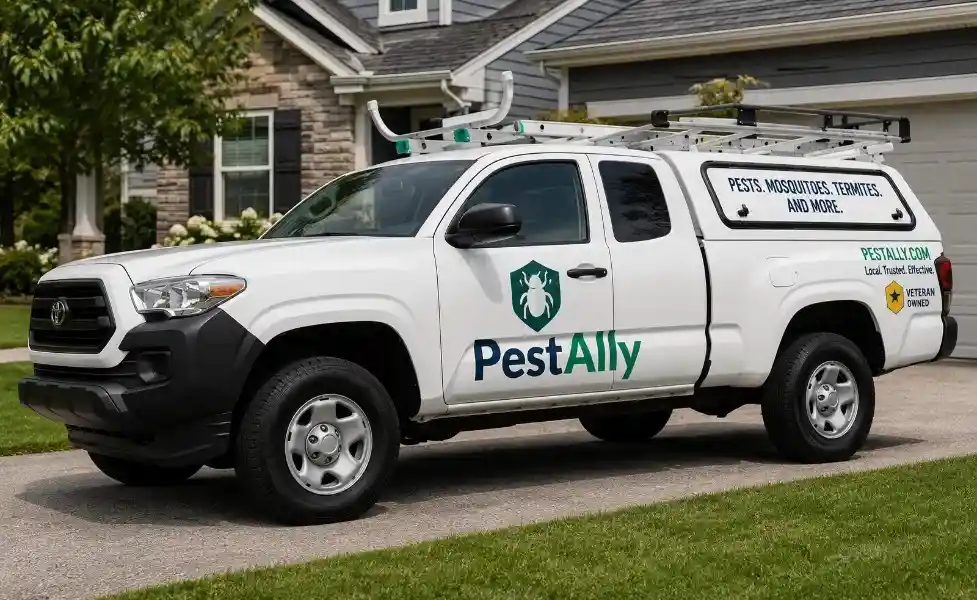
Speak to an Exterminator in Wilson
Tell us what you’re dealing with and we’ll connect you with an independent, licensed exterminator working in Wilson County. Using PestAlly costs nothing and there is no obligation.
Call (888) 921-7764