
Pest Control in Springfield, OR
Connect With a Local Pro Who Knows Lane County
Springfield grew on timber — mills along the river, mill housing behind them — and it sits where the McKenzie joins the Willamette, with the Cascade foothills rising to the east. Most of the housing is older, on crawl spaces rather than basements, and the western Oregon winter runs wet from October through May. That rainfall, more than anything else, is what shapes pest work here. PestAlly is a free service connecting Springfield homeowners with independent, licensed local pest control pros working Lane County.
Call (888) 921-7764Speak to a Local ProWhy Springfield
Why Springfield Homes Get Hit Harder Than Most
West of the Cascades, almost everything structural traces back to moisture. Seven or eight months of rain, mild temperatures and heavy shade keep crawl spaces damp, siding and trim slow to dry, and moss growing on north-facing roofs. That softened, wet wood is what carpenter ants excavate — they are the main wood-destroying insect in this part of Oregon — and what Pacific dampwood termites need, since unlike southern species they attack wood that is already wet rather than travelling up from dry soil.
The rest is the Willamette Valley’s own landscape. Himalayan blackberry and English ivy grow into dense thickets along river margins, fence lines and neglected corners, and both are prime roof rat harbourage — ivy climbing a wall is effectively a ladder to the soffits. Backyard fruit trees, compost and yard-debris bins feed the same rats and draw yellowjackets, which become genuinely aggressive across western Oregon in August and September.

Seasonal Activity
What’s Active in Springfield, and When
Spring · Mar–May
Carpenter ant swarmers indoors, rats active in blackberry and ivy, and rain keeping crawl spaces wet.
Summer · Jun–Aug
Yellowjacket colonies building fast, fruit ripening in gardens, and spiders establishing on eaves.
Fall · Sep–Nov
Peak yellowjacket aggression, dampwood termite swarms at dusk, and rodents moving in as rain returns.
Winter · Dec–Feb
Rats in wall voids and crawl spaces, and constant damp feeding rot, ants and dampwood termites.
Coverage
Areas We Cover in Springfield
The old mill housing
Timber-framed houses on crawl spaces, with sills and trim that stay damp through a long wet winter.
The Willamette and McKenzie margins
Blackberry and ivy thickets along the rivers, giving roof rats dense permanent harbourage.
The ivy-covered walls and fences
Ivy growing up a wall is effectively a ladder to the soffits and roof line for rats.
The backyard fruit trees and compost
Windfall fruit and food waste feeding rats and drawing yellowjackets through late summer.
The Cascade foothill edge
Forest and brush margins bringing rodents and wildlife to the building line year-round.
Springfield sits across the Willamette from Eugene in Lane County, an old timber and mill town at the confluence of the Willamette and McKenzie rivers.
See the whole state on our Oregon pest control page, the metro hub in Eugene, or the nearby towns we also cover: Creswell, Cottage Grove, Junction City, Veneta.
Services
The Pest Problems Springfield Calls About Most
Ant Control
Carpenter ants are the main wood pest west of the Cascades, and they follow timber that is already wet.
Rodent Control
Blackberry, ivy and fruit trees give roof rats harbourage, food and a climbing route in one package.
Yellow Jacket Removal
Colonies peak in August and September and turn aggressive around fruit, bins and outdoor eating.
Termite Control
Pacific dampwood termites attack wood that is already wet, which makes them a moisture warning.
Spider Control
Damp crawl spaces, sheds and sheltered eaves give spiders shelter and steady insect traffic.
General Pest Control
Long wet winters bring rot, moisture ants, silverfish and springtails into crawl spaces and walls.
Also available in Springfield: Cockroach Control · Wasp Nest Removal · Bed Bug Treatment · Flea Control · Fly Control · Mosquito Control
Common Questions
Springfield Pest Questions, Answered
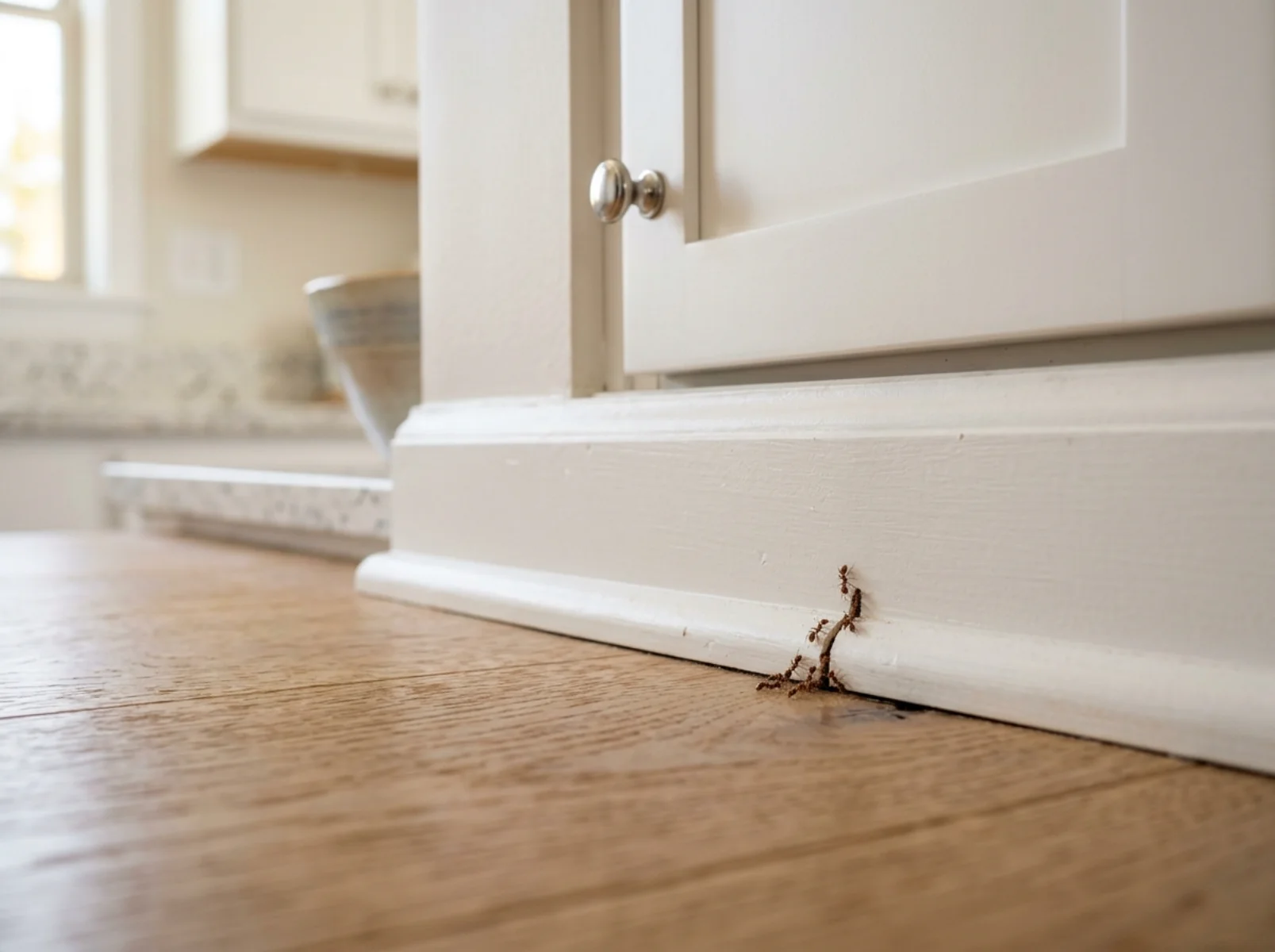
Large black ants indoors in spring.
What is a dampwood termite, and is it serious?
Rats in the ivy along the fence.
Yellowjackets everywhere in September.
Our crawl space is damp all winter.
Speak to an Exterminator in Springfield
Tell us on the call what you’re dealing with and we’ll connect you with an independent, licensed exterminator working in Lane County. Using PestAlly costs nothing and there is no obligation.
Call (888) 921-7764