
Pest Control in Phoenix, AZ
Connect With a Local Pro
Who Knows the Desert
PestAlly connects Phoenix and Maricopa County homeowners with independent
local pest control pros who know how bark scorpions, roof rats
and desert termites actually get in.
In the Desert, Pests Follow Water and Shade — Straight to Your House
Phoenix doesn’t get the humid, year-round insect pressure the Southeast does. What it gets instead is concentration: in a landscape this dry, anything that needs water, shade or cool ground ends up at the one place that has all three — your home. Irrigation boxes, block wall voids, landscape rock and the gap behind stucco all sit a few degrees cooler than the open desert, and that is exactly where Arizona bark scorpions, roof rats and desert subterranean termites set up. PestAlly connects Phoenix homeowners with independent, local pros who treat the perimeter, not just the room.
Get Connected With a Local Pro →
At a Glance
Service Area
Phoenix, AZ and surrounding Maricopa County communities
Most Common Pests
Bark scorpions, roof rats, desert subterranean termites, crickets, spiders, wasps, roaches
Peak Pest Season
Late spring through monsoon (June–September), easing in winter
Response Time
Same-day and next-day appointments typically available
Phoenix’s Year-Round Pest Calendar
In the Valley the calendar tracks heat and monsoon moisture rather than frost — activity concentrates instead of stopping.
Winter
Dec – FebRoof rats settle into attics and garage voids for the cool season
Scorpion activity at its lowest; termites keep feeding underground
Warm spells wake scorpions early along south-facing walls
Spring
Mar – MayDesert subterranean termite activity picks up after spring rain
Bark scorpions emerge in numbers; wasps begin building
Crickets increase — and scorpions follow the crickets indoors
Summer
Jun – AugExtreme heat pushes everything toward irrigation and shade
Monsoon rain triggers surges of crickets, beetles and roof rats
Peak scorpion season; humidity drives them into cooler interiors
Fall
Sep – NovMonsoon tail keeps scorpion and rodent pressure high
Roof rats work citrus and palm canopy as fruit sets
Cooling nights move rodents and spiders into wall voids
One exception: Desert subterranean termites don’t take a season off. They stay below the frost-free desert soil and keep feeding through winter, so unlike scorpion pressure — which genuinely drops — termite risk in Phoenix is a year-round constant.
Services We Cover in Phoenix
Whether it’s something under the landscape rock or something in the attic — here’s what the local pros in our network handle.
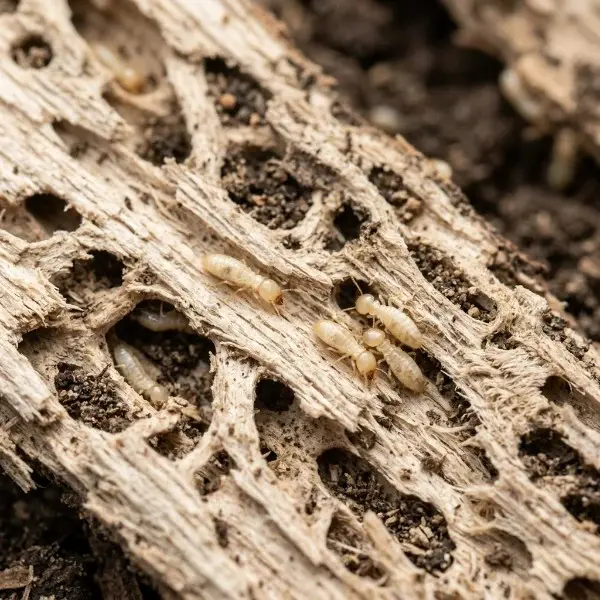
Termites
Phoenix termite pressure is constant and largely invisible until mud tubes appear on a wall someone finally looked behind.
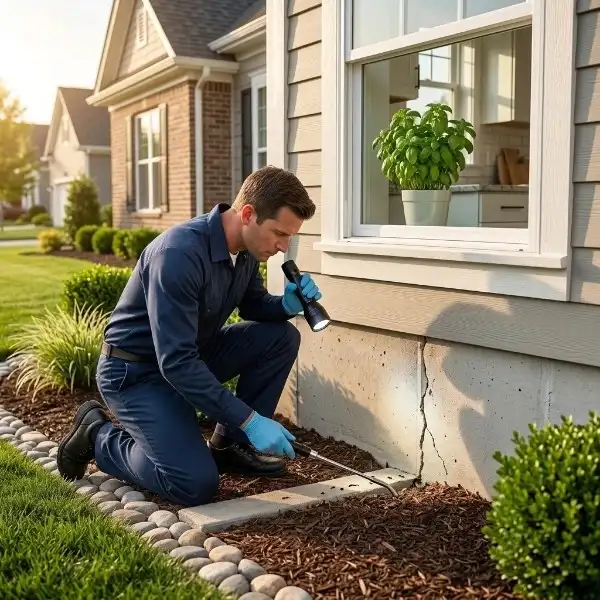
Ants
Pavement and odorous house ants trail in along irrigation lines and drip emitters, following the only reliable water on the property.

Roaches
American roaches move through sewer and irrigation lines and turn up in garages and bathrooms, especially after monsoon rain floods their runs.

Bed Bugs
Heavy visitor and seasonal-resident turnover across the Valley keeps bed bug cases steady year-round.

Fleas
Shaded, irrigated yards and urban wildlife keep flea pressure alive even in a dry climate.

Spiders
Black widows favour block wall voids, irrigation boxes and landscape rock; the same treatment work helps with scorpion pressure.
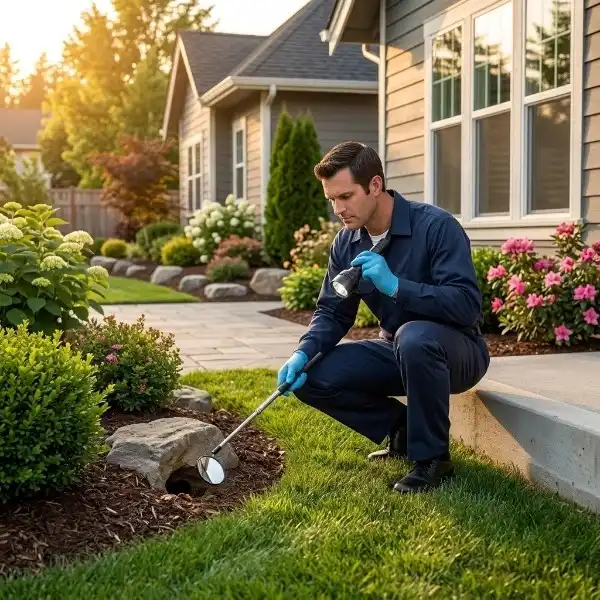
Yellow Jackets
Ground and void nests exploit block walls and utility boxes, and they get defensive fast in summer heat.

Wasps
Paper wasps build under eaves, patio covers and roof tiles across Phoenix neighbourhoods every spring.

Mosquitoes
Monsoon standing water, irrigation runoff and green pools give mosquitoes a strong summer window here.

Flies
Drain and filth flies trace to a source, and in the Valley that source is usually a floor drain or a line that only runs seasonally.

General Insects
Crickets, beetles and silverfish surge after monsoon rain, and crickets are what draw bark scorpions toward the house in the first place.

General Rodents
Roof rats climb citrus, palms and roof lines into attics; sealing the roofline matters more here than trapping alone.
Trusted by Homeowners Across the Country
Licensed & Insured
Every pro in the network carries current licensing and insurance.
Same-Day Service
Same-day and next-day appointments typically available.
100% Satisfaction Guarantee
If the pest comes back, your pro comes back — that is the standard.
Locally Trusted Experts
Independent pros who actually live and work in your area.
No Obligation to Book
Talk to a pro first. Nothing is committed until you say so.
Vetted Pro Network
We screen every contractor before they join the PestAlly network.
Most Common Pest Entry Points in Phoenix Homes
The narrow gap where stucco meets the stem wall is the single most common way bark scorpions get inside a Valley home — a scorpion can flatten into a gap about the width of a credit card, and this one runs the whole perimeter.
Hollow block walls stay cool and protected and valve boxes hold moisture — together they are the staging ground scorpions, widows and yellow jackets use before moving to the house.
Desert grit wears weatherstripping down quickly, and the garage is usually the first interior space scorpions and roaches reach.
Roof rats climb citrus, palms and overhanging limbs, then enter at tile gaps, vents and where the roof meets the wall.
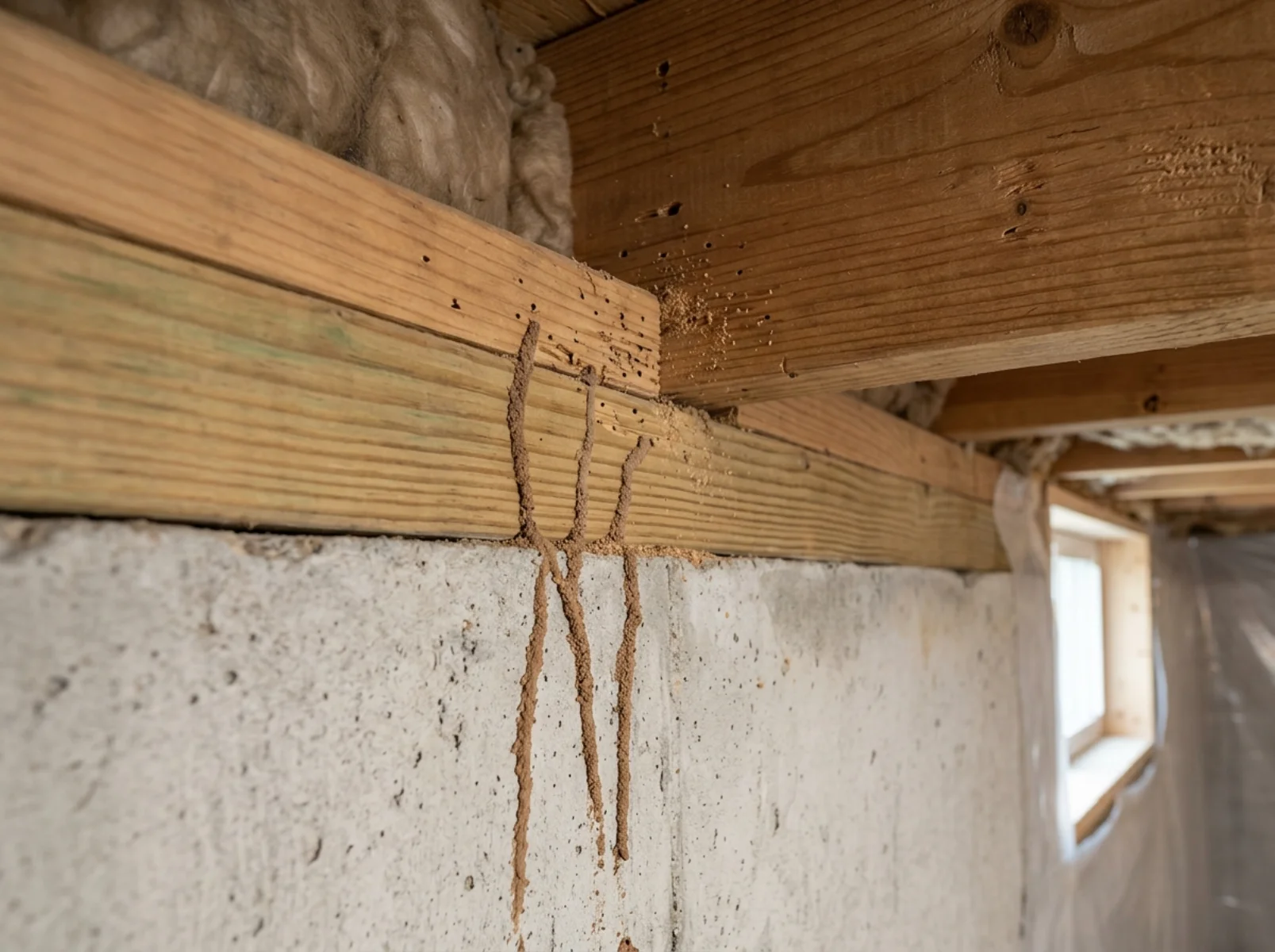
Arid soil expands and contracts, opening hairline gaps at the slab edge and around pipe entries — the exact routes desert subterranean termites use to build mud tubes.
Why Phoenix Homes Deal With These Pests Specifically
Two desert realities change how treatment has to work here — and both are why an indoor spray alone accomplishes very little.
Bark scorpions climb, and they hunt what your yard attracts
Arizona bark scorpions are the one medically significant scorpion in the country, and unlike most species they climb — walls, stucco, block, even into ceilings. They follow crickets and other soft-bodied insects toward the house.
Treating indoors only. If the block walls, irrigation boxes and landscape rock aren’t addressed, the perimeter keeps restocking and scorpions keep arriving through the weep screed.
Desert soil moves, and desert termites never stop
The desert subterranean termite is the most destructive termite in the Phoenix metro, and it needs soil contact rather than a wet season. Arid ground shrinking and swelling opens the small structural gaps it exploits.
Assuming a dry climate means low termite risk. Phoenix termite pressure is constant and largely invisible until mud tubes appear on a wall someone finally looked behind.

What to Expect From a Local Pro’s Visit
Every Phoenix property is different, but the sequence stays the same — your local pro starts at the perimeter, because in the desert that’s where the problem lives.
Inspect
Full perimeter walk: weep screed line, block walls, irrigation and valve boxes, roof line, garage and attic.
→Identify
Confirming what’s present, since bark scorpion work, roof rat exclusion and desert termite treatment are three different jobs.
→Treat
Matched to the finding: perimeter and harborage treatment, termite soil work, or rodent baiting and removal.
→Seal
Closing the weep screed gap, garage thresholds, roof line and utility penetrations the inspection turned up.
→Follow Up
Recurring service every two to three months, which is the realistic interval in a desert climate rather than an upsell.
→How PestAlly Works in Phoenix
PestAlly doesn’t perform the pest control ourselves — we connect you with vetted, independent local professionals who do.
Get Started →Tell us what’s going on
The pest, and roughly where in the Phoenix area you’re located.
We match you with an independent, local pro
Someone who services your specific neighborhood.
You deal directly with that contractor
Pricing, scheduling, and the work itself are between you and them.
Frequently Asked Questions
When is scorpion season in Phoenix?⌄
Bark scorpion activity climbs from late spring, peaks through monsoon season roughly June to September, and drops off in winter. Monsoon rain drives a surge in crickets and beetles, and scorpions follow that food supply toward homes and irrigated yards.
Do I really have termites if the climate is this dry?⌄
Yes — the desert subterranean termite is the most destructive termite in the Phoenix metro and stays active year-round. It survives on soil contact rather than rainfall, and the usual first sign is a mud tube running up exterior stucco, a block wall or a garage wall.
Why do roof rats keep coming back to my yard?⌄
Roof rats want water, fruit and shelter, and citrus canopy plus irrigation supplies all three. Trapping alone rarely finishes it — the roof line, tile gaps and overhanging limbs have to be sealed and cut back or a new group simply moves in.
How do scorpions get inside when I’ve sealed the doors?⌄
Most come in below the stucco, through the weep screed gap that runs the perimeter of the house, and through garage thresholds. A bark scorpion can pass through a gap about the thickness of a credit card and it can climb, so door seals alone don’t solve it.
Does PestAlly serve my specific Phoenix neighborhood?⌄
PestAlly connects homeowners throughout Phoenix and Maricopa County, including Arcadia, Biltmore, Ahwatukee, Desert Ridge, Willo and Encanto. Tell us your area and we’ll match you with a local pro who covers it. ZIP codes we cover in Phoenix include 85003, 85004, 85006, 85007, 85008, 85009, 85012, 85013, 85014, 85015, 85016, 85017, 85018, 85019, 85020, 85021, 85022, 85023, 85024, 85026, 85027, 85028, 85029, 85031, 85032, 85033, 85034, 85035, 85037, 85040, 85041, 85042, 85043, 85044, 85045, 85048, 85050, 85051, 85053, 85054, 85083, 85085 and 85086. We also cover nearby Mesa (85201–85215), Chandler (85224–85286), Gilbert (85233–85298), Scottsdale (85250–85266) and Glendale (85301–85310).
Get Connected With a Local Phoenix Pest Control Pro
Whether it’s a scorpion under the UV light, rats in the citrus, or a mud tube on the block wall, PestAlly connects you with an independent, local pro who knows what Valley homes are actually up against.
Looking beyond Phoenix? See every Arizona city we cover →