
Pest Control in Mentor, OH
Connect With a Local Pro Who Knows Lake County
Mentor has two things most Ohio suburbs do not: Mentor Marsh and the Headlands on the Lake Erie shore, and a county whose economy was built on commercial plant nurseries. Lake County has been one of the largest nursery-growing districts in the country for over a century, and that means enormous acreages of container stock, irrigation and soil movement sitting alongside residential streets. PestAlly is a free service connecting Mentor homeowners with independent, licensed local pest control pros working Lake County.
Call (888) 921-7764Speak to a Local ProWhy Mentor
Why Mentor Homes Get Hit Harder Than Most
The nursery trade shapes the local insect picture in a way nothing else here does. Field and container growing on this scale means constant irrigation, dense low canopy and huge numbers of pots holding water — ideal mosquito habitat — alongside soil and plant material moving in and out of the county continuously, which is one of the main ways new insect pests get introduced anywhere. Mulch, compost and soil piles also hold ants, millipedes and rodents at the edges of residential streets.
Marsh and lakefront supply the rest. Mentor Marsh is one of the largest natural marshes on the Ohio shoreline, holding permanent standing water and dense cover for mosquitoes and giving muskrats, raccoons and rodents a continuous corridor, while the lake produces midge emergences that settle on shoreline buildings in early summer. Basements on lake-plain clay hold damp for centipedes and camel crickets, and autumn brings invaders onto sunlit walls.

Seasonal Activity
What’s Active in Mentor, and When
Spring · Mar–May
Nursery irrigation starting, mosquitoes breeding early in container stock, and overwinterers waking indoors.
Summer · Jun–Aug
Heaviest mosquito pressure off the marsh and containers, and lakefront midge emergences on shoreline walls.
Fall · Sep–Nov
Autumn invaders on sunlit walls, yellow jackets at their largest, and mice moving in from marsh margins.
Winter · Dec–Feb
Mice in basements and garages, and centipedes and camel crickets active in damp lake-plain cellars.
Coverage
Areas We Cover in Mentor
Mentor Marsh & the Headlands
Permanent marsh water and dense cover, breeding mosquitoes and giving wildlife a continuous corridor.
The commercial nursery ground
Irrigation, dense low canopy and thousands of containers holding water within reach of the streets.
The mulch, compost & soil yards
Large organic piles holding ants, millipedes and rodents at the edge of residential areas.
The Lake Erie shoreline
Midge emergences settling on shoreline buildings, and lake humidity keeping basements damp.
The post-war residential streets
Lake-plain clay basements with damp floor drains and window wells, ideal for centipedes and spiders.
Mentor sits on the Lake Erie shore east of Cleveland in Lake County, a city of shoreline marsh and headland beach set in a county built on the commercial nursery trade.
See the whole state on our Ohio pest control page, the metro hub in Cleveland, or the nearby towns we also cover: Lakewood, Euclid, Strongsville, Westlake.
Services
The Pest Problems Mentor Calls About Most
Mosquito Control
Marsh water and thousands of irrigated nursery containers give mosquitoes two production bases at once.
General Pest Control
Mulch and compost yards push out ants and millipedes, and autumn invaders arrive on sunlit walls.
Rodent Control
Marsh margins and organic piles give rodents cover, and lake-plain basements give them easy entry.
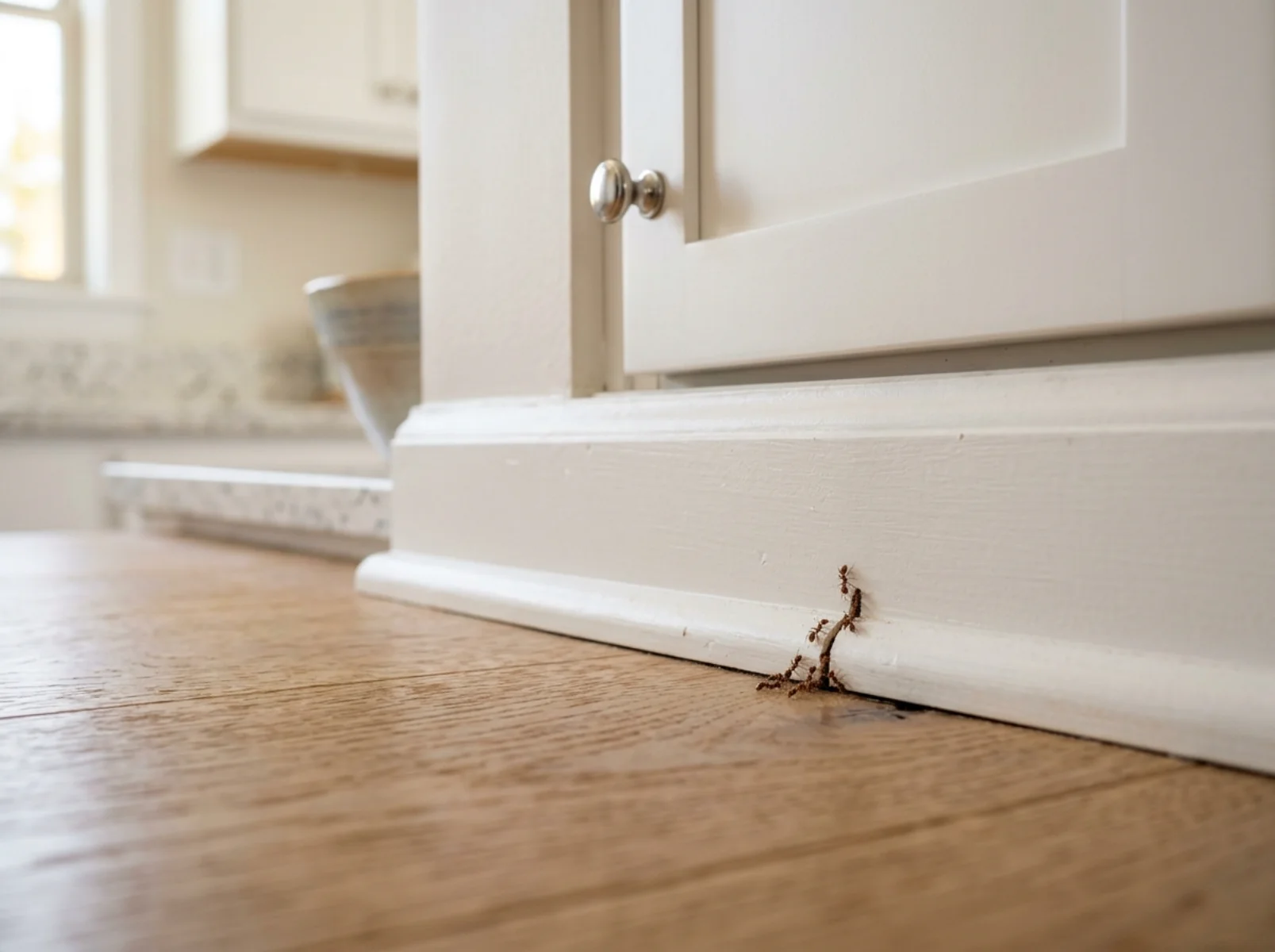
Ant Control
Mulch, compost and irrigated bedding hold moisture, which is where ants set up close to buildings.
Spider Control
Damp cellars, window wells and lit shoreline walls give spiders shelter and heavy insect traffic.
Yellow Jacket Removal
Undisturbed nursery and marsh edge ground suits underground colonies, largest in late summer.
Also available in Mentor: Wasp Nest Removal · Cockroach Control · Termite Control · Bed Bug Treatment · Flea Control · Fly Control
Common Questions
Mentor Pest Questions, Answered
Mosquitoes are relentless and we have no standing water.
Do the nurseries actually affect residential streets?
Clouds of insects on the walls near the lake in June.
Something living at the marsh edge is getting into the garden.
Damp basement near the lake.
Speak to an Exterminator in Mentor
Tell us what you’re dealing with and we’ll connect you with an independent, licensed exterminator working in Lake County. Using PestAlly costs nothing and there is no obligation.
Call (888) 921-7764