
Pest Control in Lexington, SC
Connect With a Local Pro Who Knows Lexington County
Lexington sits between Columbia and Lake Murray, and it has grown very fast — subdivisions spreading across former farm and pine ground, with lake frontage, coves and creek arms running deep into the residential area. The soil here is sandy Midlands and Sandhills rather than the clay of the Piedmont, which changes what does well. PestAlly is a free service connecting Lexington homeowners with independent, licensed local pest control pros working Lexington County.
Call (888) 921-7764Speak to a Local ProWhy Lexington
Why Lexington Homes Get Hit Harder Than Most
Lake Murray is a very large body of water with an enormous shoreline, and its coves and creek arms reach right into the neighbourhoods. Shallow, sheltered water with shoreline vegetation is prime mosquito habitat, and it holds regardless of recent rain, while the wooded shoreline gives raccoons, snakes and rodents a continuous corridor to the back of properties and holds ticks and chiggers in the litter.
Sandy soil and rapid clearing supply the rest. Fast-draining Sandhills sand suits fire ants and ground-nesting yellow jackets particularly well, and it warms early, so both get going sooner here than on heavy clay. Clearing pine for new phases leaves stumps and buried timber in the soil beside new slabs, and South Carolina carries heavy eastern subterranean termite pressure right across the Midlands.

Seasonal Activity
What’s Active in Lexington, and When
Spring · Mar–May
Termite swarms after warm rain, fire ant mounds appearing early in sandy lawns, and ticks emerging.
Summer · Jun–Aug
Heavy mosquito pressure off the lake coves, chiggers at their worst, and fire ants at full strength.
Fall · Sep–Nov
Yellow jackets at their largest and most defensive, and rodents moving in from cleared ground.
Winter · Dec–Feb
Mild winters keeping activity going, with mice in crawl spaces and termites still working.
Coverage
Areas We Cover in Lexington
The Lake Murray coves and creek arms
Shallow sheltered water reaching into the neighbourhoods and holding mosquitoes regardless of rain.
The wooded shoreline
A continuous corridor bringing raccoons, snakes and rodents to the back of properties.
The sandy Sandhills lawns
Fast-draining soil that warms early, suiting fire ants and ground-nesting yellow jackets.
The new subdivisions on cleared pine
Stumps and buried timber left in the soil a few yards from brand-new slabs.
The pine and brush margins
Chiggers and ticks waiting in the litter right against gardens and back fences.
Lexington sits west of Columbia in the Midlands, a fast-growing town wrapped around Lake Murray with sandy Sandhills soil and pine woodland through it.
See the whole state on our South Carolina pest control page, the metro hub in Columbia, or the nearby towns we also cover: West Columbia, Irmo, Cayce, Blythewood.
Services
The Pest Problems Lexington Calls About Most
Ant Control
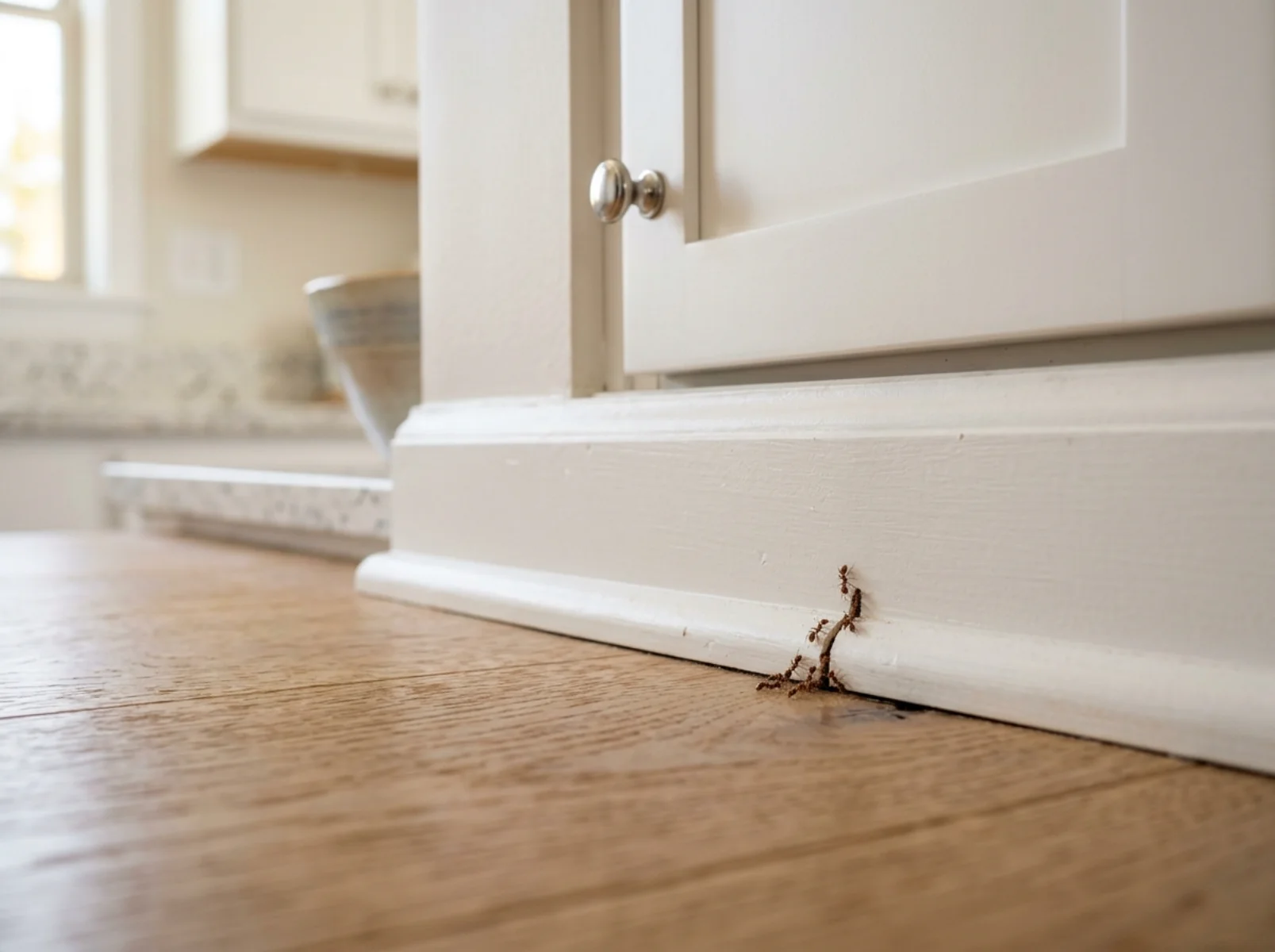
Sandy Midlands soil is close to ideal fire ant ground, and colonies get going early here.
Mosquito Control
Lake Murray coves hold sheltered shallow water within easy flight range of the streets.
Yellow Jacket Removal
Loose sandy soil suits underground nests, which peak in size and aggression through autumn.
Termite Control
Buried stumps beside new slabs meet heavy South Carolina subterranean pressure.
General Pest Control
Pine and brush margins hold chiggers and ticks right through a long warm season.
Rodent Control
Clearing pushes rodents into finished streets, and the shoreline corridor keeps resupplying them.
Also available in Lexington: Cockroach Control · Spider Control · Wasp Nest Removal · Bed Bug Treatment · Flea Control · Fly Control
Common Questions
Lexington Pest Questions, Answered
Fire ants took the lawn faster than we expected.
Does living on the lake mean more mosquitoes?
Stung out of the ground while mowing.
Chiggers after every walk in the pines.
New house on a cleared lot — termites?
Speak to an Exterminator in Lexington
Tell us on the call what you’re dealing with and we’ll connect you with an independent, licensed exterminator working in Lexington County. Using PestAlly costs nothing and there is no obligation.
Call (888) 921-7764