Rats or Mice? How to Tell From the Droppings — and Why It Changes Everything You Do Next
Somebody hears scratching above the ceiling in October, buys a box of snap traps, sets them along the kitchen wall, and catches nothing for three weeks.
Usually the traps were fine. They were set for the wrong animal.
Rats and mice get treated as one problem — “rodents” — and they are not. They travel different distances, climb differently, react to new objects in opposite ways, and need bait stations placed at different heights and different spacings. A plan built for one will reliably miss the other.
Tell them apart from the droppings
You will find droppings before you see the animal. They are the most reliable identification you have, and the sizes are distinct enough that you do not need to guess.
- House mouse — about 1/8 to 1/4 inch, roughly the size of a grain of rice, and there will be a lot of them.
- Roof rat — about 1/2 inch, with pointed ends, often curved.
- Norway rat — 3/4 inch to a full inch, noticeably thicker, and blunt at both ends like a capsule.
Pointed versus blunt is the detail most people miss, and it is the one that separates the two rat species — which matters more than it sounds.
The other two tells
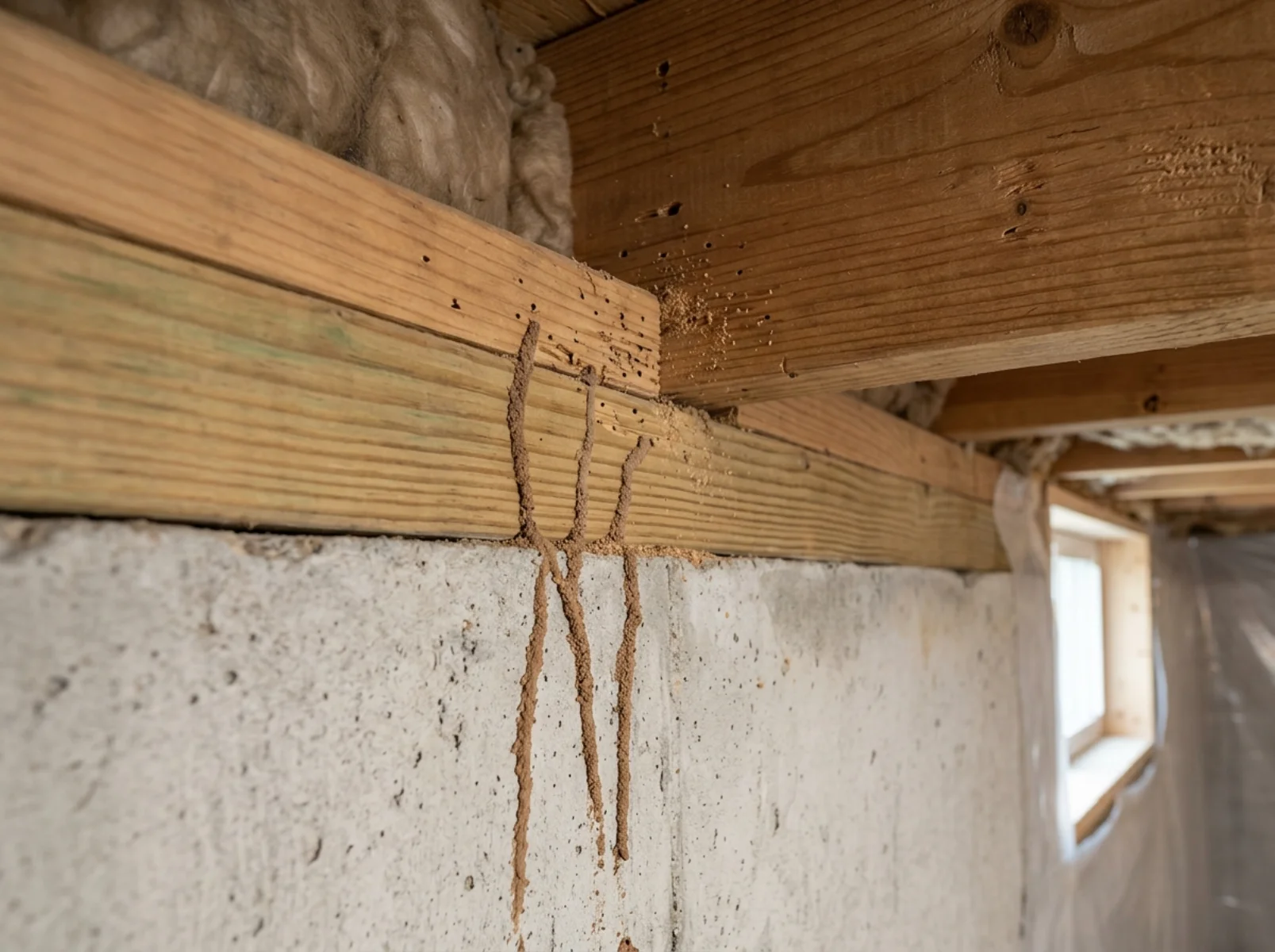
Gnaw marks. Where a rodent has chewed, the paired tooth grooves are measurable. A mouse leaves marks roughly 1 to 2 mm wide. An adult rat leaves 3.5 to 4 mm. Doubling in width is obvious once you know to look.
Entry holes. A mouse gets through an opening around 1.5 inches or smaller — the often-quoted dime is not an exaggeration. A rat needs about 2 inches or more. So a hole you can put a thumb through is a rat route; a gap you would not look twice at is a mouse route.
High or low: the difference that changes everything
This is the part that wastes the most time.
Norway rats work at ground level. Burrows around the foundation, crawl spaces, basements, the lower third of the building. They are heavier and poorer climbers.
Roof rats live above you. Attics, rafters, wall voids, tree limbs touching the roof, and the utility lines running to the house. They are excellent climbers and they enter at the roofline.
Which produces a specific and very common failure: bait stations on the ground are often ineffective against roof rats, simply because the rats never come down to them. The station is placed correctly for a Norway rat and is in the wrong plane entirely for the animal actually in the building. Weeks pass, nothing is taken, and everyone concludes the bait does not work.
There is a second wrinkle: most commercial baits are registered for both rat species and for house mice, but roof rats accept them less readily than the other two. So even a well-placed station can underperform.
How far they travel — and why spacing matters
A house mouse has a home range of roughly 30 feet or less. It lives close to its food and it does not wander.
A rat will travel up to 300 feet from its nest.
That single difference decides the layout of every trap and station in the building. Standard spacing for rat stations is 15 to 30 feet. But if you are treating for both at once — which happens more often than people expect — stations have to come down to about 10 feet apart, because a mouse forty feet from the nearest station will simply never encounter it.
Space for rats alone with mice in the building, and you will keep catching rats while the mouse population carries on untouched.
Quick reference
| House mouse | Roof rat | Norway rat | |
|---|---|---|---|
| Droppings | 1/8–1/4 in | ~1/2 in, pointed | 3/4–1 in, blunt |
| Gnaw marks | 1–2 mm | 3.5–4 mm | 3.5–4 mm |
| Entry hole | 1.5 in or less | 2 in or more | 2 in or more |
| Where it lives | Anywhere near food | Attic, rafters, roofline | Ground, burrows, crawl space |
| Travel range | 30 ft or less | Up to 300 ft | Up to 300 ft |
Why the first week often catches nothing
Rats are cautious about anything new in their environment. A trap or station that appears overnight gets avoided for several days regardless of what is on it.
Mice are the opposite — curious, and they will investigate a new object quickly.
So an empty trap on day two means something completely different depending on which animal you have. With mice it suggests the placement is wrong. With rats it is simply normal, and the useful move is to leave everything in place, unset and baited, for a few days first so it stops being new.
Yes, you can have both
Rats generally dominate and will displace mice from shared space — but in a large building, or one with a separated attic and crawl space, both can be present in different zones at the same time. Finding rat droppings does not mean the mice are gone.
If the droppings you are finding are two clearly different sizes, treat it as two problems.
When it is worth calling someone
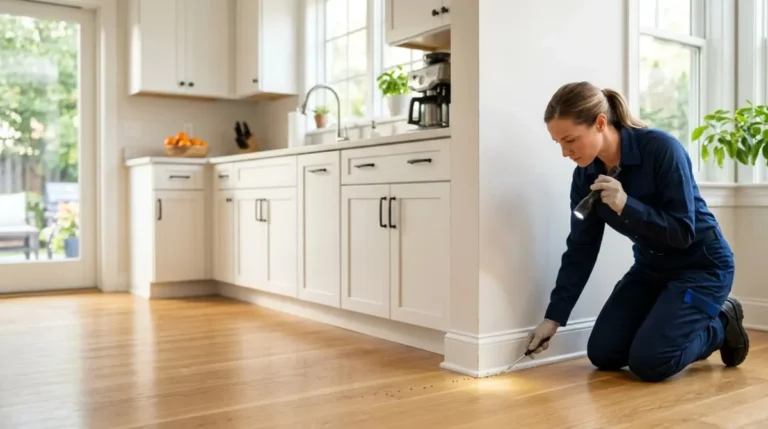
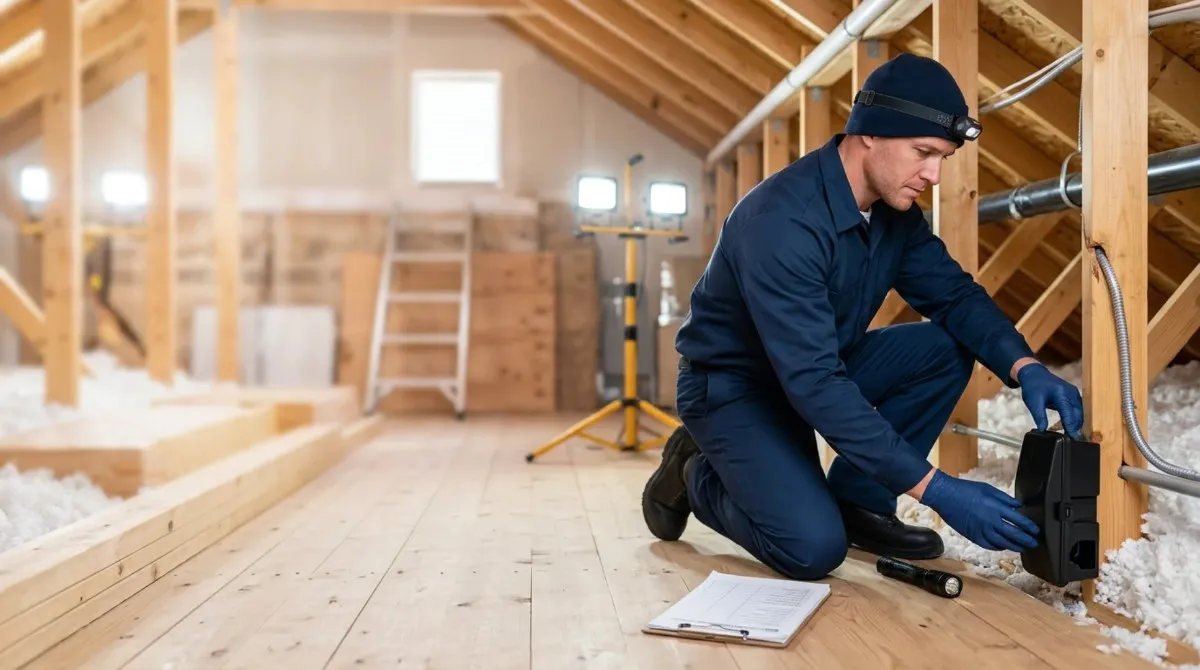
Identification you can do yourself in ten minutes with a torch. It is worth bringing someone in when you cannot tell which species you have, when the activity is in an attic or roofline you cannot safely inspect, when traps have been out for two weeks with nothing, or when the entry points are structural rather than a gap you can stuff with wire wool.
Our rodent control page covers what a professional job involves — and it is worth saying that trapping without sealing is temporary in every case.
The one thing to take away
Before you buy a single trap, find the droppings and measure them. Rice-sized means mice and close spacing. Half an inch and pointed means look up, not down. An inch and blunt means look at the foundation.
Ten minutes of identification saves three weeks of empty traps.