
Fall Invaders: The Six-Week Window That Decides Whether Your Winter Is Bug-Free
There is a short window every year — roughly the next six weeks — where a small amount of work outside your house prevents a problem that runs all winter. Miss it, and there is very little anyone can do until spring.
This is the fall invader season, and it works differently from every other pest problem.
What is actually coming
Four insects account for most of it, and they are not related to each other. What they share is a single goal: getting somewhere sheltered before winter.
- Brown marmorated stink bugs — shield-shaped, brown, and the reason most people learn the phrase “fall invader”. Crushing one is a mistake you make once.
- Boxelder bugs — black with red stripes, and they arrive in numbers rather than singly. Homes near boxelder, maple or ash trees get the worst of it.
- Asian lady beetles — brought to the US deliberately to eat aphids, now a household pest. They look like ladybugs and behave nothing like them.
- Cluster flies — slow, sluggish, and they appear in groups on sunny windows. More on why these are the strangest of the four below.
Why they all arrive at once
None of them are reacting to the cold you can feel. They are reacting to shortening daylight alongside dropping temperatures, and because day length is the same for every insect in your area, they move as a group. That is why it feels like an invasion rather than a trickle.
What they are looking for is oddly specific: a space that holds somewhere around 40 to 50°F through winter. In most houses that means exterior wall voids, attics, and the gap behind soffits and siding. Not your living room — the living room is an accident.
They find those spaces by gathering first on the warm side of the building. South and west-facing walls collect afternoon sun, the surface stays warmer than the air, and hundreds of them congregate there before working their way in through a torn screen, a gap around a pipe, or a crack under the siding.

Cluster flies are the odd one out
If you read anything about flies and kitchen hygiene, forget it here. Cluster flies breed in earthworms. The female lays eggs in soil, the larvae develop inside earthworms in your lawn, and the adults have no interest whatsoever in your bin, your fruit bowl or your drains.
Which means the cleanest house on the street gets them just as badly as the messiest. There is nothing to clean up and nothing you did wrong. They are simply coming in from the lawn, and the only thing that stops them is the building envelope.
Why spraying inside makes it worse
This is the part worth understanding, because the instinct is exactly backwards.
Killing the ones you can see changes nothing. The ones in the room are a fraction of the ones in the wall. Aerosol foggers will drop the visible insects on the ceiling, and more will emerge from the void within days of the room being aired out. You have not reduced the population, you have only cleared the room temporarily.
Treating the wall void is worse still. Insecticidal dust in a wall cavity can kill hundreds at once — and then you have hundreds of dead insects sealed inside your wall. Carpet beetles feed on them. Once a carpet beetle population establishes itself on that supply, it moves on to wool, stored dry goods and natural fibres elsewhere in the house. You have traded a seasonal nuisance for a year-round one.
The honest answer is that once they are in the walls, the practical options are a vacuum and patience. Which is exactly why the timing matters.
The six weeks that actually count
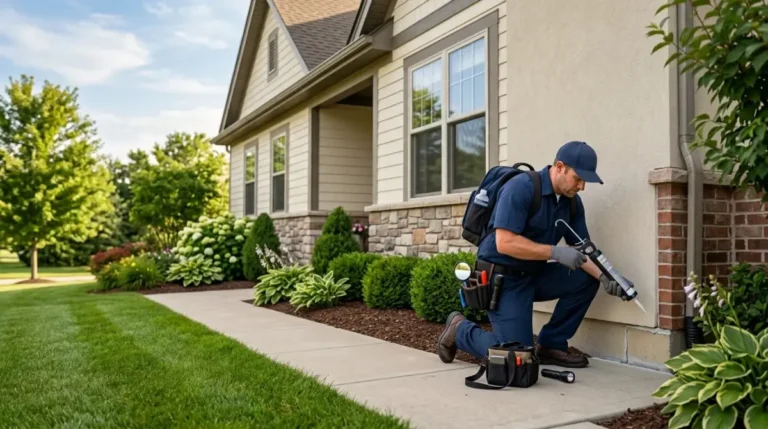
Exclusion works, and it only works before they arrive. Working on the warm-facing walls first:
- Every window and door screen — a tear the width of a pencil is a doorway. Repair or replace rather than patch.
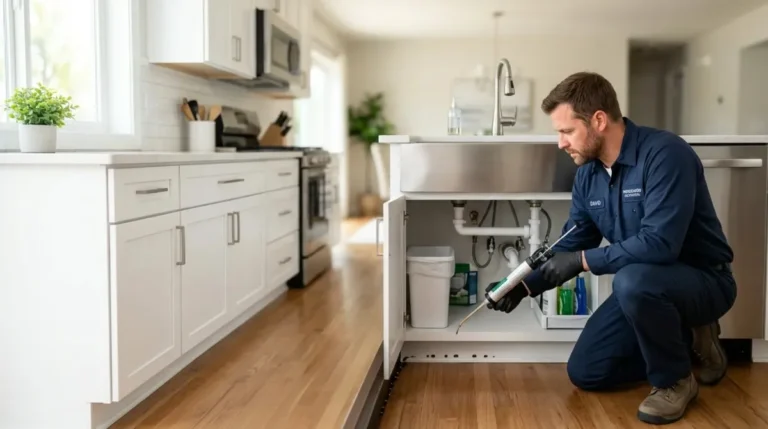
- Where anything enters the wall — dryer vents, AC lines, gas and water pipes, cable and electrical. Seal with caulk or expanding foam, and use fine mesh where a gap has to stay open for airflow.
- Soffit and fascia joins — the gap between soffit and wall is one of the most-used entry routes and almost nobody checks it.
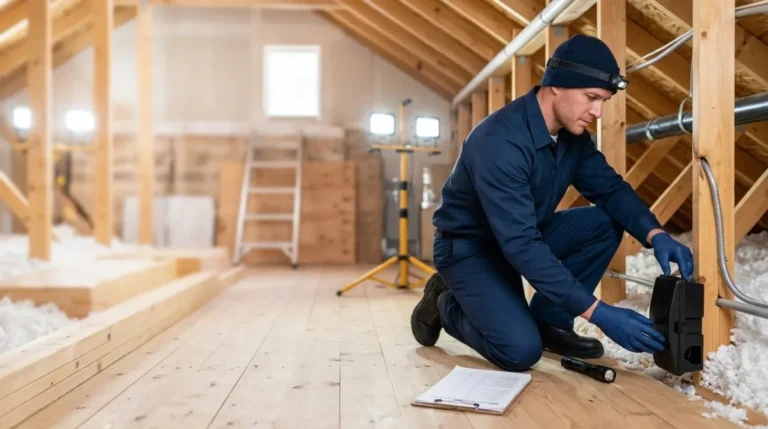
- Attic and crawl space vents — screen them. They must stay open, so mesh rather than sealant.
- Under the siding and around window frames — caulk the gaps you can reach.
- The chimney and any roof penetration — cap and screen.
An exterior treatment applied to those same surfaces in late summer helps, but it is a supplement to sealing, not a substitute. The seal is what still works in January.
Once they are already inside
Vacuum them — do not squash them. Stink bugs release their odour when crushed, and Asian lady beetles leave a yellow fluid that stains walls, curtains and carpet permanently.
Empty the vacuum outside immediately afterwards, or use a stocking over the nozzle so you can tie it off and bin it. Leaving them in the canister means the smell comes back on next week.
When it is worth calling someone
A dozen stink bugs on a window is a vacuum job. It is worth bringing someone in when the numbers run into the hundreds, when they are emerging faster than you can clear them, when the entry points are on a second storey or a roofline you cannot safely reach, or when you want the exclusion work done properly in the window that is open now.
Our general pest control page covers what that involves.
The one thing to take away
Every other pest problem can be dealt with when you notice it. This one cannot. By the time you see them on the window in November, the decision was made in September — and it was made by whoever did or did not seal the warm side of the house.