Why Stink Bugs Are Suddenly Everywhere in Your House This September
Why September Triggers the Stink Bug Invasion
As days shorten and nighttime temperatures drop into the 50s across Ohio, brown marmorated stink bugs abandon soybean fields, orchards, and gardens and start heading straight for buildings. They are not coming inside looking for food. They are looking for a warm, dry place to spend the winter, and a sun-baked house wall looks exactly like the crevice under tree bark they would use out in the wild. That is why a home that saw zero stink bugs in July or August can suddenly have a dozen crawling across a windowsill by the third week of September.
Is It Actually a Stink Bug? Quick ID Check
Brown marmorated stink bugs are shield-shaped, roughly five-eighths of an inch long, mottled grayish-brown, and have distinctive light bands on their antennae and the edges of their abdomen. Homeowners often confuse them with boxelder bugs, which are narrower and marked with red-orange lines, or with the smaller kudzu bug. All three show up on the same late-summer schedule and cluster on sunny, south-facing walls before pushing indoors, but only the true stink bug releases that sharp, cilantro-like odor when disturbed.
Where They’re Actually Getting In
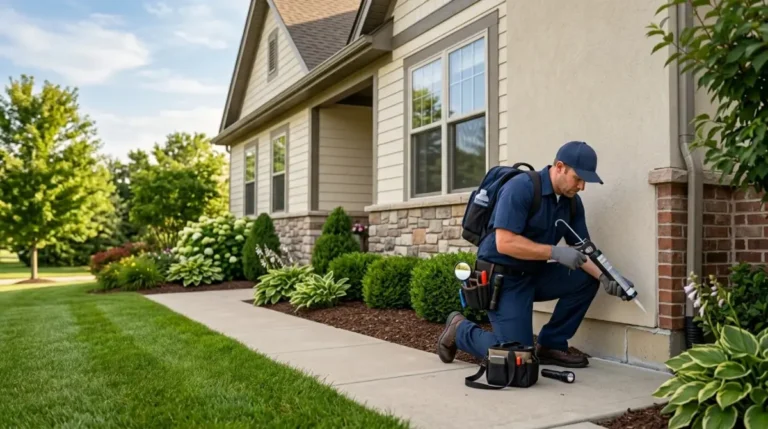
The usual entry points are smaller than most people expect: gaps around window air conditioner units, the overlap seams in vinyl siding, attic and soffit vents without fine mesh screening, the small holes where cable or utility lines pass through an exterior wall, and gaps under fascia boards. Caulking these spots helps, but it rarely solves the problem on its own, because stink bugs exploit gaps as thin as an eighth of an inch and those gaps reopen every time the siding expands and contracts with the temperature swings that are typical of a Columbus September.
Never Vacuum or Crush Them Indoors
A stink bug’s defense gland releases a chemical called trans-2-decenal the moment it feels threatened, which is exactly what happens when it gets crushed underfoot or pulled into a vacuum. The smell lingers in carpet fibers and can sit inside a vacuum canister for weeks. A better approach is a dedicated shop vac used only for this job, or a simple trap made from a desk lamp shining into a pan of soapy water overnight, since stink bugs are drawn to light and the soap breaks the surface tension so they cannot climb back out.
The Real Fix Is Timing, Not Just Sealing
An exterior perimeter treatment applied before nighttime temperatures consistently fall below 60 degrees works far better than one applied after bugs have already moved into the wall void, because it intercepts them while they are still staging on the outside of the house. Sealing gaps is a useful supplement to that treatment, not a replacement for it. Once stink bugs settle into a wall cavity or attic for winter, they can re-emerge on any unusually warm day all winter long and again in early spring, which is why homeowners often mistake a second wave in February or March for a brand-new infestation rather than the same group finally waking up.
When It’s Time to Call a Pro
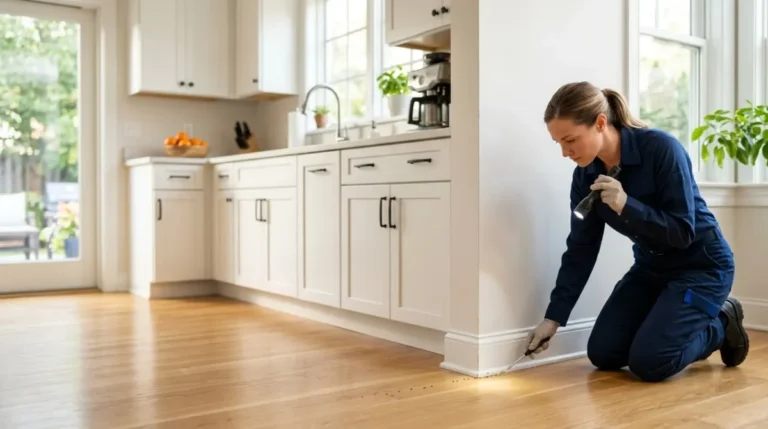
A handful of stink bugs on a window screen is normal fall behavior. Several dozen showing up in a single week, bugs that keep reappearing inside the same wall or ceiling light fixture, or an older multi-unit building where several units are affected at once are all signs the colony has already established itself in the structure. At that point, an exterior perimeter treatment timed to the local temperature drop is what actually breaks the cycle. PestAlly’s technicians know when that window opens in the Columbus area and can get ahead of it before the bugs finish moving in for the season.