
September Spider Season: Why Your House Is Suddenly Full of Spiders (and Which Two Actually Matter)
Sometime around Labor Day it starts: a big, fast spider sprinting across the living room floor at 9 p.m., another one in the bathtub two days later, a third parked on the hallway ceiling. Every September the same question shows up in search bars and neighborhood groups — why is my house suddenly full of spiders?
Here is the part almost nobody knows: your house does not have more spiders than it did in July. You are just finally seeing them — and the reason is a little strange.
Spider season is actually mating season
Most of the spiders you spot indoors in late summer and early fall are adult males out looking for females. They spent the spring and summer growing up quietly — behind the water heater, in the garage, inside wall voids, under the crawl space. Come late August and September, they mature, abandon their hiding spots, and start covering ground.
That is why fall spiders seem bigger, faster and bolder than the ones you see the rest of the year. A wandering male is not hunting and not building a web. He is walking a straight line across your floor because it happens to be the shortest path across his search area, and he could not care less that you are watching.
By some estimates, roughly eight out of ten spiders people see during spider season are males on the move. The females — usually larger — stay put near their webs and retreats, which is why you rarely see them at all.
So there isn’t an “invasion”?
Not really. The population was already there; the behavior changed. Two other things stack on top of it in September: doors and windows stay open during the first cool evenings, giving wanderers an easy way in, and outdoor insect numbers start dropping, which nudges hunting spiders toward the warm, bug-holding structure — your house. A hot summer that produced lots of insects also means more spiders survived to adulthood, so a bad mosquito year is often followed by a busy spider season.
The two spiders actually worth taking seriously
In most of the United States, the honest list of medically significant spiders has exactly two names on it.
Black widow. Glossy black, roughly the size of a nickel with legs, red hourglass on the underside. Widows do not wander your living room — they build messy, strong, low webs in undisturbed spots: garage corners, water meter boxes, woodpiles, under patio furniture, behind stored boxes. The classic encounter is a hand reaching blindly into exactly those places. Wear gloves, look first, and you have removed most of the risk.
Brown recluse. Tan to brown, about the size of a quarter with legs, with a dark violin shape on its back and — the real identifier — six eyes instead of eight. Recluses live up to the name: closets, attics, cardboard boxes, shoes that have not been worn in a month, bedding in a guest room nobody uses. Their established range covers the central and southern U.S. — roughly Texas across to Georgia and up through Missouri and southern Iowa. If you live outside that belt, the “recluse” you found is almost always a harmless lookalike; true sightings outside the range are rare.
Everything else — house spiders, wolf spiders, jumping spiders, cellar spiders, the enormous but gentle orb weavers hanging in the yard right now — falls somewhere between harmless and actively useful. A single house spider eats far more insects in a year than any trap you can buy.
What actually reduces spiders indoors
Spraying a wandering male with anything only solves the one spider in front of you. What changes the numbers is making the house harder to enter and less worth entering.
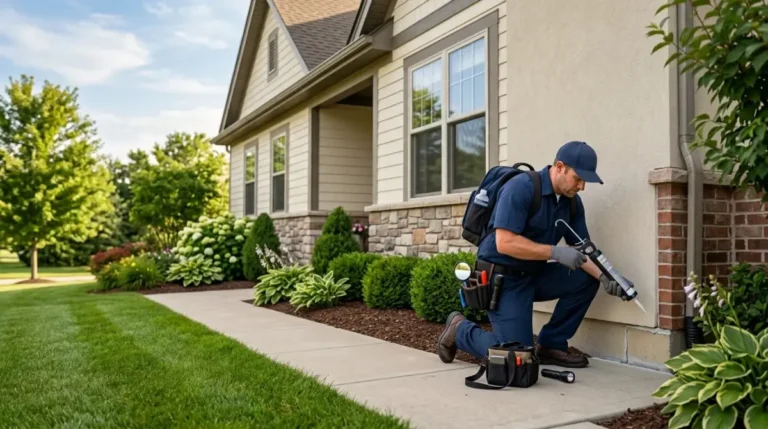
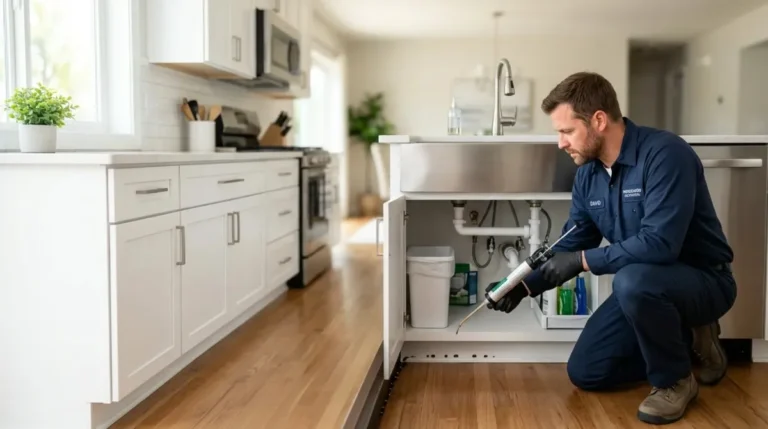
Seal the ground-level gaps. Door sweeps on exterior doors, screens without tears, and caulk around pipe and cable penetrations remove the main highways. Most fall spiders walk in at floor level — they do not need much of a gap.
Cut the food supply. Spiders go where insects are. Outdoor lights that burn all night pull in moths and flies, which pull in spiders; switching to warm-toned bulbs or motion sensors quietly starves the food chain around your entry doors.
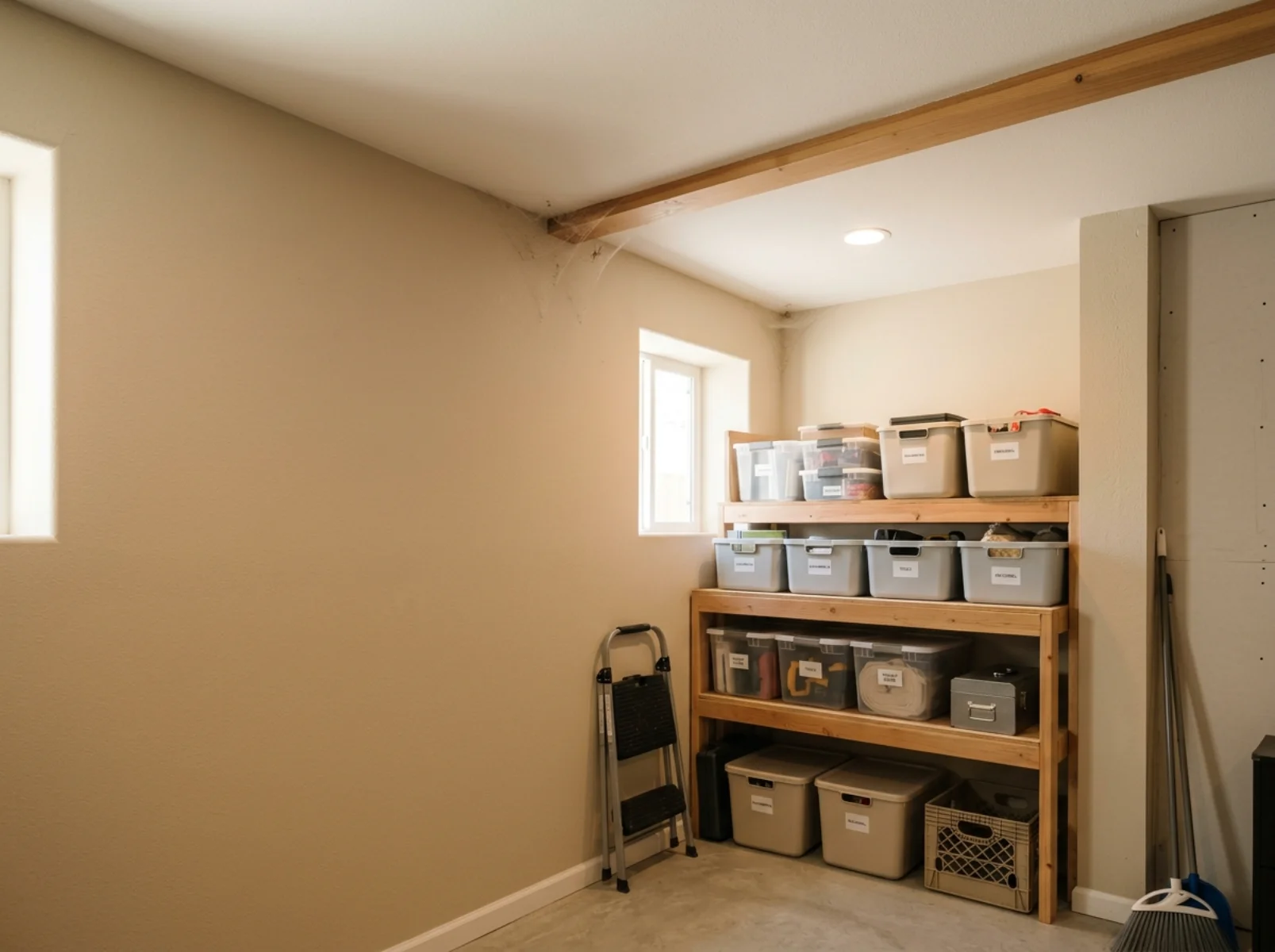
Take away the real estate. Knock down webs with a broom weekly, keep firewood and clutter off the foundation, and shake out gloves, boots and anything stored in the garage before putting your hand in. In recluse country, keep stored clothing in sealed bins instead of open boxes.
Glue boards tell the truth. A few flat sticky traps along baseboards and behind furniture will show you within a week whether you have wandering males (a spider every few days — normal for the season) or a real established population breeding indoors.
When it’s time to call someone
Most spider seasons need a broom, not a professional. The exceptions: repeated black widow finds where kids or pets play, a confirmed brown recluse in living areas inside the recluse belt (they breed indoors, and an established recluse population is genuinely hard to clear without professional treatment), or webs and egg sacs multiplying faster than you can knock them down. Our spider control page explains what professional treatment involves. If you want a local pro, we connect homeowners with spider control specialists across the country — including recluse-belt metros like Dallas and Atlanta — or you can browse every covered area on our locations page.
And if the spider on the wall tonight is just a house spider minding its business — September is the one month of the year when the kindest and most effective pest control is a drinking glass, a piece of paper, and the back porch.