Do Bug Bombs Actually Work? What the Research Found — and What Worked Instead
Short answer: no. A university study set foggers off in real infested homes and counted the cockroaches two weeks and a month later. There was no reduction at all from the numbers before treatment. Meanwhile, insecticide residue on kitchen surfaces rose to around 600 times its starting level.
Worst of both outcomes: the insects survive, and the chemical ends up where you live rather than where they do.
Why they fail, physically
A total-release fogger works by pushing a fine mist upward and outward, and letting it settle. Which means the product lands on the top of every horizontal surface — floors, counters, tables, the tops of appliances.
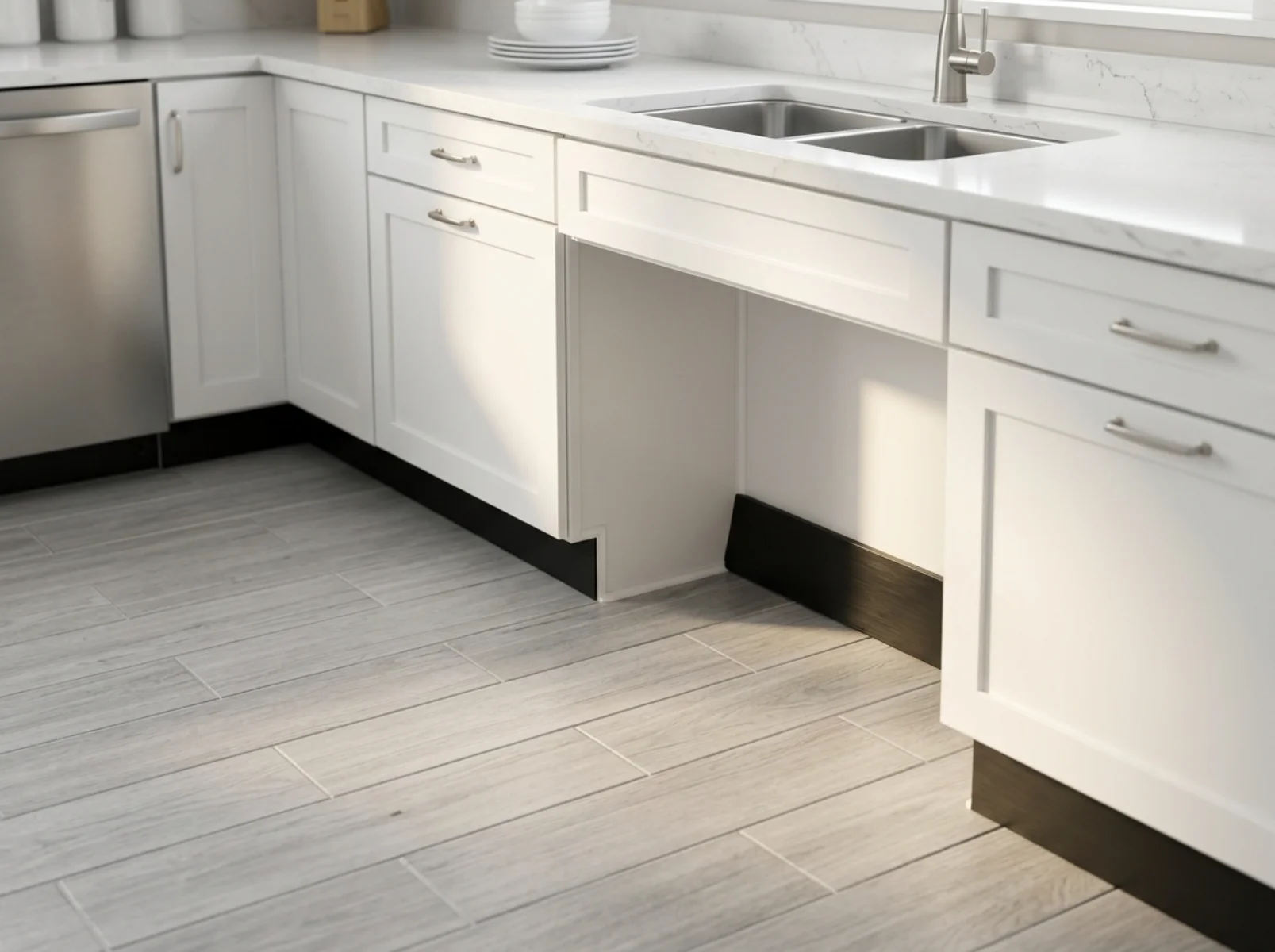
Now think about where cockroaches actually spend their time. Underneath things. The underside of a cabinet shelf, the back of a kick plate, inside a wall void, behind the fridge motor, in the hinge gap of a cupboard door. Those surfaces face down or sit inside an enclosed space, and the mist never reaches them.
So the treatment covers the parts of the kitchen the roaches avoid, and misses every part they use. That is not a dosage problem you can fix with more cans.
The residue is the part nobody talks about
The same study measured what was left behind. Insecticide levels on kitchen surfaces, walls and floors climbed to roughly 600 times baseline within hours of release.
Read that alongside the first point and the picture is uncomfortable. The chemical is concentrated exactly on the surfaces that food gets prepared on, that children sit on, and that pets walk across — and it is absent from the cabinet undersides where it would have done something.
You are not choosing between a strong solution and a weak one. You are choosing between an ineffective solution with a residue problem, and an effective one without.
What worked instead, in the same study
Gel bait. In the same set of homes, gel baits placed in the right locations eliminated the cockroach populations within two to four weeks.
The reason is the mechanism, and it is the opposite of a fogger. Bait does not need to reach the insect — the insect comes to it. Then it carries the active ingredient back into the harbourage, where it passes to others through droppings and feeding. The treatment travels into the wall void on the roaches themselves, which is somewhere no spray will ever go.
A pea-sized dot of gel in the right crack does more than an entire fogger.
The mistake that makes it worse
Do not use a fogger and gel bait together, and do not fog a room you have baited.
The repellent residue from the aerosol makes the surrounding area unattractive, so the roaches avoid the very spot where the bait is sitting. Fogging first can actively sabotage the thing that would have worked.
The same applies to over-the-counter spray around a bait placement. If you are baiting, stop spraying.
And they scatter
Foggers are repellent. A German cockroach population sitting in one kitchen void, hit with an aerosol, does not stay put — it disperses into adjoining voids, along shared plumbing, and in an apartment building, into the units next door.
Which is how a contained problem in one room becomes a distributed problem in four. In multi-unit housing this is the single most common way an infestation spreads between neighbours.
The safety issue people underestimate
Fogger contents are flammable. Every year there are house fires and explosions caused by a can discharging near a pilot light, a water heater, a furnace, or a refrigerator compressor kicking on.
The other common error is using several cans in a small space — more product does not compensate for the delivery method being wrong, and it substantially raises both the fire risk and what people breathe when they come home.
What to do instead
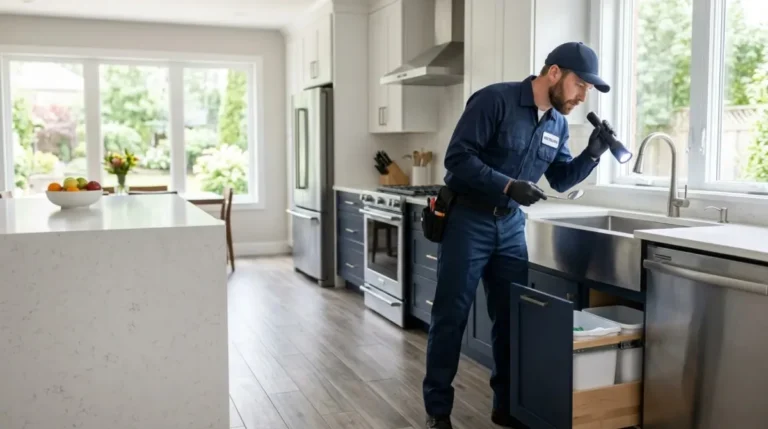
- Find the harbourage first. Under the sink, behind and under the fridge, inside the dishwasher panel, the motor housing of appliances, and the hinge side of cabinet doors.
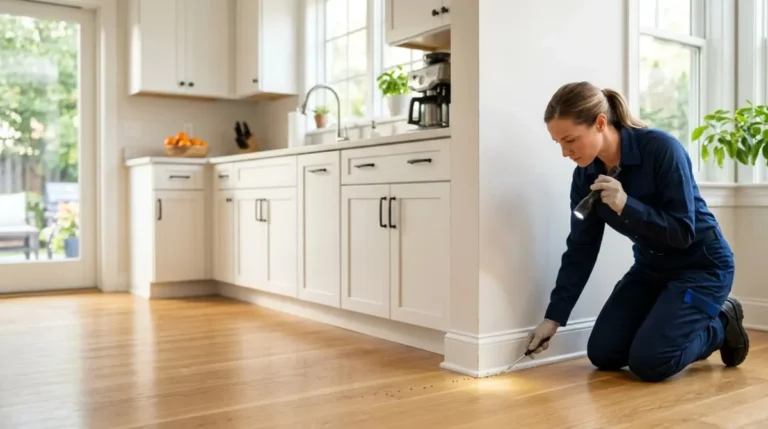
- Place gel bait in cracks, not on open surfaces. Small dots, several of them, close to where the droppings are.
- Fix the water. Cockroaches will tolerate no food far longer than no water. A dripping trap or a damp cabinet base keeps a population alive on its own.
- Leave the bait alone. No cleaning products over it, no sprays near it, and give it two to four weeks.
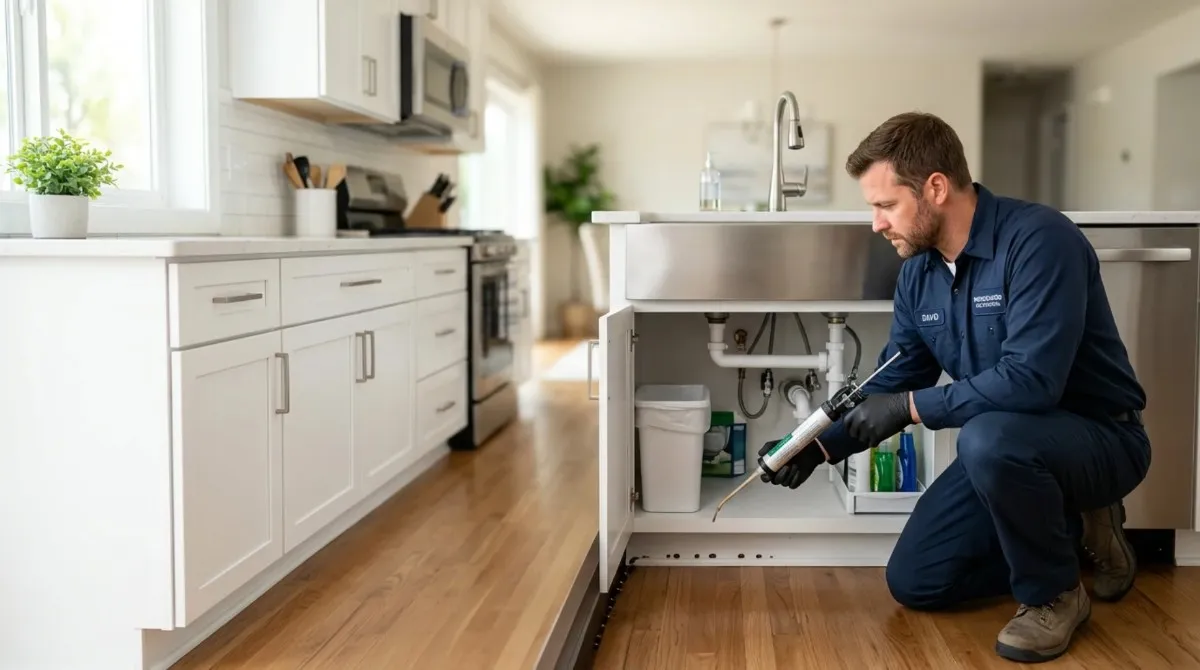
- Seal what you can reach — gaps around pipes under the sink are the standard route between units and between rooms.
When to call someone
If you are in an apartment or a shared building, if you are still seeing them after four weeks of correctly placed bait, if you see them in daylight (which indicates a large population), or if the source is behind a wall or an appliance you cannot get into — that is the point where it stops being a shop-bought job.
Our roach control and general pest control pages cover what that involves.
The one thing to take away
Foggers feel decisive. You set it off, you leave, you come back to a treated house. But the research is unusually clear: the roach count did not move, and the residue went up six hundredfold.
Put the money into gel bait and ten minutes of looking under things instead. It is less satisfying and it actually works.