Why Ants Show Up in Late August — the Seasonal Switch From Protein to Sugar
Ants in April make sense. Ants in late August, marching across a kitchen counter that has been ant-free all summer, feel like a betrayal. But the timing is not random — and the reason has almost nothing to do with the crumbs on your worktop.
The colony’s calendar changes at the end of summer
For most of the year an ant colony is running a nursery. The workers you see foraging in spring and early summer are collecting protein — insects, grease, anything to feed developing larvae. That is the colony’s priority while the brood is growing.
Late in the season the job changes. Larval production slows, and the colony shifts to stocking up carbohydrates — sugars that adult workers burn, and reserves the colony needs to get through the cold months. At the same time the outdoor food supply that carried them through summer starts thinning out.
So the ants that appear on your counter in late August are usually doing something specific: looking for sugar, because sugar is what they need right now and it is getting harder to find outside. That is why a trail materialises around a single sticky ring on a shelf when nothing was happening in June.
Rain moves them, heat moves them
Two weather patterns push ants indoors at exactly this point in the year.
Heavy late-summer rain floods shallow nests. Many common household ants nest in soil close to the surface — under a paving slab, along a foundation edge, beneath mulch. A downpour saturates that ground and the colony relocates, often to the driest reliable space nearby, which is the void inside your wall or under your floor.
Prolonged dry heat does the same thing for the opposite reason. Ants need moisture. When the ground bakes, the reliable water is indoors — a leaking trap under a sink, condensation around a pipe, the damp under a dishwasher. This is why late-summer ant trails so often lead to a bathroom or a kitchen sink rather than to food.
If a trail ends at plumbing rather than at a pantry, you are looking at a water problem with an ant symptom.
Why spraying the trail makes it worse
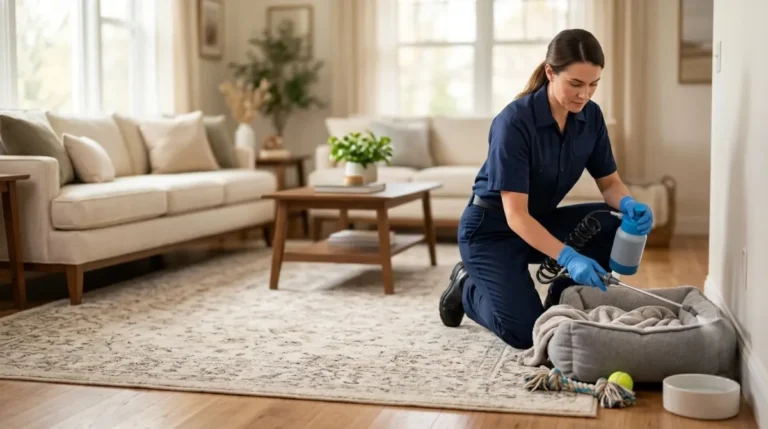
This is the single most common mistake, and it is completely understandable — the ants are right there, and the spray is right there.
The ants you can see are foragers, and they are a small percentage of the colony. The queen and the brood are somewhere else entirely. Killing the visible workers does nothing to the colony’s ability to replace them, and repellent sprays can make things worse in a specific way: some species respond to chemical pressure by budding — splitting into multiple satellite colonies with their own egg-laying queens. One problem becomes three.
It also destroys the trail, which sounds good and is not. The trail is information — it tells you where they are entering and, roughly, where they are going.
What works instead
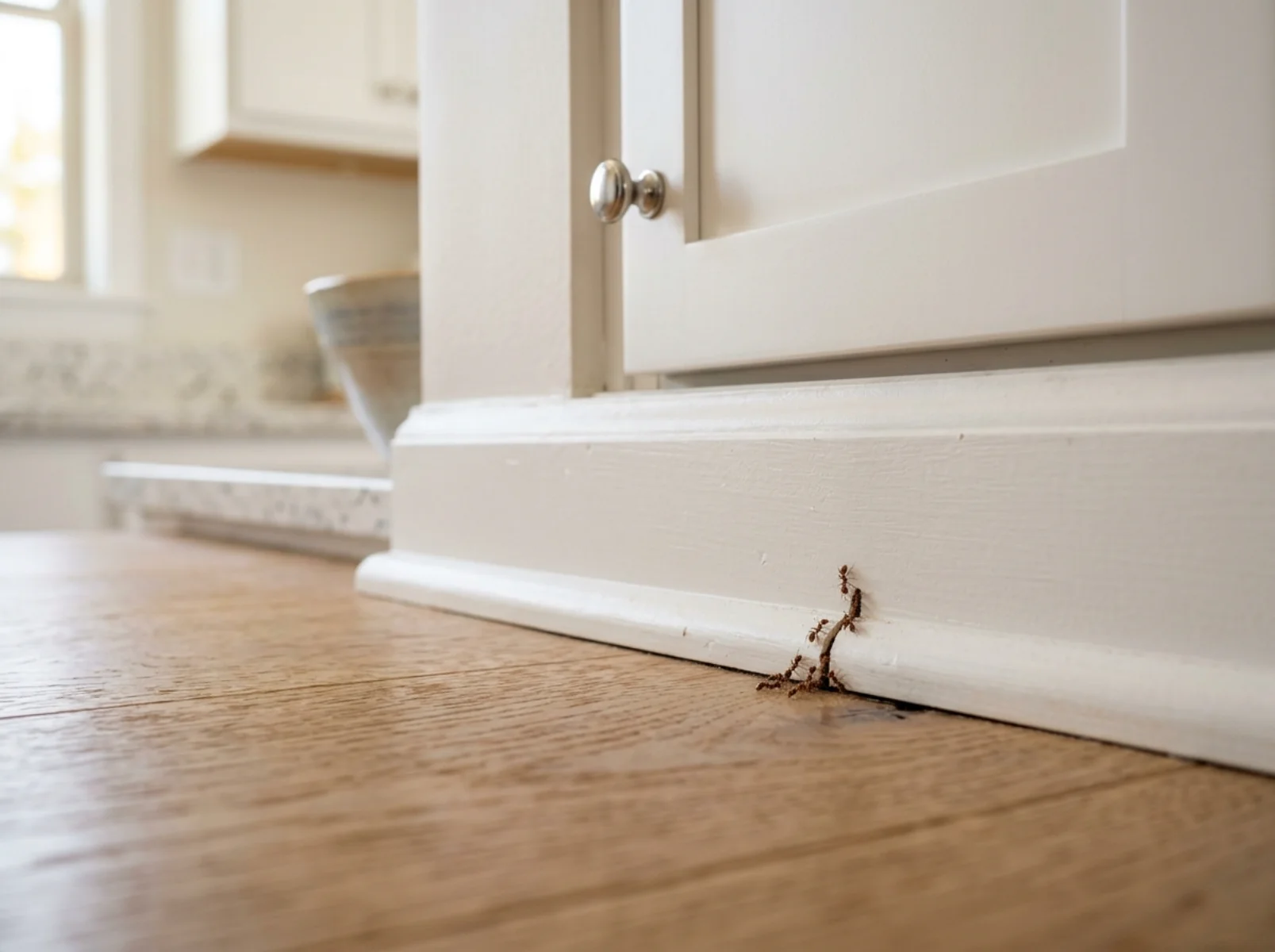
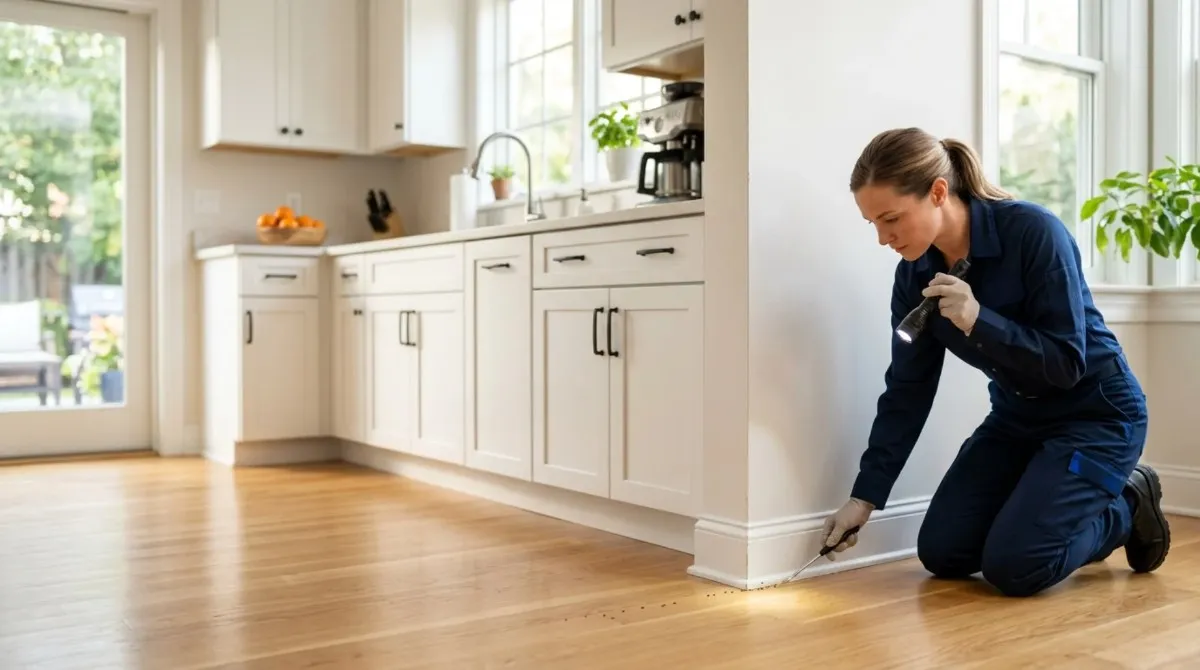
Follow the trail before you touch it. Watch where it goes. A gap at a window frame, a utility penetration, a crack in the slab edge, a branch touching the roof. That entry point matters more than the ants.
Use bait, and be patient. Slow-acting bait works because foragers carry it back and share it, reaching the queen and the brood. It takes days rather than minutes, and there is a stage where the ant activity looks worse because more of them are recruiting to the bait. That is the treatment working.
Match the bait to the season. Since late-summer colonies are usually after carbohydrates, sugar-based baits often outperform protein baits at this time of year. If one type gets no interest after a day, switch.
Do not clean the trail while baiting. Wiping the pheromone path away means the foragers cannot find the bait. Clean up after the activity stops, not during.
Remove the sugar they came for. Sticky rings on shelves, the honey jar lid, spilled juice under an appliance, fruit ripening on the counter, pet food left out. Late-summer ants are single-minded about this.
Sealing, once the colony is handled
Order matters. Sealing entry points while a colony is nesting inside a wall just traps it in the wall. Deal with the colony first, then close the doors:
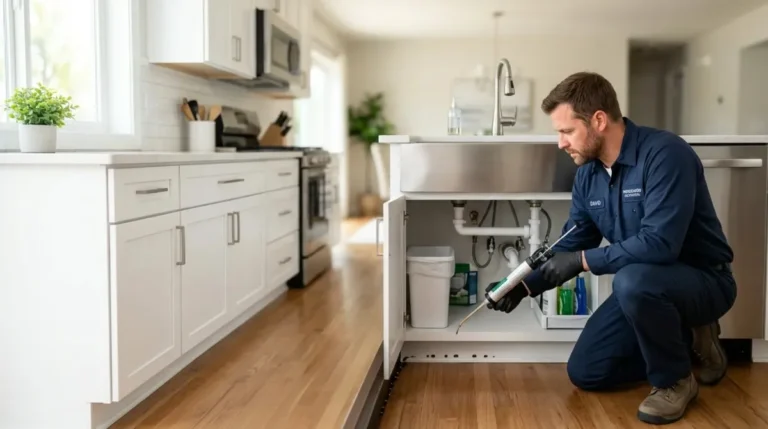
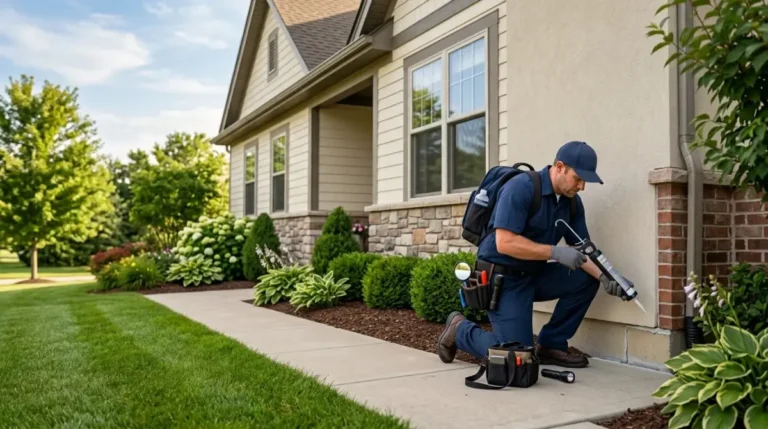
- Caulk gaps around window and door frames, and where pipes and cables pass through walls
- Fit or repair door sweeps
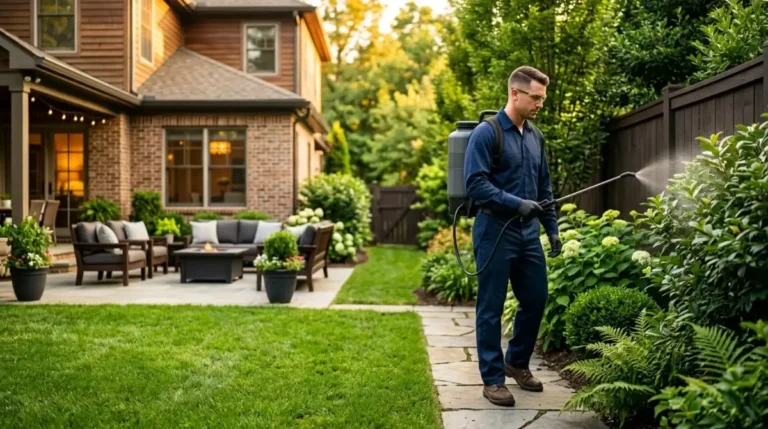
- Trim branches and shrubs touching the roof or siding — ants use them as bridges past everything at ground level
- Pull mulch back a few inches from the foundation and fix any leak that keeps the soil damp there
When it is time to call someone
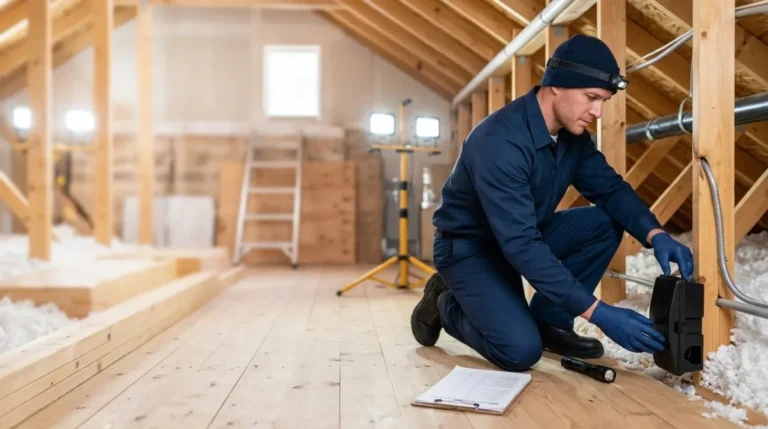
Bait handles most late-summer kitchen trails. Bring in a professional when the trail keeps returning in a new place after baiting, when you find coarse sawdust-like shavings near woodwork — that suggests carpenter ants excavating rather than a sugar raid — or when multiple separate trails appear at once, which can indicate budding.
Our ant control page covers what professional treatment involves, and if you want a local pro we connect homeowners with pest control specialists across the country — including Chicago, Atlanta and Dallas — or browse every covered area on our locations page.
The good news about a late-August ant trail is that it is seasonal behaviour with a clear cause. Find the entry, put out the right bait, and fix the leak they were actually after.